
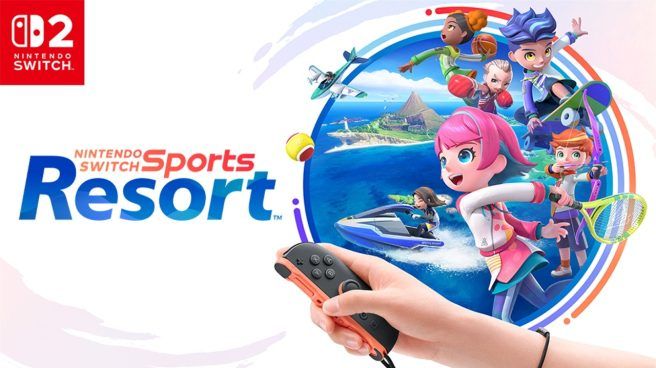

Nintendo Switch Sports Resort version 1.1.0 enables online play at launch, adds a Mii frequency setting, and leaves key balance questions unanswered.
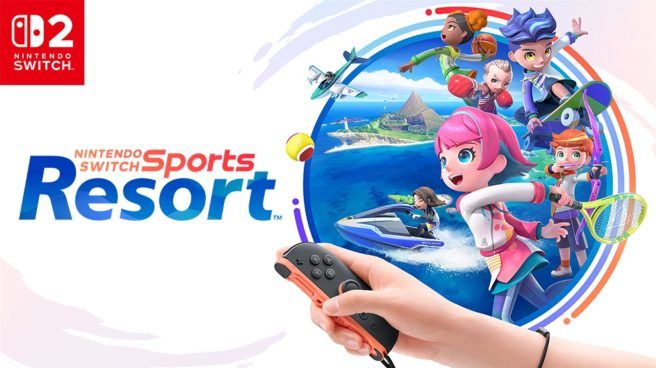
Image: nintendoeverything.com
Version 1.1.0 makes online play the real launch-day download
Nintendo Switch Sports Resort version 1.1.0 is out ahead of the game’s October 22 release, and the most important change is straightforward: online features are locked behind this update. Nintendo Everything reports that players must download the Nintendo Switch Sports Resort update before accessing online features, making this less of a routine tune-up and closer to the patch that switches on the game’s live multiplayer structure.
That creates the main tension for day-one players, especially anyone buying physical. The cartridge may get you onto Wuhu Island, but the patch notes published by Nintendo Everything, Nintendo Life, and GoNintendo all point to version 1.1.0 as the update that enables online matches, Casual Online, online friend rooms, and Join ID access. If your plan is couch multiplayer only, the update still adds an offline Mii option and general fixes. If your plan is leagues, distant friends, or global matchmaking, version 1.1.0 is the gate.
Nintendo Life notes that, at the time of its report, the full patch notes had only been shared on Nintendo’s Japanese support site and that its posted version was a machine translation. Nintendo Everything and GoNintendo also published the same core notes. The supported facts are consistent across the reports: online play is being enabled, a Mii appearance-frequency setting has been added, and Nintendo says several unspecified issues have been fixed to improve the gameplay experience.
Competitive online arrives with leagues across nine sports
The headline addition in the Switch Sports Resort patch notes is Online Matches. According to the version 1.1.0 notes published by Nintendo Everything, this mode lets players challenge opponents from around the world and aim for promotion to higher leagues. The mode covers nine competitive sports.
That matters because Nintendo’s launch-trailer details, as relayed by Nintendo Everything, frame the Pro League as the serious online track. Nintendo said players compete against others at a similar level, starting at E, and climb by winning. Version 1.1.0 appears to be the patch that turns that promise into an available mode. For players who care about ranked progression, this is the update that makes launch-day records and early league movement possible.
There is no evidence in the notes of sport-specific balance changes, ranked rule changes, motion-control adjustments, or matchmaking tuning beyond the availability of online matches. That distinction is important. A competitive player looking for tweaks to Basketball movement, Golf feel, Power Cruising controls, or any other sport will not find named changes here. The patch enables the ladder, but the notes do not say it rebalances the field.
The nine-sport split also leaves a clear mode boundary. IGN’s preorder and overview coverage lists 12 total sports in Nintendo Switch Sports Resort: Tennis, Bowling, Archery, Boxing, Volleyball, Table Tennis, Basketball, Golf, Thumb Wrestling, Prop Plane, Skateboarding, and Power Cruising. The patch notes say ranked-style online matches support nine competitive sports, while the broader friends feature supports 12 sports including competitive and recreational events. Based on the sources provided, Nintendo has not clarified in these notes which three are excluded from the nine-sport competitive online pool.
Casual Online is the low-pressure counterweight to ranked play
Version 1.1.0 also adds Casual Online, which the notes describe as online matches that do not keep a record of wins and losses. Like Online Matches, Casual Online supports nine competitive sports. For a motion-sports collection built around party play, that mode split is useful: players who want league pressure have a path, while players who want quick online games without record-keeping have a separate queue.
From a sports-game perspective, this is a healthy launch structure if the population holds. Ranked environments tend to harden quickly as players identify optimal serving patterns, timing windows, and defensive habits. Casual Online gives newer players, families, and returning Wii Sports-era fans a place to learn without turning every misread swing into a permanent mark on a profile. The notes do not say whether Casual Online uses the same matchmaking logic as league play, so expectations should stay modest until players can test it in the wild.
There is also a useful doubles-style wrinkle. The notes say that if players select the option rendered by Nintendo Everything as “Two Players with a Friend Far Away,” they can team up with a distant friend and compete against players from around the world. Nintendo Life’s machine-translated version calls the option “Play with a distant friend,” which is likely the same feature. The practical result is the same across the reports: the patch supports teaming with a remote friend before taking on global opponents.
For casual players, this is probably the most immediately valuable part of the Switch sports patch. Local play remains the natural fit for motion controls, but coordinating with one remote teammate reduces the friction of jumping online alone. It also gives pairs a way to build chemistry in sports such as Tennis, Volleyball, Basketball, or Table Tennis if those are included in a given online playlist.
Friend rooms and Join ID make the update bigger than matchmaking
The “Play with Friends Far Away” feature is also enabled in version 1.1.0. According to the patch notes, it supports up to eight people online and covers a total of 12 sports, including competitive and recreational sports. Players can also split into multiple groups and play different sports at the same time.
That last detail is easy to overlook, but it is one of the most player-friendly changes in the update. A typical online party breaks down when half the group wants to grind competitive sports and the other half wants lower-stakes activities. Letting groups split across different sports should make larger friend sessions less dependent on unanimous voting. It also better fits Nintendo’s Wuhu Island framing, where Nintendo’s launch-trailer description includes competitive events alongside Leisure Sports such as Prop Plane and Skateboarding.
The Join ID feature adds another practical layer. The notes say Join ID allows players to temporarily play online matches with people who are not registered as friends. For communities, streamers, family groups spread across accounts, or short-term event nights, that is cleaner than requiring everyone to exchange friend codes first. The notes do not specify moderation tools, lobby privacy details, or whether Join ID sessions have sport-by-sport restrictions, so those are open launch-day questions rather than confirmed features.
Video Chums’ review context also makes this feature set feel central to the product’s identity, while still separate from the patch notes themselves. The outlet says Nintendo Switch Sports Resort supports local multiplayer with up to four players and online play with up to 16 players, while saying local multiplayer is where the game shines brightest. The version 1.1.0 notes specifically confirm up to eight people for the “Play with Friends Far Away” feature, so readers should not treat every online mode as having the same player cap unless Nintendo states it in-game or in official support material.
The Mii setting is small, but it changes the offline vibe
The other named feature in Nintendo Switch Sports Resort 1.1.0 is a new option to adjust the frequency of Mii appearances. The patch notes place it under Options, then User Settings, then Other. Nintendo Everything’s version says that if players set the option to “Always,” Mii characters registered on the device and the guest’s Mii will appear every time.
This setting is limited. The notes say it applies to offline use only in competitive sports. That means it should not be read as a full online avatar policy change, and it does not appear to affect every recreational activity. It is a presentation and personalization option for offline competitive play, which will matter most to households that prefer Miis over Sportsmates or want familiar faces showing up consistently during local sessions.
The multiplayer rule is also worth knowing before a living-room tournament starts. The notes say that when multiple players are playing, the most frequently used settings take precedence. The wording is a little awkward in the translated notes, but the player takeaway is simple enough: one player’s preference may not fully control the session if several local users have different Mii frequency settings.
This is not a competitive integrity change in the way a control patch or ruleset adjustment would be. It will not alter league progression or online records based on the information Nintendo has provided through these notes. It does, however, speak directly to one of the series’ long-running social hooks: seeing familiar custom characters in a sports setting. For many families, that is part of the rhythm of the game.
The vague fixes are the part competitive players should watch closely
The final line of the version 1.1.0 notes says several issues were fixed to improve the gameplay experience. Nintendo has not identified the issues in the provided notes, and none of the sourced reports lists specific bug fixes, performance changes, input adjustments, server corrections, or animation repairs.
That lack of detail should shape expectations. If you are a competitive player, do not assume version 1.1.0 changes the feel of a serve, the timing of a spike, the accuracy of Archery, or the handling in Power Cruising unless you can verify it through play or Nintendo publishes fuller notes. Reviews in the source material show why players will be watching feel closely. IGN’s review describes Archery as a standout, says Basketball still feels too choreographed, and calls Power Cruising’s controls clunky. Video Chums praises many of the motion sports but says Golf was difficult to get right and did not help the reviewer improve much. Those are review judgments, not patch-note claims, and version 1.1.0 does not confirm fixes for those areas.
For casual players, the safer reading is that the update is essential for access and stability rather than a reason to relearn the game. For competitive players, it is a starting line. The online ecosystem, league climb, opponent quality, and motion consistency under network conditions will only become clear once the game is broadly live and players are testing the servers at scale.
There is also a business-side timing note. IGN reports that Nintendo Switch Sports Resort launches exclusively for Nintendo Switch 2 on October 22, with the physical edition listed at $59.99 and preorder discounts at Amazon and Walmart bringing it to $49.94 before release. IGN also lists a Nintendo Switch 2 bundle that includes a digital copy of the game and a three-month individual Nintendo Switch Online membership. Since version 1.1.0 is required for online features according to Nintendo Everything, anyone buying for league play should plan for both the update download and whatever online membership access is required by Nintendo’s platform rules.
Who should update immediately, and who can wait
If you plan to play online at all, update immediately. That includes ranked-minded players chasing league promotion, casual players who want no-record matchmaking, pairs teaming up from different homes, and groups using Play with Friends Far Away or Join ID. The core online modes named in the Switch Sports Resort patch notes are tied to version 1.1.0.
If you are only playing offline, the update still has value, but the urgency depends on your setup. The Mii frequency option is useful for local sessions where personalization matters, and the unspecified general fixes may improve the experience. Because Nintendo has not detailed those fixes, there is no confirmed evidence here of a specific offline sport being repaired or retuned.
The cleanest player-focused summary is this: version 1.1.0 is a launch-enablement patch with one personalization feature and broad, unnamed fixes. It affects casual play by opening no-record online matches, friend rooms, remote teaming, and Join ID sessions. It affects competitive play by turning on global online matches and league promotion across nine competitive sports. It does not, based on the published notes, announce sport-specific balance changes or solve the deeper feel questions raised in early reviews.
For a sports collection built around both living-room chaos and online ladders, that makes Nintendo Switch Sports Resort 1.1.0 a necessary download rather than an exciting balance overhaul. The real test begins after release, when players find out whether the newly enabled online structure can support the rivalries Nintendo is clearly building around.