
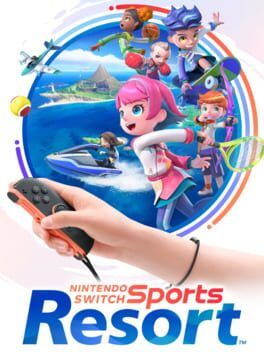

Public listings point to Nintendo Switch Sports Resort as a Switch 2 sports game, but its reward structure may matter as much as its event roster.

Image: IGDB
Public listings set up a familiar Nintendo sports test
GameStop currently lists Nintendo Switch Sports Resort for Nintendo Switch 2 with an October 22, 2026 release date, putting Nintendo’s motion-sports format back in the party-game conversation at the exact point where Switch 2 needs broad, repeatable living-room software. That listing confirms the platform and date on the retailer side, but it does not show a standard price in the provided page text. It also displays a purchase limit of zero, which reads more like a storefront state than useful buying guidance.
The bigger question is not whether a Switch 2 sports game can draw attention. Nintendo Switch Sports already proved the audience is there. Its Wikipedia entry says the 2022 Switch release sold over 18.32 million copies by March 2026, despite mixed critical reception and debate over the strength of its individual sports. The harder question is whether Nintendo Switch Sports Resort can keep that audience engaged without leaning on the same kind of limited-time reward pressure that made the original feel oddly hostile to casual play.
NintendoEverything’s October 2026 feature frames that problem bluntly. The outlet argues that the original Nintendo Switch Sports became too dependent on online play for replay value and on FOMO for cosmetics. Its example is the Collections system, which it describes as groups of twelve exclusive items earned through online play. According to NintendoEverything, a new batch arrived each week, players had three weeks to collect everything, and missed items could disappear for a full year before returning.
That is the tension sitting under Nintendo Switch Sports Resort. Public listings and encyclopedia entries describe a larger, more resort-styled sequel with Wuhu Island, Joy-Con 2 motion controls, mouse-control elements, and twelve sports. NintendoEverything’s critique points to the design risk underneath the surface: a casual sports compilation can look welcoming at a party and still train players to log in on a schedule that does not match how party sports games are actually played.
The original reward loop served online activity better than party play
Nintendo Switch Sports had a clean multiplayer foundation on paper. Wikipedia lists eight sports for the 2022 game, including volleyball, badminton, bowling, golf, soccer, chambara, tennis, and basketball. It also notes support for up to four players locally and two players in online random matchmaking. That split matters because a sports compilation lives in two very different environments: the weekly solo grind and the couch session where somebody asks, “What can four of us play right now?”
NintendoEverything’s criticism lands because Collections, as described by the outlet, rewarded one of those environments far more than the other. If cosmetics were tied to online play, local sessions became structurally less valuable for progression. If items rotated away after three weeks, the game turned missed weekends into missed rewards. If the fallback was waiting an entire year, the system borrowed live-service urgency without offering the kind of deep competitive ladder, roster meta, or season-long team management that usually supports that pressure in sports games.
From a mode-design perspective, that is the wrong trade for a Nintendo sports compilation. FIFA-style and NBA-style live modes can justify weekly objectives because their economies revolve around squad building, market movement, and competitive resets. A motion sports party game is different. Its highest-value moments are quick rematches, uneven skill matchups, family sessions, and the player who only touches the game when friends are over. Those players are not failing the game by skipping a week. The game fails them if it makes their absence feel like a penalty.
This is where Nintendo sports FOMO becomes especially awkward. Cosmetics are a natural fit for Sportsmates and Miis, and avatar expression is one of the easier ways to give a casual game long legs. But the unlock path has to respect the audience. If a reward system pressures people to play online alone so their local group has better outfits later, the game is asking its party crowd to do homework before the party.
Permanent rewards would make the sequel stronger without killing motivation
The best version of Nintendo Switch Sports Resort would not need to remove unlocks. It would need to make them permanent, legible, and friendly to every major way people play. NintendoEverything’s feature is useful as a springboard because the problem it identifies is not cosmetics themselves. The issue is time-limited access tied to a narrow activity funnel.
A stronger system would keep reward sets available permanently and let players earn toward them through local multiplayer, online matchmaking, solo challenges, and island activities if those modes exist in the final game as public descriptions suggest. The reward board could still rotate featured items to keep the interface fresh, but the catalog should not vanish. In sports terms, the difference is between a season schedule and a vault. A season schedule demands attendance. A vault gives players goals.
That distinction is especially important for a game that may have a long hardware-cycle role. Trend Hunter describes Nintendo Switch Sports Resort as an exclusive Switch 2 release built around motion-focused social play, with an explorable Wuhu Island and twelve activities. Wikipedia similarly describes the game as an upcoming Nintendo Switch 2 title developed and published by Nintendo, with motion and mouse controls using Joy-Con 2. If those public descriptions reflect the final shape, Nintendo is not selling a narrow competitive sports sim. It is selling a recurring household game.
Permanent unlocks fit that job. They give returning players something to chase after six months away. They give new Switch 2 owners a full game instead of a museum of missed drops. They also reduce the support burden of explaining when old items return, which activities count, and why local multiplayer does not meaningfully progress a player’s collection. For a Nintendo Switch Sports sequel, clarity is part of the feature set.
The sports roster needs mode depth, not a calendar of missed cosmetics
The reported activity list for Nintendo Switch Sports Resort already suggests a broader pitch than the 2022 game. Wikipedia lists twelve main sports: archery, boxing, table tennis, tennis, volleyball, bowling, basketball, golf, thumb wrestling, skateboarding, power cruising, and prop plane. It also says jump rope is included as a warm-up sport. Trend Hunter’s write-up overlaps with that framing, highlighting racket events, target events, aerial recreation, power cruising, prop plane flying, and a mouse-control option for skateboarding.
That roster has natural rhythm if Nintendo builds around session variety. Bowling and golf can anchor slower score-chasing play. Tennis, table tennis, volleyball, and basketball can carry rematch energy. Boxing and thumb wrestling can serve quick elimination formats. Archery can support precision challenges. Power cruising, prop plane, and skateboarding can make Wuhu Island feel like a place rather than a menu.
The mode question is whether those sports connect in ways that last. A resort structure opens space for island tours, local party cups, team rotations, skill badges, sport-specific challenges, daily warm-ups that do not expire into anxiety, and persistent medals that can be earned at any pace. None of those require disappearing cosmetics. In fact, they work better when rewards stay visible because players can plan around them.
As a sports analyst, I care less about the raw count of events than the repeatable formats around them. Twelve sports sounds healthy, especially compared with the eight listed for Nintendo Switch Sports, but a dozen shallow queues can still run cold. A smaller party group needs quick setup, fair scoring, and reasons to swap events. A solo player needs mastery goals that do not feel like chores. An online player needs matchmaking that supports skill growth without turning every casual match into a grind tax. Time-limited cosmetics solve none of those problems.
Wuhu Island gives Nintendo a better answer than the old menu loop
The most promising reported change is Wuhu Island. Wikipedia says Nintendo Switch Sports Resort adds an open-world version of Wuhu Island, the setting associated with Wii Sports Resort, while Trend Hunter describes the island as explorable and as a way to turn the collection into a destination. Those are public descriptions rather than a detailed Nintendo systems breakdown in the provided material, so the exact structure remains unconfirmed here. Still, the design opportunity is obvious.
A connected island can make progression physical and social. Instead of logging into an online queue because a hat expires soon, players could move between sports, discover challenges, and build a resort profile over time. A local group could run an island circuit where each person picks an event. Families could treat jump rope as a warm-up before bowling or golf. Players who prefer online could still chase ranks or cosmetics, but the reward economy would no longer need to exclude the living room.
This is where Nintendo has to be careful with nostalgia. Wuhu Island carries memory for Wii Sports Resort players, and that memory is tied to easy participation. The island worked because it felt open, bright, and low-friction. If the Switch 2 version turns that setting into a map full of expiring item prompts, the design sends mixed signals. The fantasy says vacation. The reward calendar says attendance sheet.
The Switch 2 hardware hook also raises the bar. Public descriptions mention Joy-Con 2 motion controls, and both Wikipedia and Trend Hunter refer to mouse-control functionality in some form. New input options can make the sequel feel fresh, especially for activities like skateboarding or target sports. But control novelty wears off if the surrounding modes are thin. Evergreen party play is what keeps a motion sports game installed after the launch-window curiosity fades.
Buyers should watch Nintendo’s reward and multiplayer details before launch
The practical picture is partly clear and partly open. GameStop lists Nintendo Switch Sports Resort for Nintendo Switch 2 with a release date of October 22, 2026. Wikipedia describes it as an upcoming Nintendo-developed and Nintendo-published sequel with twelve sports, Wuhu Island, Sportsmates, Mii support, and Joy-Con 2 motion and mouse controls. Trend Hunter also presents it as a Switch 2 exclusive centered on motion-focused social play.
The unanswered questions are the ones that will decide whether it becomes one of the defining Switch 2 party games or another sports release that peaks early. The provided sources do not confirm the final price for Nintendo Switch Sports Resort. They do not confirm whether local multiplayer earns the same rewards as online play. They do not detail whether cosmetics are permanent, seasonal, rotating, purchasable, or tied to Nintendo Switch Online participation. They also do not provide performance targets, accessory requirements beyond the Joy-Con 2 framing in public descriptions, or an upgrade path from Nintendo Switch Sports.
NintendoEverything’s argument should be read as commentary, not an official feature leak. Still, it identifies the right pressure point. A Nintendo Switch Sports sequel does not need to chase modern live-service habits to keep players returning. It needs a full activity roster, smooth local setup, durable online play, and rewards that respect the stop-start way households use party games.
If Nintendo Switch Sports Resort launches with permanent rewards and meaningful local progression, its twelve-sport resort structure could be exactly the kind of approachable Switch 2 sports game that keeps showing up at gatherings. If it repeats the original’s FOMO-heavy cosmetic loop, the sequel risks making its most casual players feel late before they even pick up a Joy-Con.