
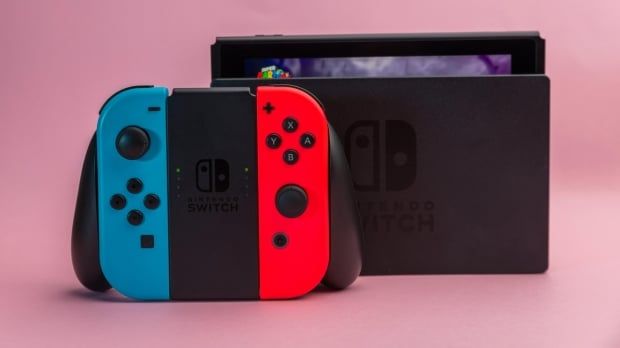

Nintendo won a $4.5 million default judgment against James “Archbox” Williams in a Switch piracy case tied to Reddit, pirate shops, and circumvention software.
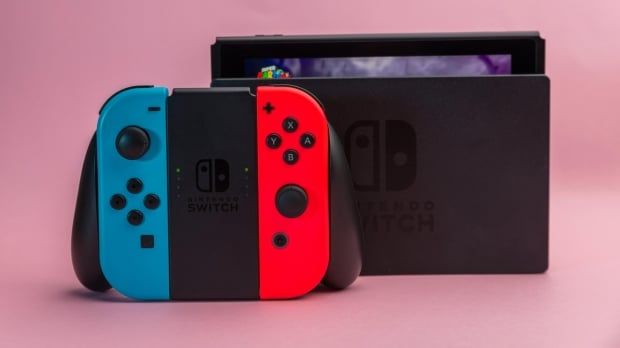
Image: tweaktown.com
Nintendo gets the full $4.5 million it sought
Nintendo of America has been awarded $4.5 million in damages in its Nintendo Switch piracy lawsuit against James C. Williams, known online as “Archbox,” after a Washington federal court entered a default judgment in the company’s favor. The key legal detail is the default: as reported by Aftermath, The Verge, GamesIndustry.biz, Nintendo Everything, Kotaku, and CBR, Williams did not respond to the lawsuit in court, so Nintendo received the damages it had requested rather than winning after a contested trial.
The judgment also orders Williams to shut down online “shops” he operates or controls that offered libraries of pirated Nintendo Switch games for download. The default judgment language quoted by multiple outlets says Williams must “immediately disable access” to those shops. GamesIndustry.biz also reports that the injunction requires him to close social media accounts linked to piracy and bars him from distributing, advertising, marketing, selling, reselling, uploading, downloading, offering for sale, or otherwise disseminating Nintendo software or hardware.
That distinction matters. This Nintendo $4.5 million lawsuit is a confirmed court win, but the public reports describe it as a default judgment, not a ruling produced by Williams litigating Nintendo’s allegations point by point. The practical result is still severe: a multi-million-dollar damages award, forced closure of alleged piracy infrastructure, and a broad injunction restricting future activity around Nintendo software, hardware, and circumvention tools.
The case Nintendo built around Archbox and the pirate shops
Nintendo’s complaint, as described by the reporting, centered on two connected claims: that Williams distributed or facilitated the distribution of pirated Switch games through online shops, and that his role in online piracy communities helped those shops function.
Nintendo Everything quotes the lawsuit as alleging that Williams “engaged in the infringing and unlawful reproduction and distribution of hundreds or thousands of copyrighted Nintendo Switch Games,” and that through “various Pirate Shops,” he “distributed or facilitated the distribution of thousands, if not hundreds of thousands” of unauthorized copies. Aftermath reports that Nintendo described Williams as the “operator, overseer, and driving force behind several Pirate Shops.” The Verge, citing the court order, reports that US District Judge Lauren King wrote that Nintendo had demonstrated Williams promoted online shops offering pirated Nintendo game files and circumvention software, encouraged others to contribute pirated Nintendo games, and assisted others in distribution while knowing the activity violated copyright law.
The Reddit link was central to how the case became visible. Williams was reportedly a moderator of r/SwitchPirates, and Kotaku identifies him as one of the moderators of that subreddit. The Verge reports that Nintendo alleged he became a “leading moderator” in the community and solicited “donations” of Nintendo eShop gift cards and copies of Switch games “to be copied and distributed” through pirate stores. Aftermath adds that r/SwitchPirates remains active, but Williams does not appear to be listed as a moderator.
Nintendo did not target a random forum user in the public record described by these reports. The allegations presented Williams as a hub: a Reddit-linked identity, a moderator role, alleged shop operations, alleged solicitation of games and gift cards, and alleged distribution infrastructure. For Nintendo’s anti-piracy strategy, that is a higher-value target than a single downloader because it aims at supply, organization, and community trust.
How Reddit activity reportedly led Nintendo to a real-world defendant
The unusual part of this Switch piracy Reddit case is how the online identity was reportedly tied back to Williams. Nintendo Everything and Aftermath report that Nintendo tracked Williams through Reddit and linked him to a Nintendo Account with a similar identity. Nintendo Everything says that account had previously been used to file for hardware repairs, which made it possible to obtain his address. Aftermath attributes that account-linking detail to prior reporting from Game File.
That sequence is a warning sign for piracy communities because it shows how platform, storefront, repair, and social identities can overlap. The reporting does not say that Reddit itself was sued, nor does it say every r/SwitchPirates participant was targeted. It says Nintendo identified Williams through his online presence, then connected that presence to a Nintendo account and repair history.
From a strategy perspective, Nintendo’s target selection looks methodical. A company trying to reduce piracy can pursue end users, but the larger deterrent comes from demonstrating that pseudonymous operators can be identified when their online handles, accounts, support records, and alleged commercial activity intersect. That is the pressure point in this Nintendo anti-piracy judgment: the court order hits the alleged distribution layer, while the reporting around the case tells communities that anonymity can collapse through ordinary account trails.
The judgment is part of a wider anti-circumvention campaign
This case did not arrive in isolation. Kotaku reports that Nintendo first filed suit against Williams in 2024 as part of a larger crackdown on original Switch piracy activity. The same article points to Nintendo’s case against Ryan Daly, owner of Modded Hardware, a site Kotaku says specialized in selling modded original Switch consoles, mod kits, and flash carts. Kotaku reports that Daly was eventually forced to pay Nintendo $2 million and relinquish hardware used to mod consoles.
GamesIndustry.biz also connects the Williams judgment to a separate European development. Earlier in September 2026, the District Court of The Hague in the Netherlands ruled that selling Switch modding kits that let players download and play pirated games is illegal. GamesIndustry.biz reports that the decision made it illegal to sell MIG Switch and similar devices in Europe. The Verge likewise describes Nintendo as having recently won a court case in the Netherlands involving Mig flash cartridges that allow people to play pirated games.
Nintendo’s own framing, as quoted by GamesIndustry.biz, is that it took action to protect its intellectual property and “on behalf of the many video game developers globally that depend on legitimate sales of Nintendo video games.” The company also warned players to avoid circumvention devices, circumvention software, and unauthorized copies of games, saying those products increase the risk of interfering with the functionality and experience provided by authentic Nintendo consoles, games, and systems.
The throughline is clear enough without overstating it. The confirmed court actions described in the sources target piracy distribution, alleged modded hardware sales tied to piracy, flash cartridges, circumvention software, and shops offering unauthorized game files. The sources do not establish a blanket legal conclusion about every form of console tinkering or repair. They do show Nintendo pressing courts to treat commercialized circumvention and piracy-enabling devices as part of the same enforcement problem.
What this signals for Switch modding and piracy communities
For Switch modding communities, the Williams order draws a bright practical line around activities that courts and Nintendo are willing to treat as piracy infrastructure. According to GamesIndustry.biz, the injunction bars Williams from a wide range of conduct involving Nintendo software and hardware, including distributing, advertising, marketing, selling, reselling, uploading, downloading, offering for sale, or otherwise disseminating it. The Verge reports that the court order specifically addressed shops offering pirated Nintendo game files and circumvention software.
That does not mean every discussion of Switch hardware is described in the sources as unlawful. It does mean the risk profile changes sharply when discussion becomes alleged distribution, solicitation, shop operation, resale of piracy devices, or traffic in circumvention software. The Williams case, the Modded Hardware case described by Kotaku, and the Hague ruling described by GamesIndustry.biz all point toward enforcement against organized systems that make piracy easier for others.
For communities built around guides, tools, flash cartridges, modded consoles, or archived game files, the strategic lesson is not subtle. Nintendo appears to be prioritizing nodes that combine audience access with distribution capability. A moderator title alone is not reported as the legal violation here, but a moderator accused of steering users toward pirate shops, soliciting content, and operating distribution channels becomes a much cleaner enforcement target. In a networked piracy scene, Nintendo is attacking the infrastructure layer rather than arguing only with individual consumers.
The unanswered questions after a default judgment
Because this was a default judgment, several questions remain unanswered in the public record described by the reports. Williams did not respond in court, so there was no publicly described defense testing Nintendo’s allegations in an adversarial trial. The judgment gives Nintendo the damages it requested and imposes an injunction, but it does not provide the same factual back-and-forth readers might expect from a fully litigated case.
There is also the practical question of collection. The sources confirm the $4.5 million award, but they do not establish whether Nintendo will recover that amount from Williams, how quickly any payment might occur, or whether further enforcement proceedings will be needed. Similar large anti-piracy awards often function as both compensation claims and deterrent signals, but the provided reporting does not say how much Nintendo expects to collect.
Another open question is the future of r/SwitchPirates and adjacent communities. Aftermath reports that the subreddit remains active and that Williams does not appear to be listed as a moderator. The court order described in the sources is aimed at Williams and the shops, accounts, and conduct under his control, not at the subreddit as a whole. That leaves a familiar enforcement gap: removing one alleged organizer can disrupt a network, but it does not automatically erase demand, discussion, or successor channels.
A deterrent aimed at the Switch’s long tail
The timing gives the judgment extra weight. The original Switch has a mature software library, a large installed base, and a long history of piracy attention. Nintendo’s incentive is to keep legitimate game sales protected even late in the hardware cycle, especially when Switch software continues to hold commercial value and when piracy tools can circulate far beyond one region or storefront.
GamesIndustry.biz reports that Nintendo argued Williams’ conduct damaged Nintendo’s business and intellectual property rights, as well as those of its development and publishing partners. Nintendo also said the conduct harmed artists, designers, programmers, and others whose livelihoods depend on authorized Nintendo product sales. That framing is designed to make the lawsuit about the ecosystem around Switch games, not only Nintendo’s balance sheet.
For readers, the practical guidance is straightforward. Buying or using unauthorized copies of Switch games, pirate-shop access, circumvention software, flash cartridges advertised for piracy, or modded hardware sold for playing copied games now sits under a growing set of legal warnings and court outcomes. For community operators, the danger is higher still when moderation, promotion, donations, shop links, or file distribution overlap.
The Williams judgment is therefore both a legal result and a strategic message. Nintendo won $4.5 million by default, secured an order shutting down alleged pirate shops, and added another case to a campaign that has already touched US modded hardware sellers and European circumvention devices. The ruling does not answer every question about modding, preservation, or console ownership, but it makes one point hard to miss: Nintendo is pursuing the people it believes make Switch piracy scalable.