
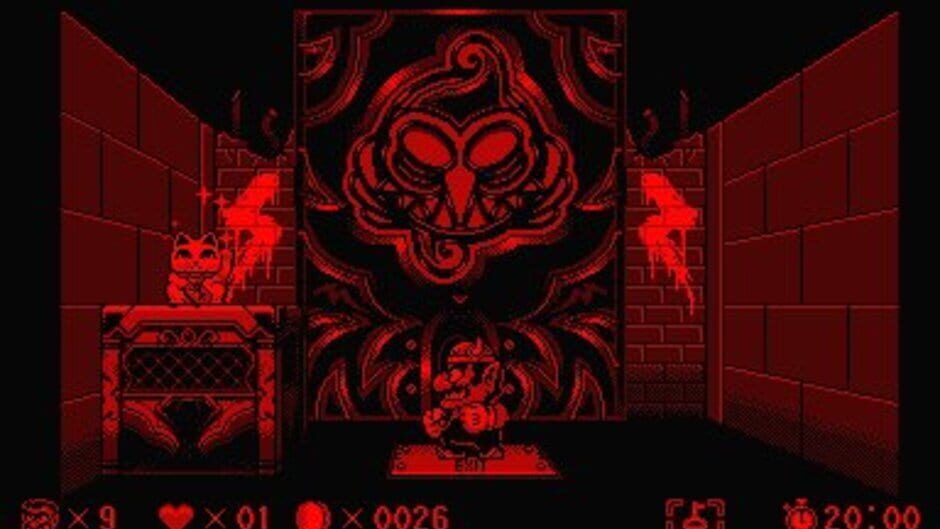

Nintendo keeps expanding its Virtual Boy catalog on Switch Online, turning one of its biggest hardware misfires into a preservation success story and giving overlooked red‑and‑black curios a second chance.
Nintendo has quietly done something that once felt impossible. In 2026, the Virtual Boy – the red, headache-inducing relic many assumed the company wanted to forget – is not only back, it is getting regular updates on Nintendo Switch Online.
The May 2026 drop adds five more titles to the "Virtual Boy – Nintendo Classics" app for Expansion Pack subscribers: V-Tetris, Jack Bros., Space Invaders Virtual Collection, Virtual Bowling and Vertical Force. With almost the full 22-game library now accounted for between February’s launch lineup and this latest update, Nintendo is methodically preserving one of its strangest failures in a way that finally lets players experience the machine without eBay prices or eye strain.
Why Nintendo Is Finally Embracing Its Weirdest Console
For decades, the Virtual Boy existed as a kind of ghost in Nintendo history. It never appeared on the Wii Virtual Console or the 3DS, despite that system’s stereoscopic display. Outside of a few cameos and trivia references, Nintendo acted like it barely existed.
So why open the vault now?
Part of the answer is timing. Switch and Switch 2 sit at a point in Nintendo’s life cycle where nostalgia is becoming a strategy all its own. NES, SNES, N64, Game Boy, Game Boy Advance and now GameCube libraries have turned Switch Online into a rolling museum of Nintendo history. The Virtual Boy was the most conspicuous missing artifact. By bringing it into the same subscription service, Nintendo fills in an awkward gap on the company’s timeline and turns an infamous misstep into a feature.
The other part is technology. The original headset could only display red-and-black visuals at a fixed focal distance that caused headaches and neck pain. On Switch, those same games can run on a standard display or handheld screen, with filters and comfort options that make the 3D effect less punishing. That preserves the feel of the originals while ditching the uncomfortable ergonomics that made the hardware a nonstarter for many.
Finally, there is branding. The idea that even Nintendo’s biggest flop is worth revisiting sends a message that the company takes its own history seriously. Retro fans talk a lot about "game preservation," but it carries more weight when platform holders actually surface obscure, once-abandoned software and put it in front of millions of players.
Virtual Boy on Switch as Preservation, Not Just Nostalgia
The Virtual Boy library is tiny in raw numbers, but it is unusually fragile. Many cartridges were low print runs, the hardware is prone to technical failures, and replacement parts are niche hobbyist territory. Until this year, legal ways to play most of these games essentially did not exist.
Switch Online changes that. By bundling the Virtual Boy library into the same "Nintendo Classics" framework used for NES and SNES, Nintendo is doing a few important things at once.
It makes these games economically accessible. You no longer need a functioning 1995 headset and a handful of import carts. If you have the Expansion Pack, you can sample the entire catalog without committing hundreds of dollars to hardware that might fail.
It stabilizes the versions that will be remembered. Emulation can be messy when it is handled unofficially, especially for a platform built around stereoscopic parallax tricks. With Nintendo’s own emulation layer handling the 3D separation and timing, there is now a first-party reference point for how these games are "supposed" to look and feel.
It contextualizes the Virtual Boy alongside Nintendo’s hits instead of leaving it as an embarrassing footnote. Pull up the app on Switch and you are browsing Virtual Boy games in the same interface used for Super Mario World or Metroid Fusion. That framing matters. It invites players to treat Virtual Boy titles as part of the same lineage rather than as a punchline.
There is a caveat. All of this preservation lives inside a subscription, which means the library is still dependent on Nintendo’s long-term support. If the service shutters or rotates platforms, these games could disappear again. But compared to where the Virtual Boy library was even a year ago, this is a massive improvement.
What The May 2026 Update Adds To The Picture
The February launch app already brought heavy hitters like Virtual Boy Wario Land and Mario Clash, plus curios such as Teleroboxer and Galactic Pinball. The May 2026 update feels more like Nintendo digging into the deep cuts. It is not about flagship mascots, but about fleshing out the breadth of what this strange machine tried to do.
V-Tetris shows the platform handling a familiar puzzle game template with a 3D twist. The depth effect subtly shifts the playfield, creating a sense of a stack built into the screen instead of on top of it. It is still Tetris at heart, but it uses the parallax to add a feeling of physical space that you do not get in flat versions.
Jack Bros. is probably the biggest cult prize in this batch. Developed by Atlus and featuring early versions of the Jack Frost and Pyro Jack characters that later became Shin Megami Tensei icons, it blends top-down action with light maze and time-attack mechanics. On original hardware, it quickly became expensive and obscure; on Switch, it finally has a chance to exist as more than a collector talking point.
Space Invaders Virtual Collection doubles as both a remaster and a reinterpretation. You get classic modes, but the Virtual Boy’s layered backgrounds and foregrounds let Taito play with a sense of depth that gives the familiar invader formations a surprising amount of presence. It is the kind of game that explains, in minutes, why developers were curious about stereoscopic experiments in the mid-90s, even if the hardware was not ready.
Virtual Bowling has long been one of the real rarities in the catalog. Developed by Athena, it was a late Japanese release with a limited run that quickly turned it into a grail item. Mechanically, it is a straightforward bowling sim, but the way it uses the alley’s length to emphasize depth makes it almost feel like a proof-of-concept for how sports games could have used the system if it had lasted longer.
Vertical Force rounds out the set as a vertical shoot ’em up that plays with altitude in a way most 16-bit shooters could not. You can swap between foreground and background planes, weaving between layers of enemy fire. On Switch, clearer resolution and more comfortable viewing make the parallax easier to read, which helps the design finally shine.
Together, these five games expand the Virtual Boy app beyond its launch novelty. This is no longer just "the Wario Land machine." It is starting to feel like a complete snapshot of a doomed experiment: puzzle games, shooters, sports, arcade remasters and oddball crossovers sitting shoulder to shoulder.
The Overlooked Standouts Modern Players Should Not Skip
A lot of early coverage of Virtual Boy on Switch boiled the library down to one or two must-plays and a pile of curios. With May’s expansion, it is clearer that there are several games worth visiting on their own terms, not just as historical artifacts.
Jack Bros. deserves to be first on that list. It is an accessible action game with tight controls, snappy pacing and a great soundtrack, and it doubles as a fascinating prehistory of modern Atlus icons. For anyone who came to Nintendo through Persona, seeing these characters in a 1995 top-down gauntlet is a fun bit of context.
Vertical Force is another sleeper hit. Many players skipped it originally because shmups were already plentiful on SNES and Genesis, but the plane-switching system genuinely takes advantage of stereoscopic depth. On Switch, you are not fighting a blurry display or a wobbly headset, so it becomes easier to appreciate how its level design layers threats in front of and behind you.
Virtual Bowling, despite its straightforward premise, is more interesting than its reputation suggests. It highlights how even a simple sports concept can feel different when your eye is tracking a lane that recedes into space rather than lying flat on a TV. Its rarity also made it a kind of legend among collectors. Having it casually selectable from a menu takes some of the mystique away but gives everyone a chance to actually play it.
Space Invaders Virtual Collection is probably the best "demo" for skeptical friends. Most people know Space Invaders, so the 3D layering immediately stands out without needing explanation. It is a perfect way to communicate what made the Virtual Boy idea intriguing while also underlining how strange it is that this concept skipped the entire 3DS era.
V-Tetris might not steal headlines, but Tetris in stereoscopic space is quietly compelling. The Virtual Boy’s stark palette puts all the emphasis on motion and depth. That focus carries over nicely to modern screens, where the parallax turns a familiar puzzle into something that feels tactile in a different way.
Of course, Virtual Boy Wario Land remains the crown jewel of the overall app, even if it was not part of this specific May update. It is one of Wario’s best platformers and one of the few Virtual Boy games that feels like an unqualified classic in any era. With the library filling out around it, Wario Land now feels less like an anomaly and more like the centerpiece of a fully preserved catalog.
What This Means For Nintendo’s Future Retro Efforts
The Virtual Boy’s revival sets an interesting precedent for how far Nintendo is willing to go with its back catalog.
If the company is willing to spend time and engineering resources on a platform that sold poorly and was mocked for years, it raises the ceiling on what might be possible for other neglected corners of its history. The Satellaview broadcasts, 64DD experiments and smaller regional oddities are suddenly more plausible candidates than they once seemed.
At the same time, the Virtual Boy app shows how Nintendo can turn even a failure into a subscription selling point. Expansion Pack started with N64 and Genesis, but additions like GameCube, Virtual Boy and arcade-adjacent material make it feel less like a museum of hits and more like a living archive that includes the weird side alleys too.
For players, the result is simple. One of the hardest Nintendo libraries to access is now a few menu clicks away, presented in a way that respects both the original hardware and modern comfort. The May 2026 expansion is not just five more curios; it moves the service measurably closer to a complete, playable snapshot of a famously doomed console.
The Virtual Boy is still strange and limited, and no amount of preservation will turn it into a hidden GameCube. But by putting nearly its entire library on Switch, Nintendo is finally treating this odd little detour as history worth keeping, not a mistake to bury. That shift matters, and it turns every new batch of red-and-black arrivals into something worth paying attention to.