
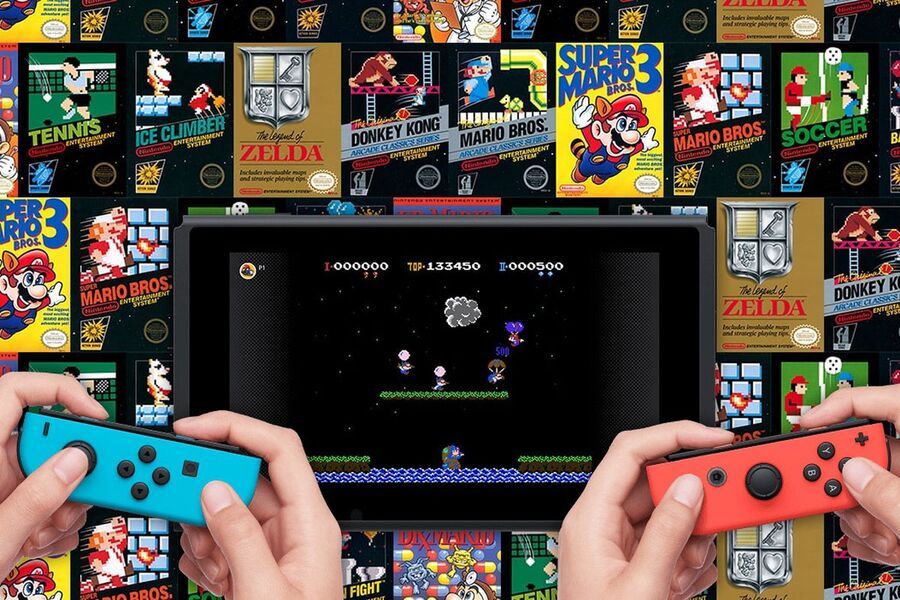

Nintendo president Shuntaro Furukawa says Switch Online helps players experience older games. Here is how that reframes retro libraries, subscription value, and Switch 2 expectations.
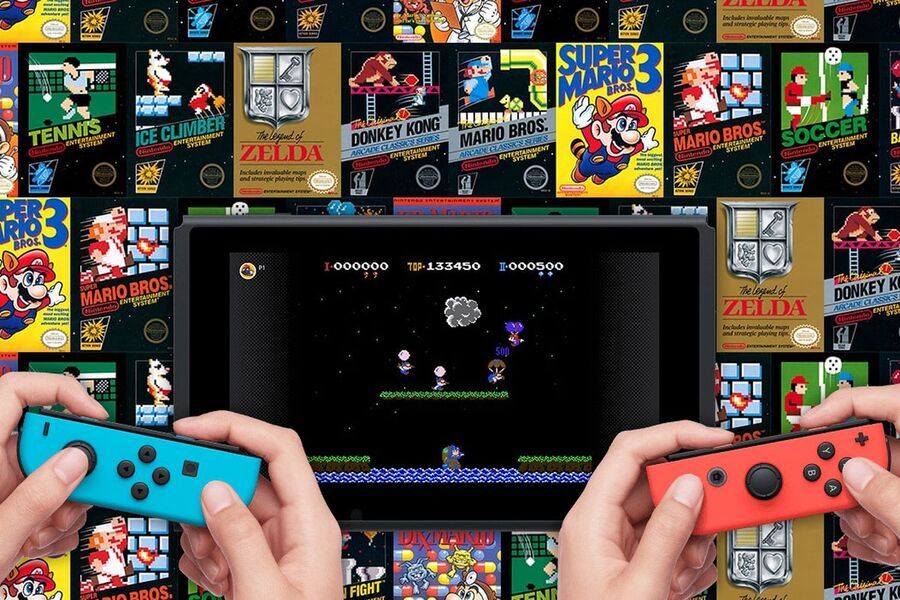
Image: nintendolife.com
Nintendo is framing Switch Online as a bridge to its own history
Nintendo president Shuntaro Furukawa has made the company’s retro strategy unusually explicit: Nintendo Switch Online is one of the ways Nintendo intends to “create opportunities” for players to experience games from its past. The comment came in a translated shareholder Q&A published by Nintendo and reported by Nintendo Life, in response to a question about recording, preserving, and passing on Nintendo’s culture and philosophy of play.
That framing matters because it puts the Nintendo Switch Online retro games catalog in a different strategic lane than a simple subscriber perk. Furukawa acknowledged the value people see in older Nintendo products and software, including public archiving efforts, but he also pointed to “certain challenges” in preserving and exhibiting past games, especially keeping them playable. Nintendo’s answer, at least for many consumers, is not an open archive. It is a curated, subscription-based service.
Nintendo also tied that preservation conversation to physical history. Furukawa said the Nintendo Museum, which opened in October 2024, had passed 800,000 visitors as of the end of April 2026. The museum handles the artifact side of the company’s legacy. Switch Online handles the playable side, or at least the portion Nintendo chooses to surface. The tension is clear: Nintendo is acknowledging preservation language while continuing to route practical access through a live commercial platform.
The retro catalog is now part of Nintendo’s platform economy
Nintendo Switch Online launched as a paid online service for Switch in September 2018, with Nintendo Switch Online + Expansion Pack following in October 2021, according to the public Nintendo Switch Online service history included in the source material. Since then, its classic-game apps have become one of the service’s most visible long-term value drivers, alongside online multiplayer, cloud saves, profile icons, offers, and communication features.
Nintendo’s official US Switch Online page currently describes the base membership as including online play, GameChat on Nintendo Switch 2, Nintendo Classics, and other benefits. It lists the base individual membership at $19.99 per year and a family membership for up to eight Nintendo accounts at $34.99 per year. The same official page promotes a free bonus month for Nintendo Switch Online + Expansion Pack memberships through July 28, 2026, though the provided excerpt does not list the Expansion Pack’s annual price.
The important shift is that Nintendo is no longer presenting the classic catalog only as nostalgia frosting on an online subscription. Furukawa’s answer makes the library part of a broader corporate answer to how Nintendo keeps older games accessible. For players, that makes the subscription feel more central. For Nintendo, it turns legacy software into a recurring engagement tool rather than a one-time Virtual Console style purchase model.
What the current Nintendo Classics lineup actually covers
Furukawa’s shareholder answer gave a concise map of the current Nintendo Classics offering. He said Nintendo Switch Online subscribers can enjoy software from NES, Super NES, Game Boy, Game Boy Advance, and Nintendo 64, and that on Nintendo Switch 2, consumers can also play Nintendo GameCube software. Nintendo’s official site separately describes the base Nintendo Classics library as a curated selection of NES, Super NES, and Game Boy titles.
The split matters for anyone evaluating the Nintendo subscription. Based on Nintendo’s own public wording and the supporting guide material, NES, Super NES, and Game Boy sit with the base service, while systems such as Nintendo 64, Game Boy Advance, and GameCube are tied to the higher Expansion Pack tier. Thumbsticks’ updated guide also lists Sega Genesis/Mega Drive and Virtual Boy under Expansion Pack, and states that GameCube games are available only on Nintendo Switch 2.
Thumbsticks counts more than 200 games across the available retro platforms as of its May 31, 2026 update. Its examples include Super Mario Bros., Earthbound, Super Metroid, Double Dragon, and The Legend of Zelda: A Link to the Past on the broader service, with Expansion Pack highlights such as GoldenEye 007, Super Mario 64, The Legend of Zelda: The Minish Cap, and F-Zero GX. The exact value of the library still depends less on the headline count than on which systems and franchises a player actually wants.
Preservation language does not erase the limits of subscription access
Nintendo’s preservation-adjacent framing should not be confused with a guarantee of permanent ownership or complete historical coverage. The Nintendo Classics reference material states that games are accessible as long as the user has an active Nintendo Switch Online subscription, and that users must connect to the internet at least once a week to access the apps while offline. That is a practical boundary around the whole archive-like pitch.
There are player-friendly features inside that boundary. The Nintendo Classics apps support features such as save states and control remapping, while most console apps also support rewind. The same reference material says the emulators include online multiplayer support for local multiplayer games played remotely with friends. Some NES and SNES games also have SP versions that change the starting conditions, often by unlocking modes, granting extra items, or placing the player later in the game.
Those features make older games easier to approach, but they also make Nintendo Classics a curated modern presentation rather than a neutral historical record. Nintendo is deciding which versions appear, how quickly they arrive, which systems sit behind which tier, and which quality-of-life tools wrap around them. Furukawa’s comment about technical challenges reinforces that the catalog is shaped by production constraints as much as by preservation intent.
Switch 2 raises the stakes for Nintendo’s retro plan
The clearest Switch 2 implication is already confirmed: Furukawa said GameCube software is playable through Nintendo Switch Online on Nintendo Switch 2. Nintendo’s official Switch Online page also leads with “Unlock more content on Nintendo Switch 2” and lists GameChat as a benefit tied to the C button on the new system. The supplied Nintendo Switch Online reference material further states that Expansion Pack members received Switch 2 Edition upgrade packs for The Legend of Zelda: Breath of the Wild and The Legend of Zelda: Tears of the Kingdom in June 2025.
That creates a broader expectation around what many players will informally call Nintendo Switch 2 Online, even if the source material presents the service as Nintendo Switch Online across Switch and Switch 2 rather than a separately named product. The subscription is positioned to carry forward accounts, benefits, retro libraries, and system-specific perks. GameCube is the cleanest example because it is both a nostalgia play and a hardware differentiator for Switch 2.
The unanswered questions are the ones that matter most for long-term value. Nintendo has not, in the provided material, announced a fixed cadence for GameCube additions, promised every major first-party classic, or laid out how far later-console support might go. Furukawa said Nintendo wants to continue exploring “a variety of possibilities” while taking technical challenges and other factors into account. That is an open door, not a roadmap.
The smart subscription read: buy for the library that exists, not the one you hope arrives
For players deciding whether Nintendo Switch Online is worth it, the practical answer is to separate confirmed access from expectation. The base membership is the safer value calculation if you want online play and the established NES, Super NES, and Game Boy libraries at the official $19.99 annual individual price or $34.99 annual family price. It is also the least speculative way to sample Nintendo classic games without paying for the higher tier.
Expansion Pack becomes easier to justify if the systems behind that tier are the target: Nintendo 64, Game Boy Advance, and, on Nintendo Switch 2, GameCube. Thumbsticks’ guide also lists Sega Genesis/Mega Drive and Virtual Boy in that expanded pool. If F-Zero GX, GoldenEye 007, Super Mario 64, or The Minish Cap are the draw, the higher tier is where the relevant catalog sits. If a player is waiting for a specific unannounced title, the available sources do not support subscribing on that assumption.
Furukawa’s comments clarify Nintendo’s direction without removing Nintendo’s usual control over timing and access. Switch Online is increasingly the company’s playable-history layer, but it remains a managed subscription service with tier gates, technical constraints, irregular additions, and platform-specific benefits. For Switch 2 owners, that makes the retro catalog one of the strongest signals to watch as Nintendo defines the next generation of its online ecosystem.