
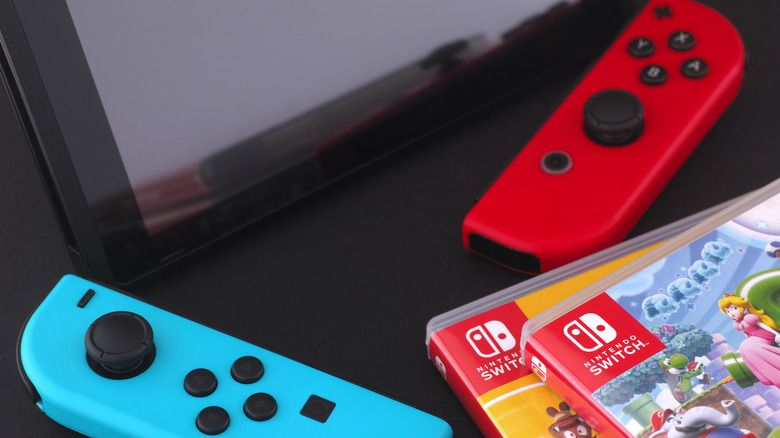

A practical 2026 buying guide for the Nintendo Switch OLED, weighing discounts, handheld value, library access, and the tougher Switch 2 upgrade question.
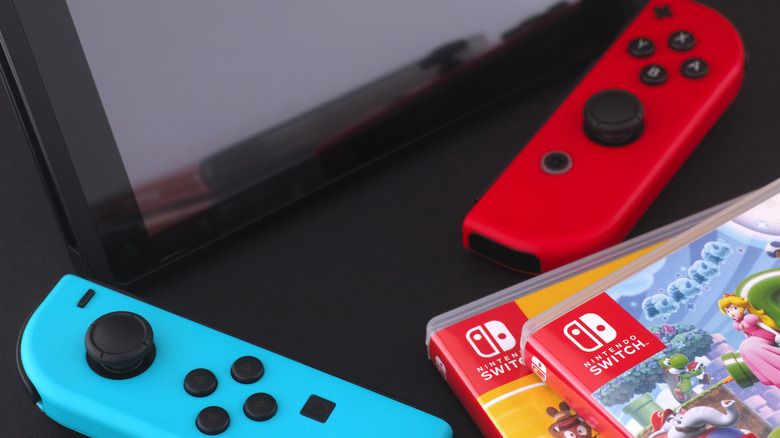
Image: engadget.com
The $100 gap has made the OLED a harder sell
The clearest buying problem for the Nintendo Switch OLED in 2026 is the price gap. Engadget reports that the standard Switch is currently priced at $339.99, the Switch OLED at $399.99, and the Switch 2 at $499.99 since September 1. Mumba’s 2026 price guide also lists the Switch OLED at $399.99 for a new unit, while noting that older $349.99 references still appear in search results and marketplace listings because the OLED launched in the U.S. at that price in 2021.
That creates the tension behind every “Switch OLED worth it 2026” search. At full retail, the OLED is only $100 below Nintendo’s newer hardware, which makes it much less appealing as a new purchase unless your priorities are very specific. NintendoEverything reaches a similar conclusion in its September 2026 feature, arguing that the Switch 2 is the better buy over the OLED despite recent $50 price bumps for both systems.
The important caveat is that Engadget frames the older Switch family differently: whether it is worth buying in 2026 “will largely depend on how much you pay for it.” That is the right way to approach the Nintendo Switch OLED in 2026. The OLED is not a bad machine because Switch 2 exists. It becomes a questionable buy when a new unit sits close enough to Switch 2 pricing that you are effectively paying current-generation money for older hardware.
A discounted OLED can still be the right kind of Nintendo purchase
The value case changes sharply once the OLED is no longer a $399.99 purchase. Mumba’s guide says used and refurbished OLED pricing varies by condition, included accessories, seller, and warranty terms, and cites a GameStop reference price of $237.49 at the time of writing for used or refurbished units. That is the kind of number that turns the conversation from “OLED vs Switch 2” into “cheap library machine vs new platform investment.”
For a reader deciding whether to buy Switch OLED 2026, my practical line is simple: a complete, clean OLED in the mid-$200 range has a real audience. That buyer might be a latecomer who skipped the Switch generation, a parent buying a first Nintendo console for a child, a handheld-first player who wants the best first-generation Switch screen, or someone whose backlog is already built around existing Switch games rather than upcoming Switch 2 releases.
At $300 to $350, the deal needs more scrutiny. At $399.99 new, it needs a strong bundle or a very specific reason. Mumba notes that Nintendo’s OLED Mario Kart 8 Deluxe bundle was also priced at $399.99, which adds value without changing the console’s list price. Still, a bundled game does not erase the core comparison: if you are comfortable spending $400, you should ask whether saving the extra $100 for Switch 2 better fits the next several years of play.
The used market also adds practical traps. Mumba lists the standard OLED package as the console, OLED dock, two Joy-Con controllers, Joy-Con wrist straps, Joy-Con grip, HDMI cable, and power adapter. A cheaper listing that lacks the dock, charger, or functional Joy-Cons may stop being a bargain once replacement parts are included. Any serious discount should be judged by the full package, return policy, warranty, stick condition, screen condition, and whether the dock is actually included.
The OLED screen is still its strongest argument
NintendoEverything identifies the OLED model’s screen as its major advantage, and that remains the most persuasive reason to buy one instead of a cheaper standard Switch. The outlet notes that the OLED panel produces more vibrant colors than a typical LCD and, because OLED screens do not use a backlight in the same way, dark areas can look closer to true black. NintendoEverything specifically points to dark, atmospheric games like Metroid Dread as the kind of software that can look better on the Switch OLED screen than on Switch 2’s LCD.
That matters most in the kinds of games that live or die by readability. Tight platformers, dense pixel-art indies, moody exploration games, and small-screen co-op benefit from clean contrast and bold color separation. As someone who spends a lot of time with craft-first games where a single hazard tile, enemy tell, or parry window can make the difference, I would rather play many 2D and handheld-first games on a great portable screen than on a larger spec sheet with a display I enjoy less.
The OLED model also has 64GB of internal storage, double the 32GB in the standard Switch, according to NintendoEverything. Alibaba’s 2026 buying guide also describes the OLED as having a 7-inch OLED screen, an improved stand, improved speakers, 64GB of internal storage, and a dock with a built-in LAN port. Those are refinements, not a generational leap, but they are the exact refinements that matter if your Switch spends most of its life undocked.
The limit is equally clear. NintendoEverything argues that the OLED’s advantages largely end with the screen, framing it as “the screen or nothing.” That is a harsh read, since the stand, storage, speakers, and dock do matter in daily use, but it captures the buying reality. If you mainly play on a TV, the OLED screen loses its biggest purpose.
Switch 2 makes full-price OLED harder to recommend
The Switch OLED vs Switch 2 decision is no longer about whether the OLED is pleasant to use. It is. The harder question is whether a first-generation premium revision should cost close to Nintendo’s newer system in 2026. On that point, NintendoEverything’s recommendation is blunt: even with price increases, it says the Switch 2 is worth buying over the OLED.
There is one display wrinkle. NintendoEverything reports that a small number of players criticized the Switch 2 screen at launch for ghosting and lower response time, although the writer says they play exclusively in handheld and were not personally bothered by the screen. That means the OLED keeps a legitimate handheld-display advantage for some eyes and some games. If you are extremely sensitive to LCD motion handling or you care most about color and contrast, the OLED’s panel still has a case.
But buying hardware is also about where your next purchases go. A full-price OLED asks you to spend $399.99 on the older Switch family when Engadget lists Switch 2 at $499.99. Unless that $100 difference is the hard ceiling of your budget, Switch 2 is the safer forward-looking purchase. That is especially true if you expect to buy new releases over the next few years rather than spend 2026 and 2027 catching up on the existing Switch catalog.
No source material here confirms an imminent Switch 2 OLED. NintendoEverything says it does not think a Switch 2 OLED is happening anytime soon, but that is presented as the outlet’s judgment rather than an official Nintendo announcement. The practical guidance is to avoid buying the current OLED as a placeholder while waiting for a confirmed premium Switch 2 revision. Based on the provided sources, that future model remains unannounced.
Library access is the OLED’s quiet advantage, but it has a ceiling
For late buyers, the OLED is appealing because it opens the door to the first Switch generation at a lower possible cost. NintendoEverything notes that some players are still entering Nintendo’s ecosystem late, including people who skipped the Switch generation and are now interested in Tomodachi Life: Living the Dream. That latecomer angle is real: if your wish list is built around games already available on Switch, a discounted OLED can feel like discovering a very deep shelf all at once.
This is where indie and platformer players should be honest about their habits. If you mostly want compact, replayable games, couch co-op, handheld sessions, and established releases, the OLED can still be a lovely machine. The screen flatters colorful art direction, the detachable Joy-Cons keep local play simple, and the hybrid design remains useful for games that move from sofa to bag to bedside table.
The ceiling is future access. The source material supplied for this assignment does not include a formal Nintendo compatibility statement, a transfer policy, or a comprehensive list of games that move between Switch and Switch 2. NintendoEverything’s site listing includes coverage of Bluey’s Happy Snaps with Switch 1 and Switch 2 versions, which shows that some releases are being discussed across both platforms, but that should not be treated as proof of universal cross-generation support.
So the OLED is best understood as a library-access purchase, not a clean upgrade-path purchase. If you buy it cheaply and spend a year playing games you already know you want, that is coherent. If you buy it new expecting a frictionless move into Switch 2 later, the provided sources do not give enough confirmed detail to support that assumption.
How to decide before you buy
If you are asking whether the Nintendo Switch OLED in 2026 is still worth buying, start with price, then ask where you play. At $399.99, the OLED is difficult to recommend over a $499.99 Switch 2 for most new buyers. The $100 savings are real, but they are not large enough to ignore the age of the hardware family and the likelihood that Nintendo’s future attention moves toward Switch 2.
At a strong used or refurbished discount, the OLED becomes much more interesting. Mumba’s cited $237.49 GameStop reference for used or refurbished OLED units is the kind of pricing that can justify buying older hardware, provided the system is complete and protected by a decent return policy. If the listing includes the dock, power adapter, Joy-Cons, grip, straps, HDMI cable, and a screen in good condition, the value case is much stronger than it is at MSRP.
Choose OLED if you are handheld-first, price-sensitive, and focused on the existing Switch library. Choose Switch 2 if you can afford the extra $100 at current listed prices, care about the longer upgrade runway, or do not want to wonder whether your next anticipated game will favor newer hardware. Wait if you are hoping for a Switch 2 OLED specifically, because the sources here do not confirm one.
The fairest answer is conditional. The Switch OLED at full price is a tough buy in 2026. The Switch OLED at a real discount can still be a warm, sharp, portable way into one of Nintendo’s richest libraries, especially for players who value screen quality and compact games over being first in line for the next platform cycle.