

The October 31, 2026 Nintendo Switch eShop charts show Super Smash Bros. Ultimate holding No. 1, new releases Tape to Tape and Hello Kitty Party Land breaking in, and download-only players pushing Pokémon, Castlevania, and indies before November.
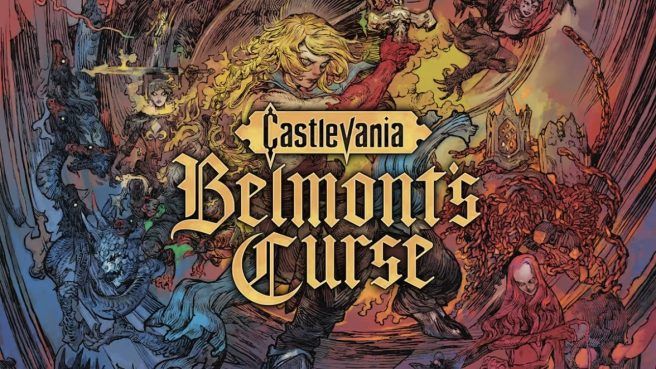
Image: nintendoeverything.com
Smash holds the top spot, but the chart is really about habit
Super Smash Bros. Ultimate is No. 1 again on the Nintendo Switch eShop charts for the week of October 31, 2026, according to Nintendo Everything, giving the 2018 fighter a second straight week at the front of the Switch storefront. That is the cleanest headline in the latest Nintendo Switch sales ranking, and it creates the more interesting question heading into November: are players buying the biggest new games, or are they retreating to the most reliable ones?
The answer, based on the published chart, leans heavily toward reliability. Nintendo Everything’s All Games list puts Super Smash Bros. Ultimate first, followed by Tomodachi Life: Living the Dream at No. 2, Minecraft at No. 3, Mario Kart 8 Deluxe at No. 4, and Super Mario Party Jamboree at No. 5. Pokémon FireRed lands at No. 6, with Tomodachi Life: Living the Dream appearing again at No. 7 in the same Nintendo Everything list, a duplicate entry that should be treated as a listing anomaly rather than smoothed over. Final Fantasy Resonance is No. 8, new release Tape to Tape debuts at No. 9, and GTA: The Trilogy rounds out the top ten.
Those placements do not come with unit sales, revenue, regional splits, discount data, or Nintendo commentary. Nintendo Everything reports rankings, not raw sales. Still, as a snapshot of the Switch eShop best sellers on Halloween, the list is useful because it shows what digital buyers are choosing when the holiday window begins: multiplayer staples, comfort sims, evergreen sandbox games, retro Pokémon, and a few fresh arrivals fighting for visibility.
The top ten favors living-room games over launch-week spectacle
The top five is packed with games that make sense for school breaks, family visits, and low-friction group play. Super Smash Bros. Ultimate and Mario Kart 8 Deluxe are established couch-competition anchors. Minecraft remains the durable creative default. Super Mario Party Jamboree gives the list another party-game pillar. Tomodachi Life: Living the Dream sitting at No. 2, plus its duplicated No. 7 appearance in Nintendo Everything’s All Games chart, points to strong visibility for social-life simulation on the storefront, though the duplicate means readers should be cautious about treating every slot as a clean individual data point.
Super Smash Bros. Ultimate’s position is also less surprising when placed against the platform’s long tail. Wikipedia’s list of best-selling Nintendo Switch software, which notes that Nintendo shares first-party sales quarterly while many publishers do not disclose per-console figures, lists Super Smash Bros. Ultimate at 38.14 million units as of June 30, 2026. That does not explain this specific eShop surge by itself, and it should not be read as proof of current weekly unit volume. It does explain why the game can still reassert itself years after release. A giant install base, strong brand recognition, and local multiplayer utility give it the kind of staying power most new releases have to work around.
The October 31 chart also shows how the original Switch audience is still buying for breadth rather than graphical novelty. The All Games top 30 includes Animal Crossing: New Horizons at No. 14, Super Mario Odyssey at No. 15, The Legend of Zelda: Breath of the Wild at No. 17, Super Mario Bros. Wonder at No. 18, Nintendo Switch Sports at No. 19, Persona 5 Royal at No. 20, New Super Mario Bros. U Deluxe at No. 24, Super Mario Galaxy + Super Mario Galaxy 2 at No. 25, Cult of the Lamb at No. 26, The Elder Scrolls V: Skyrim Anniversary Edition Bundle at No. 27, and The Legend of Zelda: Tears of the Kingdom at No. 28. This is an older-console chart behaving like a late-cycle library chart, where known quantities keep selling because they solve simple buying problems.
Tape to Tape and Hello Kitty Party Land are the new momentum tests
Nintendo Everything specifically calls out two new releases in the October 31 update: Tape to Tape debuts at No. 9 on the All Games chart, while Hello Kitty Party Land arrives at No. 11. Those are strong visible placements, but they tell slightly different stories.
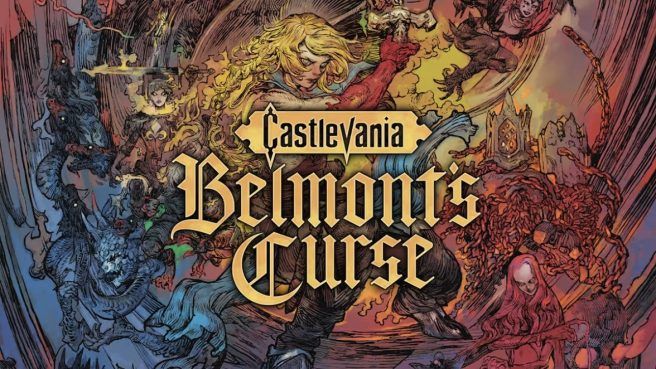
Tape to Tape has the sharper indie signal. It is No. 9 among all games and No. 3 on Nintendo Everything’s Download-Only chart, behind Pokémon FireRed at No. 1 and Castlevania: Belmont’s Curse at No. 2. For a smaller game, that dual placement matters because it means it is not being noticed only inside a narrower digital-only lane. It is also cutting into a combined list where it has to sit beside Smash, Minecraft, Mario Kart, Pokémon, Final Fantasy, and GTA. The source material does not provide price, promotion, review score, or publisher comment, so we cannot say what drove the debut. We can say the debut is visible in both contexts.
Hello Kitty Party Land’s No. 11 position on Switch looks even more interesting when compared with GoNintendo’s separate Switch 2 eShop chart for October 31, where Hello Kitty Party Land is No. 10. That does not prove equal sales across platforms, because the two charts are separate rankings without unit counts. It does show the game appearing in nearly the same range on both storefronts. Heading into the holiday season, a licensed party game does not need to dominate the discourse to succeed on a Nintendo platform. It needs to be easy to understand, friendly to mixed-age groups, and visible when gift buyers browse the shop. The charts confirm visibility, not commercial scale.
Download-only buyers are chasing retro action, cozy depth, and hard-earned craft
The Download-Only chart is where the October 31 eShop story gets more textured. Nintendo Everything lists Pokémon FireRed at No. 1, Castlevania: Belmont’s Curse at No. 2, Tape to Tape at No. 3, Pokémon LeafGreen at No. 4, and Stardew Valley at No. 5. The next wave includes Warrior Cats: Clans of the Forest at No. 6, Star Wars: Battlefront Classic Collection at No. 7, Deltarune at No. 8, Nine Sols at No. 9, Kingdom Hearts HD 1.5 + 2.5 Remix at No. 10, Subnautica at No. 11, Croc 2 Kingdom of the Gobbos at No. 12, Tunic at No. 13, Moonlight Peaks at No. 14, Mouthwashing at No. 15, and Grounded at No. 18.
That is a more discovery-driven list than the All Games chart. It has retro Pokémon at the top, but beneath that are games that sell through specific player cravings: the snap and danger of Castlevania-style action, the seasonal comfort of Stardew Valley, the precision and punishment of Nine Sols, the puzzle-box adventure design of Tunic, and the curiosity hook of Mouthwashing. As a platformer and indie watcher, this is the part of the chart that feels most revealing. Small games stand out here when their mechanics are instantly legible. A player browsing the eShop does not need a corporate showcase to understand a tight action game, a farm-life sim, or a mysterious adventure with a strong identity.
Castlevania: Belmont’s Curse is also a useful caution point. A Shattered analysis of the October 24 Switch eShop top 30, citing Nintendo Everything’s earlier chart, reported Castlevania: Belmont’s Curse at No. 2 on the All Games chart after it had previously held No. 1 before Super Smash Bros. Ultimate took over. On October 31, Nintendo Everything’s All Games list as provided does not show Castlevania in the top 30, while its Download-Only list places the game at No. 2. That is a real week-to-week difference in the available reporting, but without Nintendo’s raw eShop data or an explanation of chart rules, it should not be treated as a confirmed collapse. The confirmed fact is narrower: on October 31, it remains very high among download-only games.
Switch 2 charts show a different buyer, not a replacement audience
GoNintendo’s Switch 2 eShop chart for October 31 gives the week a second lens. On Switch 2, The Legend of Zelda: Ocarina of Time is No. 1, Nintendo Switch Sports Resort is No. 2, Final Fantasy Resonance is No. 3, Cyberpunk 2077: Ultimate Edition is No. 4, Minecraft is No. 5, Mario Kart World is No. 6, Pokémon Pokopia is No. 7, Call of Duty: Modern Warfare 4 Standard Edition is No. 8, Fire Emblem: Fortune’s Weave is No. 9, and Hello Kitty Party Land is No. 10.
That chart has a different flavor from the original Switch list. It gives more space to big cross-platform or newer-premium releases, including Cyberpunk 2077: Ultimate Edition, Call of Duty: Modern Warfare 4, Resident Evil 4 Gold Edition at No. 14, Stellar Blade Complete Edition at No. 15, Diablo IV: Age of Hatred Collection at No. 18, Elden Ring Tarnished Edition at No. 27, Fallout 4: Anniversary Edition at No. 29, and The Elder Scrolls V: Skyrim Anniversary Edition at No. 30. It also has Nintendo upgrade-path clutter in the Zelda lane, with Tears of the Kingdom Nintendo Switch 2 Edition at No. 22, Breath of the Wild Nintendo Switch 2 Edition at No. 26, and the Breath of the Wild Nintendo Switch 2 Edition Upgrade Pack at No. 28.
The overlap is just as important. Minecraft is No. 3 on Switch and No. 5 on Switch 2. Final Fantasy Resonance is No. 8 on Switch and No. 3 on Switch 2, with its Digital Deluxe Edition at No. 12 on Switch 2. Hello Kitty Party Land sits at No. 11 on Switch and No. 10 on Switch 2. Those placements suggest certain games are traveling cleanly across the hardware split. Others appear shaped by platform identity: the original Switch list favors established family and portable-era staples, while the Switch 2 chart has more appetite for visually ambitious ports, new editions, and hardware-showcase releases. That is interpretation from the rankings, not a sales-total claim.
How to read the October 31 eShop charts before spending
For buyers, the safest use of the October 31, 2026 eShop charts is as a discovery guide, not a market report. The Nintendo Switch eShop charts show relative positions on a storefront at a moment in time. They do not say whether a game is discounted, how many copies it sold, how much revenue it generated, or whether physical sales tell a different story. They also do not collapse Switch and Switch 2 into one audience. GoNintendo’s Switch 2 list and Nintendo Everything’s Switch list should be read side by side, not combined into a single ranking.
If you are shopping for a shared-screen holiday game on the original Switch, the chart points toward the obvious durable picks: Super Smash Bros. Ultimate, Mario Kart 8 Deluxe, Super Mario Party Jamboree, Nintendo Switch Sports, and Super Mario Bros. Wonder are all inside the All Games top 30. If you want something newer with momentum, Tape to Tape has the clearest chart debut on Switch, while Hello Kitty Party Land is showing up on both Switch and Switch 2 lists. If your taste runs smaller and sharper, the Download-Only chart is the better browse, especially with Castlevania: Belmont’s Curse, Stardew Valley, Deltarune, Nine Sols, Tunic, Croc 2 Kingdom of the Gobbos, Moonlight Peaks, and Mouthwashing all visible in the provided ranking.
The practical caution is versioning. Switch 2 owners should check whether a game has a dedicated Switch 2 edition, an upgrade pack, a separate collection, or only a standard Switch listing. GoNintendo’s chart shows that confusion is not theoretical, since Breath of the Wild appears as both a Switch 2 Edition and an Upgrade Pack on the same Switch 2 ranking. Original Switch owners have a different question: whether a late-cycle purchase still fits how they play. Judging by the October 31 Switch eShop best sellers, plenty of players are still answering yes.