
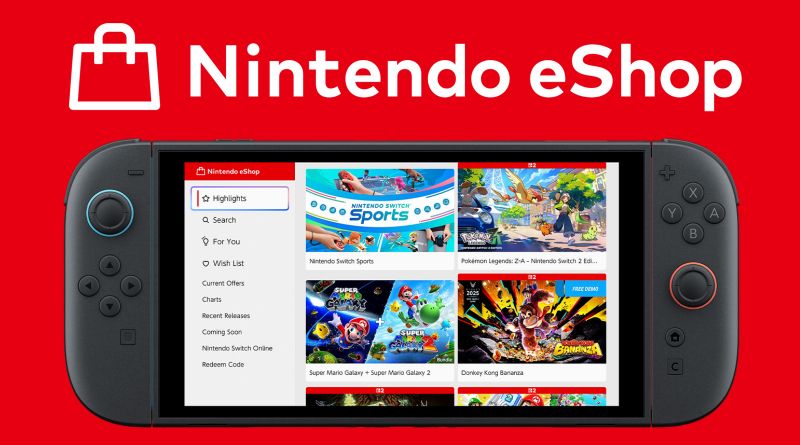

Nintendo’s eShop and updated third-party demo lists now give Switch and Switch 2 players a smarter way to sample paid games before spending. Here is how to find the best free Nintendo Switch demos, read regional listings, and separate demos from free-to-start downloads.
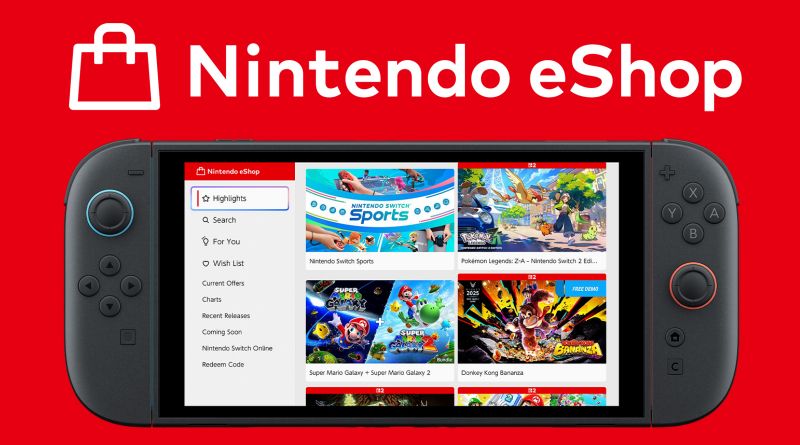
Image: perfectly-nintendo.com
Nintendo Switch demos are now a discovery tool, not an afterthought
Nintendo is actively pointing players toward free game demos across both Nintendo Switch 2 and Nintendo Switch, while Nintendo Everything has updated its broad North America and Europe list of Nintendo Switch demos as of August 31, 2026. That creates a useful tension for anyone browsing the Nintendo eShop: the catalog is large enough that “free demo” is no longer a tiny corner of the store, but finding the right trial still takes a little curation.
Nintendo’s own Canadian news post frames the current demo push plainly: players looking to add games to their library can “try before you buy” through a selection of Nintendo Switch 2 and Nintendo Switch games with demos, with Nintendo directing readers to its broader store collection of games with free demos. On the U.S. Nintendo Store’s new releases page, the available filters also show how visible demos have become inside normal shopping behavior. In the source snapshot, Nintendo lists 56 available-now new releases, with an “Edition” filter showing 16 entries marked “Demo available.”
That does not mean every demo is equally useful. A short trial can answer very different questions depending on the game. For a platformer, it may tell you whether jump arcs, checkpointing, and camera behavior feel trustworthy. For a rhythm game, it may reveal whether timing windows click with your hands. For an RPG, it may mostly test tone, interface, and patience. The updated Nintendo Switch demos landscape is best treated as a practical sampling menu rather than a bargain bin.
How to actually find free Nintendo Switch demos
Nintendo Everything’s guide gives the cleanest practical route: there are currently two ways to download Switch demos. The first is directly through the Switch eShop. Search for the game page, and if the title has a demo, the page should show “Download Demo” on the right side. The second is through Nintendo’s official website after signing in. Nintendo Everything says the North American store places “Download demo” underneath the game title when one is available, while the UK page shows similar text farther down, beneath the wish list option.
For players using Nintendo’s current storefront filters, the U.S. new releases page is also worth checking before buying. Nintendo’s own listing includes filters for price, platform, genre, availability, edition, player count, age rating, online features, ways to play, and game features. In the provided store snapshot, Nintendo separates “Nintendo Switch” and “Nintendo Switch 2” under “Play on,” and it separately tracks “Demo available” under “Edition.” That combination is useful because Switch 2 demos and original Switch demos are beginning to sit side by side in the same storefront flow.
The important practical detail is that a demo may exist in one region and not another. Nintendo Everything specifically says its list focuses on English-speaking North America and Europe, and it warns that some demos are only available in North America or only available in Europe. The site also notes that Japan has additional demos, but says many are for titles not currently sold in the West and playable only in Japanese. If a friend tells you a demo exists and you cannot find it, region is the first thing to check before assuming the listing was removed.
The newest visible demos show Nintendo using trials across very different genres
Nintendo’s U.S. new releases snapshot gives a small but telling sample of how demos are being used in 2026. Rhythm Heaven Groove, listed for July 2, 2026, is marked “Free demo” with a regular price of $39.99. Star Fox, listed for June 25, 2026, is also marked “Free demo,” with a regular price of $49.99 and a Nintendo Switch 2 product page. Yoshi and the Mysterious Book, listed for May 21, 2026, has a free demo and a regular price of $59.99 on Switch 2. Tomodachi Life: Living the Dream, listed for April 16, 2026, is marked “Free demo” with a regular price of $59.99.
That spread matters for discovery because those games ask for trust in different ways. A rhythm game demo is one of the most honest formats on the eShop: either the input feel, sound cues, and tempo language make sense to you, or they do not. A Star Fox demo can answer whether the revival’s handling and presentation suit the way you play in handheld or docked mode, though Nintendo’s listing alone does not describe the demo contents. A Yoshi demo is likely to be judged on craft feel, readability, and whether its gentler platforming has enough texture for your household. Tomodachi Life is a different case entirely, because a short sample has to sell personality, menus, pacing, and the pleasure of watching systems bump into each other.
Those are reader-facing judgments, not extra claims from Nintendo’s pages. The confirmed facts are the demo labels, dates, platforms where shown, and prices in Nintendo’s store snapshot. The useful takeaway is to match the demo to the doubt you actually have. If your question is “Will this control well?”, sample an action game or platformer immediately. If your question is “Will this loop stay interesting after five hours?”, a demo can help, but it may not settle the purchase alone.
Demos, free-to-start games, and Nintendo Classics are different offers
One easy mistake is treating every no-cost download on Switch as the same kind of thing. iTechGuides, summarizing Nintendo’s U.S. catalog, separates no-cost Switch downloads into free-to-start games and Nintendo Classics applications. According to that source, free-to-start games can be downloaded without paying for the game itself, while Nintendo Classics applications are listed at $0.00 but require an active Nintendo Switch Online membership to use their libraries. iTechGuides explicitly excludes demos from its free-games list because a demo is a limited trial of a paid game.
That distinction matters before you hand a Switch to a child, clear storage, or plan a weekend around “free games.” A free Nintendo Switch demo is designed to sample a paid product. A free-to-start game is a live product or service where the initial download costs nothing, but the business model may work differently. A Nintendo Classics app has a $0.00 download listing, but access depends on a Nintendo Switch Online subscription.
For buying decisions, demos are the cleanest test because they usually point back to one purchase question: do I want the full game? They are especially valuable for smaller games, puzzle experiments, precision platformers, and rhythm releases, where screenshots and trailers often fail to communicate the feel of a button press. If you are browsing Nintendo eShop demos, keep that intent in mind. You are not searching for the largest free library; you are building a shortlist of paid games worth considering.
A smarter way to sample Switch and Switch 2 games before spending
The best use of Nintendo Switch demos is to test friction. On the original Switch, that often means checking load behavior, text size in handheld mode, battery-friendly play sessions, and whether an indie game’s visual style remains readable on the smaller screen. On Switch 2, the question changes slightly. Nintendo’s new releases page already separates Switch 2 and Switch compatibility in filters, so players should confirm that the demo they are downloading matches the system version they intend to buy.
Start with games where feel is the product. Platformers, action games, puzzle games, rhythm titles, and run-based games benefit heavily from hands-on time. A platformer demo should tell you whether ledge spacing, acceleration, wall interactions, and enemy placement feel deliberate. A puzzle demo should reveal whether the rules are crisp or hidden behind UI noise. A rhythm demo should be tested with the same audio setup you normally use, because TV latency, Bluetooth audio habits, and handheld speakers can change your first impression.
Then use demos to challenge your assumptions about price. Nintendo’s listed demo examples range from Rhythm Heaven Groove at $39.99 to Yoshi and the Mysterious Book and Tomodachi Life: Living the Dream at $59.99, with Star Fox at $49.99 in the provided snapshot. A free trial will not tell you whether a full game has enough content for its price, unless the demo states its scope, but it can tell you whether the first contact is strong enough to justify wish-listing, waiting for reviews, or holding for a sale.
Regional lists are helpful, but the eShop page is still the final authority
Nintendo Everything’s updated list is valuable because it gathers Switch demos across North America and Europe and includes third-party demos as well as Nintendo releases. The site says thousands of games are currently available on Switch and that there are “a ton” of demos across the catalog. It also makes a key limitation clear: its focus is English-speaking availability, and demos can vary by region.
That means a discovery guide should use the big list as a map, then verify on Nintendo’s own store page before making plans. Store pages can show whether a demo is currently available, whether the game is on Switch or Switch 2, and what the regular price is. Nintendo’s new releases page, for example, labels demo availability directly on specific product entries and provides current store pricing in the same listing view.
There is also a platform-gap question that will become more important as Switch 2’s library grows. Nintendo’s news post explicitly mentions demos for Nintendo Switch 2 and Nintendo Switch systems, and its store filters show many new releases playable on Switch 2 in the captured listing. But a demo existing for one version of a game does not automatically prove that every platform version has an identical trial, identical content, or identical performance. Unless Nintendo or the publisher states those details on the product page, treat them as unconfirmed and test the exact download you are offered.
The demos worth your time are the ones that answer a real purchase question
If you are opening the Nintendo eShop with no plan, the demo section can feel endless. Give it a job. Use Nintendo Switch demos to answer one question at a time: does this control well, does it read well in handheld mode, does its difficulty feel fair, does its loop make me want one more stage, and does the tone fit the room where I usually play?
For indie and platformer fans, that approach is especially powerful. Small games often live or die by craft details that trailers flatten: coyote time on jumps, the generosity of checkpoints, how quickly a failed attempt resets, whether puzzle hints respect the player, and how cleanly the art separates hazards from decoration. A good demo makes those strengths visible within minutes. A weak demo can save you money with equal efficiency.
The current state of free Nintendo Switch demos is encouraging because Nintendo is surfacing trials on official pages while community-maintained lists such as Nintendo Everything’s make regional browsing less painful. The practical guidance is simple: browse broadly, verify region and platform on the eShop, separate demos from free-to-start downloads, and let the feel of play overrule the prettiest trailer. For Switch and Switch 2 owners, the cheapest backlog upgrade may be a more disciplined demo habit.