

A reader-friendly 2026 guide to Nintendo Switch demos and Switch 2 demos, including how to find free trials on the eShop, which new demos to start with, and how demos differ from free-to-start games.
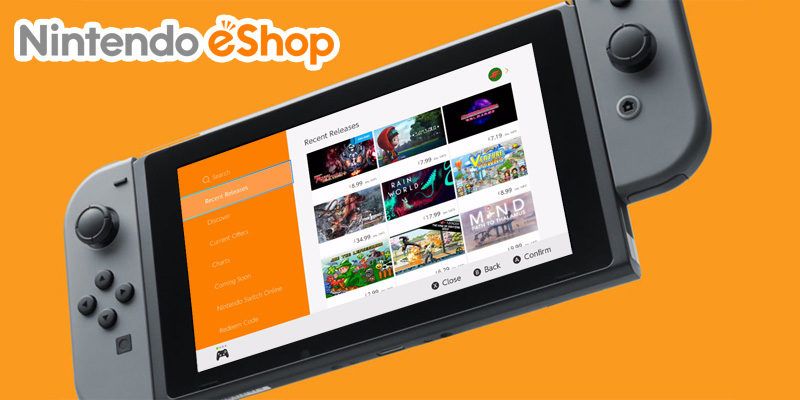
Image: perfectly-nintendo.com
The demo list is bigger than the eShop makes it feel
NintendoEverything updated its list of Nintendo Switch demos on July 25, 2026, and the useful news is also the problem: there are a lot of free trials to sort through now. The outlet says thousands of games are available on Switch and that demos exist across both Nintendo-published games and third-party releases, with its guide focused on demos available in North America and Europe for an English-speaking audience.
That creates a very 2026 shopping tension for Switch owners. The original Nintendo Switch has a deep back catalog, Nintendo Switch 2 has arrived, and Nintendo’s own US store now presents new releases across “Nintendo Switch 2 and Nintendo Switch systems.” On that Nintendo new releases page, the source material shows a “Demo available” filter with 15 results inside the current new-releases view, alongside platform filters for Nintendo Switch and Nintendo Switch 2.
In other words, the search term “Nintendo Switch demos” no longer points to a neat little shelf. It points to an expanding discovery layer split by region, platform, storefront filters, carry-over rules, and demo quality. A good demo in 2026 is less about killing ten minutes and more about reducing the chance that a $39.99, $49.99, $59.99, or $69.99 purchase misses the way you actually play.
How to find Nintendo eShop demos without wasting the evening
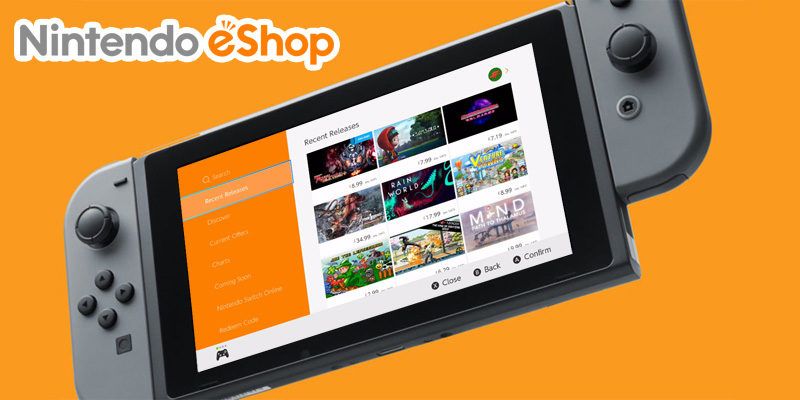
NintendoEverything lays out two current ways to download demos, and both are worth knowing because the eShop is not always the fastest way to browse. The first is the direct console route: open the Nintendo Switch eShop, search for the game, open its product page, and look on the right side for “Download Demo.” If that text appears, selecting it starts the download.
The second route is through Nintendo’s official website. NintendoEverything says players can sign in through Nintendo’s North American store, or the European equivalent, and look for “Download demo” on a game’s page. The outlet notes that on the North American site the demo text appears underneath the game title, while UK users should find the same option farther down, under the wish list option.
That small detail matters if you are browsing from a phone or laptop before committing storage space on your console. The cleanest workflow is to use NintendoEverything’s regional list as a map, confirm the demo on Nintendo’s product page, then push the download through your Nintendo account. It is slower than relying on one storefront filter, but it avoids a common eShop trap: assuming a demo does not exist because it is buried on a page you did not reach.
The 2026 demos to check first on Switch and Switch 2
Nintendo’s US new releases page in the provided source material gives a useful starting point for current demos. It lists Rhythm Heaven Groove, released July 2, 2026, with a free demo and a regular price of $39.99. It lists Star Fox, released June 25, 2026, with a free demo and a regular price of $49.99. It lists Yoshi and the Mysterious Book, released May 21, 2026, with a free demo and a regular price of $59.99. It also lists Tomodachi Life: Living the Dream, released April 16, 2026, with a free demo and a regular price of $59.99.
The platform split is important. Nintendo’s product URLs in the source identify Yoshi and the Mysterious Book and Star Fox as Switch 2 listings, while Rhythm Heaven Groove and Tomodachi Life: Living the Dream are listed as Switch products. That does not answer every compatibility question a buyer might have, but it does tell you where Nintendo is positioning those demos in its store.
For platformer fans, Yoshi and the Mysterious Book is the clearest first download because we know more about its demo. VGC reported that Nintendo released a free demo for the Switch 2 platformer, that the demo covers the first chapter, and that progress can be carried over into the full game. VGC also says the game was developed by Good-Feel, introduces a puzzle twist to the platformer, and revolves around Yoshi using the unique abilities of creatures found inside a talking encyclopedia named Mr. E. VGC’s own review gave the game 5/5 and called it “a brilliant, unique siderscroller.”
That combination, a first chapter sample plus save carry-over, is exactly the kind of demo structure that respects the player. You can test the handling, the puzzle cadence, and the creature-ability hook without treating the demo as a disposable slice separated from the real file.
Use demos to test feel, difficulty, and friction before price
The smartest way to approach the best Nintendo Switch demos is to ask one craft question per download. For a platformer like Yoshi and the Mysterious Book, the question is whether the main interaction stays playful after the opening novelty. VGC’s description points to eating, jumping on, and carrying creatures to use their abilities, so the demo is a chance to see whether those ideas are readable in motion and whether the puzzle twist feels generous or fussy.
For Rhythm Heaven Groove, Nintendo’s listing confirms the demo and $39.99 price, which is enough to make it a strong trial candidate even without leaning on review claims. Rhythm games live and die on input feel, audio clarity, and whether their timing windows click with your display setup and hands. A demo is unusually valuable here because a trailer cannot tell you whether you are fighting the beat or riding it.
For Star Fox on Switch 2, Nintendo’s listing confirms a free demo and $49.99 regular price. That makes it the kind of trial you should play before buying if you are sensitive to control schemes, camera movement, or challenge pacing. NintendoEverything’s site also had a separate Star Fox feature headline about Expert challenges in the provided page capture, which signals that at least some surrounding coverage is engaging with difficulty, but the demo itself is the source-backed way to judge whether that challenge is your kind of pressure.
Tomodachi Life: Living the Dream sits in a different category. Nintendo’s listing confirms a free demo and $59.99 price, but the appeal of a personality-driven life sim is harder to measure from screenshots. A trial can tell you whether the tone, pacing, and daily loop land for your household before you pay full retail. That is especially useful for families sharing one console, where a game’s charm has to survive being passed between players with very different patience levels.
Demos are not the same thing as free-to-start games
Search for free Switch demos 2026 and you will quickly run into another category: full games that cost nothing upfront. That can be useful, but it is not the same buying decision.
FreebieMom’s July 22, 2026 guide explicitly separates full free downloads from paid games with free demos. The site says its list focuses on games with real Nintendo product pages that can be downloaded and started without paying upfront, and it warns that many are free-to-play or free-to-start with optional purchases. Its examples include Fortnite, Rocket League, Fall Guys, Stumble Guys, Disney Speedstorm, Palia, Sky, Brawlhalla, and Pokémon Quest, each framed as an official Nintendo download rather than a ROM, survey, or code site.
That distinction should shape how you browse. A demo is a sample of a paid product. Its job is to help you decide whether to buy the full game. A free-to-start game is already a live product with its own economy, progression hooks, and optional purchases. Both belong in a “free things to try on Switch” conversation, but only demos answer the narrower question of whether a specific paid eShop listing deserves your money.
Regional availability is the hidden catch in any complete demo list
NintendoEverything’s guide is valuable because it does not pretend the demo library is identical everywhere. The outlet says it is focusing on North America and Europe because its readers are English-speaking, and it notes that Japan has additional demos, many for titles not currently sold in the West and only playable in Japanese. It also warns that some demos are available only in North America or only in Europe.
That makes regional confirmation part of the process. If you are reading a global list, treat it as a lead, then check the Nintendo page for your own account region. A demo link that exists for another territory is not a promise that the same button will appear on your eShop.
The same caution applies to save carry-over. VGC specifically reports progress carry-over for the Yoshi and the Mysterious Book demo. The provided sources do not confirm carry-over for Rhythm Heaven Groove, Star Fox, or Tomodachi Life: Living the Dream, so buyers should not assume those demos transfer progress unless Nintendo’s product page says so. The difference can change your approach: a carry-over demo is worth playing carefully, while a standalone demo is better treated as a feel test.
A practical download order before you spend
If you own a Switch 2 and want the most informative trial first, start with Yoshi and the Mysterious Book. The source-backed case is strong: Nintendo has a demo on the eShop, VGC says it includes the first chapter, progress carries over, and the full game is a $59.99 Switch 2 release on Nintendo’s store. It is the cleanest example here of a demo that can become the beginning of your save file rather than a separate sampler.
After that, prioritize by purchase risk. Try the demos attached to higher-priced games before lower-priced ones, especially if you are buying for children, sharing a family console, or choosing between several new releases. Nintendo’s listings put Tomodachi Life: Living the Dream and Yoshi at $59.99, Star Fox at $49.99, and Rhythm Heaven Groove at $39.99. Price is not a measure of quality, but it is a measure of how much a bad fit stings.
For original Switch owners, NintendoEverything’s updated North America and Europe list is the better long-tail tool than the new releases page. Use it when you are hunting beyond the front page for older indies, puzzle games, platformers, and third-party releases that may still have demos attached. The joy of the Switch library in 2026 is that small games can still ambush you with one perfect jump arc, one clever rule change, or one rhythm pattern that makes the whole room lean forward. The practical move is simple: let the free trial prove that spark before your wallet does.