
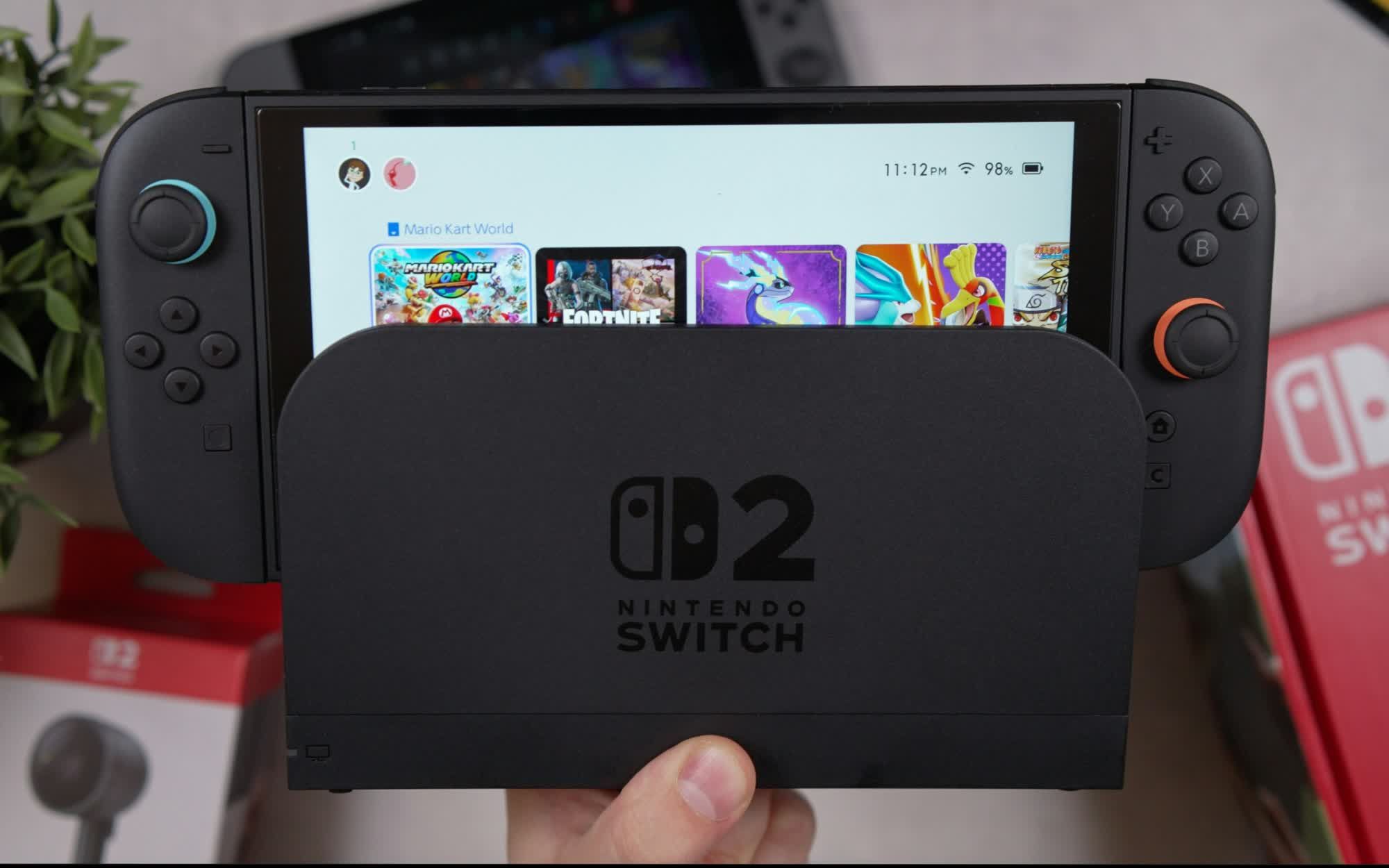

Nintendo Switch 2 has lost the fastest-selling U.S. console pace, according to Circana reporting, but the broader sales picture still points to a powerful holiday for Nintendo.

Image: techspot.com
Switch 2 has lost one U.S. sales crown, but not its momentum
Nintendo Switch 2 is no longer the fastest-selling console in the United States, according to the latest Circana data reported by Nintendo Everything and GoNintendo. That is the concrete shift at the center of the latest Nintendo Switch 2 sales conversation: a system that opened at historic speed has slipped from the top pace marker in the U.S. market.
The tension is that the headline sounds worse than the underlying read. Nintendo Everything reports that Circana’s September data showed Nintendo Switch 2 sales down 12 percent year-over-year. Circana analyst Mat Piscatella, quoted in that report and in GoNintendo’s coverage of The Game Business, said he is not seeing anything concerning in the numbers and described the system as still doing very well.
That distinction matters because the Switch 2 fastest selling console story has always been a pace story, not a simple success-or-failure verdict. A console can fall out of record-setting territory and still be operating at a level most platform holders would take immediately. The available data points describe a machine coming off an unusually high launch baseline, facing a September pricing transition, and entering a holiday period with Zelda hardware and software demand ready to test the next phase of the curve.
The comparison is awkward because Switch 2 avoided the usual launch bottleneck
Piscatella’s key explanation is that the comparisons are unusual because Switch 2 has been a rare case of a very successful first-year console without the same degree of supply constraint that often distorts launch-era hardware charts. In his words, as quoted by Nintendo Everything, the comps are weird because it is rare for such a successful first-year device not to be held back by shortages.
That is the strategic lens to use here. Supply constraints can make a console look stronger for longer because unmet demand spills into later months. If early buyers cannot find hardware at launch, the sales curve stretches out as stock arrives. Switch 2 appears to have converted much of its early demand more cleanly, which can make later year-over-year comparisons harsher without implying a collapse in interest.
The earlier U.S. milestones underline how high that opening bar was. Tech Insider, citing Circana tracking, reported that Switch 2 produced the biggest launch-month hardware performance ever tracked in the U.S. with 1.6 million units sold stateside in June 2025. The same report said Circana had separately placed the system at 5.9 million U.S. units sold across its first 12 months and called it the second fastest-selling video game system in American history at that point. The newer Circana read says the console is no longer on the fastest-selling U.S. console pace, which is a real loss of ranking, but it follows a launch phase that was already historically front-loaded.
That is the difference between a momentum break and a normalization phase. The source material supports the latter more than the former. The September decline is real. The absence of alarm from Circana’s analyst is also part of the record.
The September price shift was softened at retail
September added another variable: price. Piscatella said the price increase took effect in September, but he also argued that Nintendo handled the transition smartly. According to his comments quoted by Nintendo Everything, Nintendo dropped the Mario Kart World bundle, moved to a standalone SKU, and maintained the price point, which meant there was not a significant change on shelf.
That is a classic hardware-market tradeoff. From the consumer’s side, the visible shelf price can stay familiar even as the value equation changes. From Nintendo’s side, removing a bundled game while keeping the same shelf price protects hardware revenue and limits sticker shock. Tech Insider’s longer sales breakdown described Switch 2 as having launched at $449.99 before a $50 increase to $499.99, while the Circana commentary focuses on how the September transition felt at retail after the bundle change.
Those details should not be flattened into one simple statement. The reported price increase and the reported shelf-price continuity can both be true if the bundle mix changed. The practical result is that September Switch 2 comparisons are carrying a pricing and SKU adjustment at the same time they are being measured against a strong prior period.
For buyers, the guidance is straightforward based on the available information. If the standard standalone hardware is the target, the latest reporting does not indicate a panic scenario around demand or supply. If the value of a packed-in Mario Kart World copy mattered to you, the bundle change is meaningful because the package has changed even if the shelf number looked stable.
Nintendo enters the holidays with Zelda as the demand catalyst
The next test for Nintendo Switch 2 US sales is not September in isolation. It is whether Nintendo can turn the holiday lineup into another hardware surge. Nintendo Everything points to The Legend of Zelda: Ocarina of Time as Nintendo’s biggest game of 2026 and says it is dropping imminently. The outlet also notes that Nintendo has shipped a special 40th anniversary Switch 2 console.
Piscatella expects the Zelda hardware to create a pop. GoNintendo quotes him saying people are going to buy the Zelda Switch 2 aggressively, with an exaggerated resale-market warning that buyers may see units on eBay for $4,000. The important supported claim is not the exact resale figure as a price forecast. It is that Circana’s analyst expects the Zelda edition to drive major demand.
This is where the holiday setup looks materially different from a console that has simply run out of steam. A platform losing a speed record before the holidays is one thing. A platform doing so while heading into a major Zelda release and a commemorative hardware edition is another. Nintendo has a credible lever to pull, and it is a lever tied to one of its most reliable system-selling brands.
There are still unanswered questions. The provided source material does not give exact U.S. shipment quantities for the Zelda console, does not confirm how long the special edition will remain available, and does not provide sell-through figures for the hardware variant. Anyone chasing that model should treat it as the riskier purchase, use official retail channels where possible, and assume collector demand will be higher than for the standard SKU.
Global numbers keep the U.S. slowdown in perspective
The U.S. pace change also sits inside a broader global hardware story that remains strong. Tech Insider, citing Nintendo’s Q1 FY2027 financial results published August 6, 2026, reported that Switch 2 had reached 23.68 million units shipped worldwide as of June 30, 2026, alongside 58.17 million units of cumulative software sales. That worldwide hardware total already exceeds the GameCube’s lifetime figure of 21.74 million units, according to the same report.
Earlier in the fiscal cycle, Shattered.io cited Nintendo investor relations data showing 19.86 million Switch 2 units sold worldwide as of March 31, 2026, with 48.71 million Switch 2 games moved over the same period. That earlier figure helps show the scale of the platform before the June quarter added more volume. The later 23.68 million figure, if taken from Nintendo’s reported shipment base as Tech Insider states, suggests the console added several million units after the fiscal-year close.
The U.K. snapshot in the source material also points away from a uniform slowdown. Nintendo Everything, citing The Game Business, reports that U.K. Switch 2 sales remain strong, with September unit sales up 17 percent year-over-year and October sales up 2.2 percent. That does not erase the U.S. pace loss, but it makes clear that the latest data is regional rather than a universal downturn.
For Nintendo hardware sales 2026, the useful read is mixed in the precise way mature platform transitions often are. The U.S. record chase has cooled. The worldwide installed base is already large. Software attachment is substantial. Other regions are still showing positive year-over-year movement. That combination gives Nintendo room to manage the holiday with pricing, bundles, and limited-edition hardware rather than relying only on the launch rush.
The strategy question is whether Nintendo can turn a record launch into a long platform cycle
The most important signal is that Switch 2 is moving from launch scarcity logic into platform management. In the first year, the argument was simple: sell as many units as possible, satisfy pent-up demand from Switch owners, and prove that a successor hybrid could command a higher price. The reported U.S. slowdown changes the question. Nintendo now has to sustain demand through software cadence, hardware variants, and perceived value.
That is why the bundle decision is worth watching. Dropping Mario Kart World from the main retail proposition while keeping the shelf price stable protects margins, but it also raises the burden on the software lineup to make the purchase feel urgent. Zelda can do that for the holidays. The harder question is what follows once the special-edition rush passes.
The sources do not support a doom reading. Circana’s analyst explicitly says he sees nothing concerning in the Switch 2 numbers. At the same time, the sources do support a more disciplined reading than the early victory-lap narrative. Losing the fastest-selling U.S. console pace means the launch trajectory has bent downward relative to the record it was chasing. That matters for expectations, even if it does not imply weakness.
For readers deciding whether to buy this holiday, the practical answer depends on the target. Standard hardware looks like a safer wait-and-choose purchase based on the lack of reported supply panic. The Zelda 40th anniversary console is the one to treat as time-sensitive because analyst commentary and collector dynamics point to heavy demand. For Nintendo, the holiday is less about proving Switch 2 can sell. The already reported shipment and software numbers do that. The next challenge is proving that its post-launch economy can keep converting interest after the record-setting phase fades.