

A data‑driven look at Japan’s 2025 top‑selling games, how titles like Mario Kart World and Monster Hunter Wilds define the emerging Nintendo Switch 2 ecosystem, and what it all means for third‑party launch strategies in 2026.
Nintendo did not just launch a new piece of hardware in 2025. In Japan, Switch 2 arrived with a software lineup that effectively reset the console market and rewrote the early‑generation playbook.
Famitsu’s 2025 physical sales charts show that 9 of Japan’s top 10 best‑selling games were on Nintendo platforms, with a rapidly growing share on Switch 2 specifically. For publishers plotting 2026 releases, those numbers are not just trivia. They outline what is already becoming the defining software ecosystem of the next few years.
The Numbers: How Dominant Was Switch 2 In 2025?
On the hardware side, Switch 2 sold roughly 3.78 million units in Japan in 2025, making it the fastest selling console in the country’s history. The original Switch added another 1.5 million or so. That combined base dwarfs PlayStation 5, which moved under 900,000 units.
Software tells the same story. Looking at individual platform SKUs, Japan’s top 10 physical best‑sellers in 2025 were:
- Mario Kart World (Switch 2) – about 2.67 million
- Pokémon Legends Z‑A (Switch) – about 1.53 million
- Pokémon Legends Z‑A (Switch 2) – about 1.00 million
- Monster Hunter Wilds (PS5) – about 0.84 million
- Super Mario Party Jamboree (Switch)
- Donkey Kong Bananza (Switch 2)
- Kirby Air Riders (Switch 2)
- Minecraft (Switch)
- Mario Kart 7 Deluxe (Switch)
- Dragon Quest I & II HD‑2D Remake (Switch)
Nine of those ten SKUs are on Nintendo hardware, and roughly half are either native Switch 2 titles or dual‑platform releases with distinct Switch 2 versions. Extended rankings suggest that about 18 of the top 20 games are on Switch or Switch 2.
So before even talking genres, the strategic baseline is clear. In Japan, if you are shipping a console game and you are not considering Switch 2, you are targeting the minority of the active market.
Mario Kart World As The Blueprint Launch System‑Seller
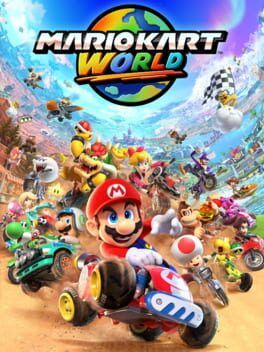
Mario Kart World is the cleanest snapshot of how Nintendo is building the early Switch 2 ecosystem.
It is a racing game that pushes scale and connectivity, with a large interconnected world that turns traditional track selection into a seamless tour, and it leans into flexible play. There is a knockout tour mode for competitive players, drop‑in local and online multiplayer for parties, and a free‑roam mode that lets players cruise together, explore, snap photos and generally treat the game as a social hub.
Crucially, this is not a risky new IP. It is the most broadly accessible franchise in Nintendo’s catalogue, released early in the lifecycle and tuned for both short handheld sessions and long couch sessions. Its 2.6‑plus million physical sales in a single year show that Switch 2’s foundation is being built on evergreen, endlessly replayable software that can anchor the platform’s audience for the entire generation.
For other publishers, Mario Kart World’s performance signals that “platform‑defining” on Switch 2 still means a few key things: four‑player or more local support, a strong online layer, and gameplay that is instantly readable to non‑core players.
RPG Gravity: Pokémon And Dragon Quest Shape The Middle Of The Chart
Right below Mario Kart World, Pokémon Legends Z‑A appears twice, once for Switch and once for Switch 2. Combined, those SKUs move well over 2.5 million units, and that is just physical sales.
Mechanically, Legends Z‑A continues the modern Pokémon push toward more open layouts and flexible questing. From an ecosystem perspective, it is more important that The Pokémon Company approached Switch 2 as an evolution of the existing install base rather than a clean break. The legacy Switch version sold more copies than the Switch 2 one in 2025, which tracks with a still‑massive previous‑gen base, but the dual launch instantly seeded Switch 2 with a top‑tier RPG.
Further down, Dragon Quest I & II HD‑2D Remake appears in the top 10 on Switch, with a separate Switch 2 version charting just outside the top 10 in extended estimates. That matters for two reasons: it shows that even classic JRPGs in a retro‑styled package can hit the mainstream when they land on Nintendo hardware, and it reinforces an expectation that major Japanese RPGs will continue to treat Nintendo’s ecosystem as their primary home.
Together, Pokémon and Dragon Quest underline that Switch 2 is not just a party machine. It is inheriting the role that DS, 3DS and Switch played as the default RPG platform in Japan.
Family And Party Games Are Still The Glue
If Mario Kart World is the tentpole and Pokémon is the long‑tail gravity well, Nintendo’s family and party catalogue continues to occupy the essential glue layer that keeps engagement high between big launches.
Super Mario Party Jamboree on the original Switch is a top‑five seller, despite arriving late in the hardware cycle. Its success shows that local multiplayer mini‑game collections still have enormous pull in Japan, especially on a platform that can be split into instant two‑player sessions with a pair of Joy‑Con.
Kirby Air Riders and Donkey Kong Bananza, both for Switch 2, extend that trend into the new generation. Neither relies on cutting‑edge tech as a selling point. Instead, they focus on simple inputs, bright visuals and easily understood cooperative and competitive modes. In practice, they function as “secondary system‑sellers” that households buy soon after the main console purchase once Mario Kart World is already in the library.
For third parties, the message is straightforward. On Switch 2, family‑friendly and couch‑multiplayer titles are not niche. They sit comfortably in the country’s top ten, and they do so while competing with Pokémon and Mario.
Multiplayer First: From Local Co‑op To Always‑On Social Play
Looking across 2025’s top sellers, one pattern jumps out quickly. Almost every top‑tier Switch or Switch 2 title has a strong multiplayer hook.
Mario Kart World is built around local and online races. Super Mario Party Jamboree is entirely focused on group play. Kirby Air Riders mixes competitive and cooperative racing. Minecraft on Switch continues to chart because it offers both solitary building and shared worlds. Even Pokémon’s trading, raiding and online battling help extend its lifecycle far beyond a typical single‑player RPG.
This does not mean single‑player experiences are unwelcome. It does mean that Switch 2’s most visible games treat multiplayer as the default, not an extra mode. For developers targeting 2026 and beyond, “does this work well in a living room with three other people watching or holding controllers” is a practical design question that matters as much as resolution or frame rate.
Monster Hunter Wilds: The One Non‑Nintendo Outlier
Amid all this, Monster Hunter Wilds on PlayStation 5 stands out as the lone non‑Nintendo entry in Japan’s 2025 top 10. Selling more than 800,000 physical copies on a smaller hardware base, it proves that a strong enough brand with the right local hooks can still thrive off Nintendo platforms.
Wilds also highlights something important about the Switch 2 ecosystem. The game leans heavily on high‑end visuals and online co‑op, which suits Sony’s hardware. Yet Monster Hunter as a series has a long history on Nintendo handhelds and hybrids. Its success on PS5 does not preclude a future Switch 2 version, and given the early adoption curve of Nintendo’s new system, publishers will have to think carefully about whether a high‑end version on another console is enough on its own in Japan.
Capcom’s future platform decisions will be watched closely, because the series sits at the intersection of everything that sells on Switch 2: co‑op hunting loops, portable‑friendly structure and strong social play.
Genre Mix: What Types Of Games Actually Win On Switch 2?
Taken together, 2025’s charts sketch out a clear hierarchy of genres for Nintendo’s new ecosystem.
Family and party titles occupy several of the highest positions, led by Mario Kart World, Super Mario Party Jamboree, Kirby Air Riders and Donkey Kong Bananza. These games are often mechanically simple, but their replayability and social focus let them continue selling far beyond launch windows.
RPGs, from open‑structure Pokémon to nostalgic but modernised Dragon Quest remakes, provide the medium to long‑term engagement backbone. Players spend dozens of hours in these games, and their physical sales remain strong despite a market that increasingly shifts to digital.
Multiplayer sandboxes and creative experiences, exemplified by Minecraft, fill in the gaps by offering effectively infinite playtime for younger audiences. Their presence in the top 10 a decade into their lifecycle shows how important “platform‑agnostic” megahits are when they are well supported on Nintendo hardware.
Absent are big cinematic action adventures or heavily online service shooters at scale. Those genres exist on Switch and Switch 2, but they are not what currently sit on top of the charts in Japan.
What This Means For Third‑Party Strategy In 2026
For publishers and developers planning 2026 projects, Japan’s 2025 data is less a curiosity and more a roadmap.
First, Switch 2 has already crossed the line from “new hardware risk” to “default target.” With millions of units sold in less than a year and software attach rates that immediately pushed a launch year Mario Kart to the top of the charts, ignoring the system for Japanese‑focused console projects is increasingly hard to justify.
Second, genre fit matters. Games with strong local multiplayer, cooperative loops, or family readability are structurally aligned with what is working on Switch 2. That does not mean every game needs to become a party title, but adding robust co‑op modes, simplified onboarding and shorter session structures will almost always be a better investment on Switch 2 than pushing for purely technical spectacle.
Third, cross‑generation and cross‑platform planning needs to treat Switch 1 and Switch 2 as a single ecosystem in the short term. Pokémon Legends Z‑A’s split performance shows that the original Switch still has a larger active base, but Switch 2 is where growth is happening. Launching across both platforms in 2026, even if the Switch 2 version offers only moderate visual or performance upgrades, will capture both sides of that audience.
Finally, developers looking beyond Japan should remember that domestic performance is often a leading indicator for Nintendo hardware worldwide. Historically, series that overperform on Nintendo platforms in Japan, such as Monster Hunter or Momotaro Dentetsu, tend to seed broader support and localisations later.
Switch 2’s 2025 lineup does not just tell a success story for one company. It signals that, for at least the next few years, any console strategy that ignores Nintendo’s hybrid ecosystem will be leaving a large and growing slice of the Japanese market on the table.