
A reported guide to the current Nintendo Switch 2 GameShare games list, how local and GameChat sharing differ, and what households should know before buying multiplayer games.
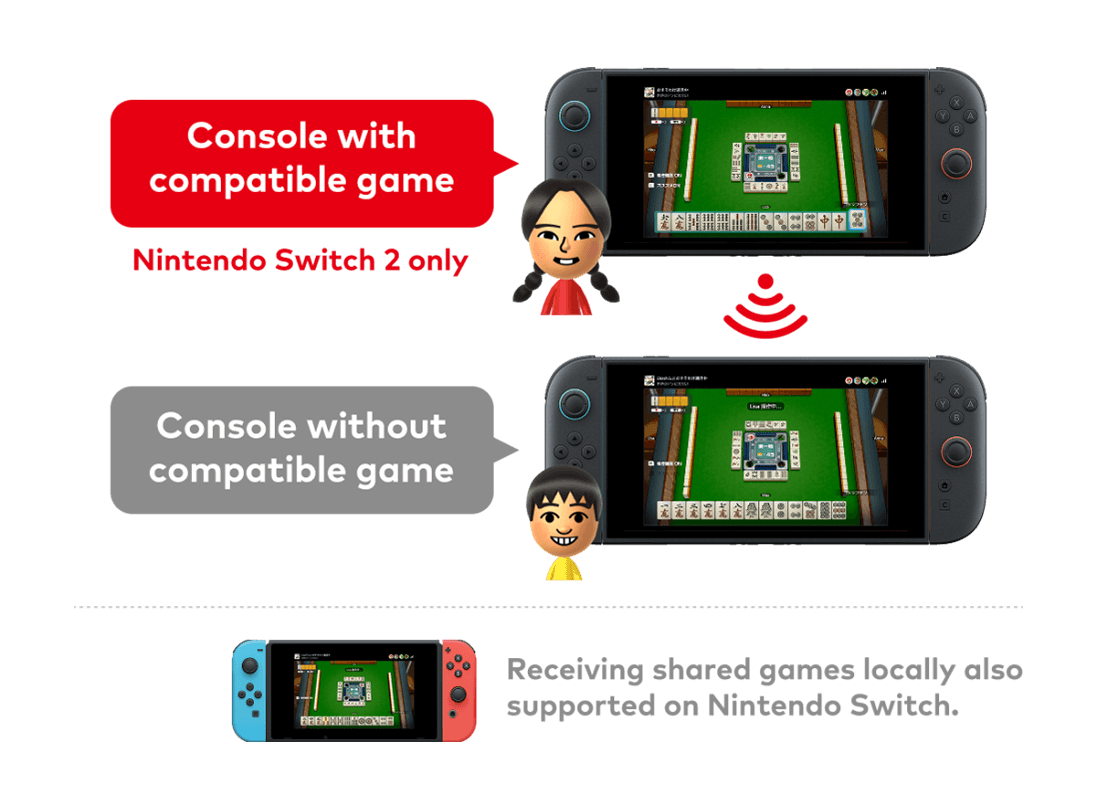
Image: nintendo.com
Nintendo Switch 2 GameShare has a real list now, but it is still selective
The most important detail for families and shared-screen households is also the easiest to miss: GameShare on Nintendo Switch 2 is not a universal system-wide pass for every multiplayer game. Nintendo Everything’s current Switch 2 GameShare list, published August 28, 2026, names 15 supported games in the source excerpt provided, with different sharing rules depending on the title. Some support local users and users in a GameChat session, some are local-only, and one listed title supports users in a GameChat session without local sharing in the excerpt.
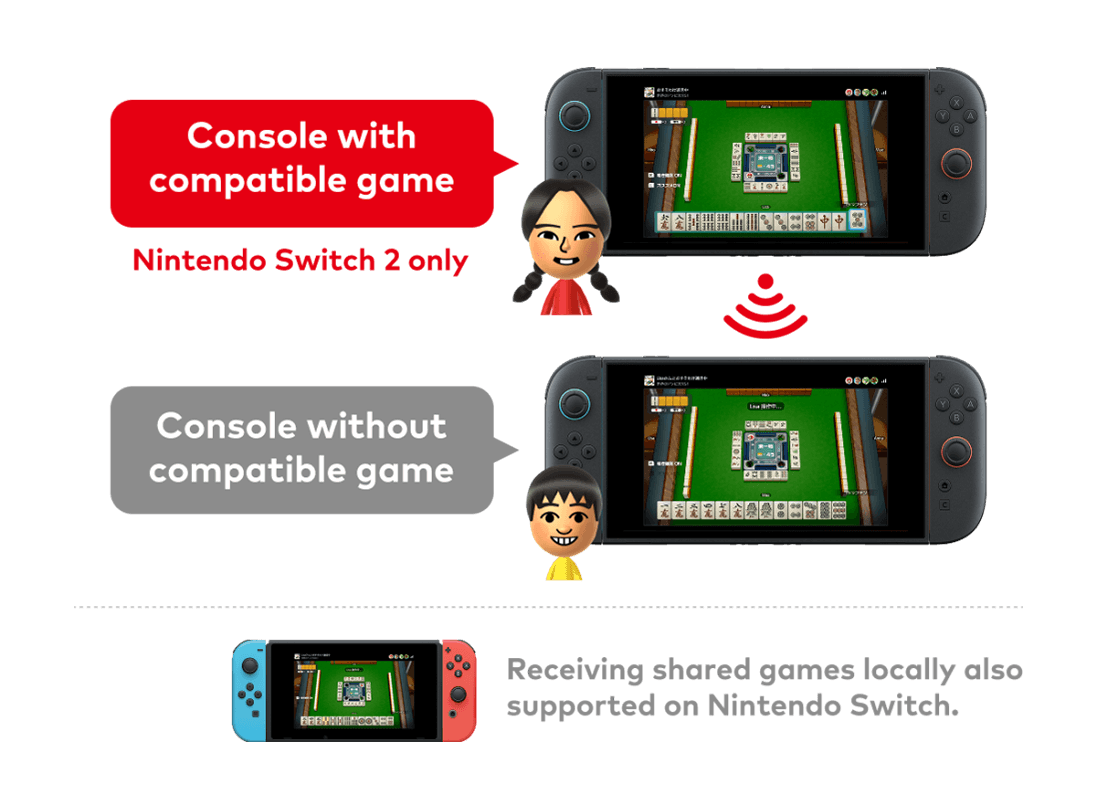
That distinction matters because GameShare is being framed around a generous promise: one person owns the game, others can join without owning their own copy. Nintendo Everything describes the feature as new for Nintendo Switch 2 and says select titles allow play with others who do not own the game. The same report says a Switch 2 can link with up to three other systems at a time, and that GameShare can work locally with original Nintendo Switch systems, while online GameShare is supported with other Nintendo Switch 2 systems.
The tension is in the word “select.” A household looking at the Switch 2 multiplayer sharing pitch should not assume that every party game, sports game, platformer, racer, or co-op release participates. The practical buyer’s question is narrower: does this exact game support GameShare, and does it support the kind of session you actually use at home?
The current Switch 2 GameShare list by sharing type
Based on Nintendo Everything’s current list in the provided source material, the Nintendo Switch 2 GameShare games that support both local users and users in a GameChat session are 4PGP, Bang Bang Bandits, Big Brain Academy: Brain vs. Brain, Captain Toad: Treasure Tracker, Card & Casino, Cast n Chill, Chillin’ by the Fire, Chippy&Noppo, Clubhouse Games: 51 Worldwide Classics, Donkey Kong Bananza, EA Sports FC 26, and Fast Fusion.
The local-only entries in the same Nintendo Everything excerpt are Brotato and Donkey Kong Country Returns HD. That means they are listed as supporting local GameShare users, but the provided list does not place them in the GameChat-supported group. For a home with multiple Switch systems in the same room, those two still matter. For separated players hoping to connect through GameChat, the source list does not support treating them the same way as Donkey Kong Bananza or Clubhouse Games.
Exit Lab: 15 Rooms is the odd one in the current excerpt because Nintendo Everything lists it as supporting users in a GameChat session. The excerpt does not list local users for that game. That makes it a useful reminder that “GameShare supported” is not a single behavior across the whole library.
There is also a source caveat worth preserving. The Nintendo Everything excerpt includes the line, “You’re still missing Donkey Kong Country Returns HD entirely,” directly above the list, while the list itself includes Donkey Kong Country Returns HD as a local-users title. The safest reading is that the article text available here contains an update or editorial remnant around a corrected listing. For readers, the actionable fact is that Donkey Kong Country Returns HD appears in the provided Nintendo Everything list as local-only GameShare support.
How GameShare works, according to current public descriptions
Nintendo Everything says only Nintendo Switch 2 systems can share games, while original Nintendo Switch units can receive them locally. Nintendo Fandom’s GameShare page describes the same basic host-and-receiver relationship: a Nintendo Switch 2 is required to host, but locally any Nintendo Switch can be used to receive a game. Fandom also says GameShare can be used with GameChat and that the shared game is streamed to the other consoles, with each console displaying the player’s own screen as if they owned the game.
That is the key household-friendly part of the feature. A parent with the Switch 2 copy, a sibling on an older Switch, and another player on a second unit may be able to play a supported title together without buying the same game several times, as long as the title supports the session type they want and the Switch 2 is the host. Nintendo Everything says up to three other systems can be linked at a time.
Online sharing is narrower. Nintendo Everything states that GameShare supports online play with other Nintendo Switch 2 systems, and Fandom says GameShare can be used through GameChat to share a game online, while also noting that not all GameShare games support this. That aligns with the current list’s split between local users and GameChat users. The feature is broad enough to reshape multiplayer buying decisions, but the supported-games table still does the real work.
GameShare fills the gap cartridges never solved for simultaneous play
For families used to passing cartridges around, GameShare is a different answer to a familiar problem. iTechGuides explains that a compatible physical Nintendo Switch game card can be moved between Switch, Switch Lite, OLED Model, and Switch 2 consoles, but the card must be inserted in the console that is playing the game. It also notes that one card does not normally provide simultaneous access on two consoles, and that moving the cartridge does not move save data because saves are stored on the console.
That old arrangement works when players take turns. It is clumsy when two or more people want to play together at the same time, especially in households that already have multiple systems. GameShare addresses that specific multiplayer pain point for supported games by letting one Switch 2 share access outward.
There is a second wrinkle around digital ownership. GameStop’s Switch 2 console page describes GameShare as letting users share digital games with up to three other consoles for multiplayer without each player needing a copy. That retailer description matches the broad consumer pitch, but it is less precise than Nintendo Everything’s title-by-title list. The supported list shows that players should treat GameShare as a game feature, not as a blanket replacement for buying multiple copies.
Switch 1 games, Switch 2 exclusives, and the update question
Nintendo Everything separates GameShare support into two practical buckets. According to its report, Nintendo Switch 1 titles on the list need an update for the feature to work, while select games exclusive to Nintendo Switch 2 should come with the functionality already available. That is a crucial difference for anyone opening an older library and expecting GameShare to appear immediately.
The official Nintendo Switch 2 games page supplied in the source material also gives broader platform context. Nintendo lists dedicated Switch 2 releases such as Donkey Kong Bananza, dated July 17, 2025 in that regional listing, and it explains that owners of certain original Nintendo Switch games can upgrade to Nintendo Switch 2 Edition versions by purchasing an upgrade pack. The source material does not say that every Switch 2 Edition upgrade adds GameShare, so readers should avoid making that leap. Upgrade paths and GameShare support are related platform systems, but the provided sources do not present them as interchangeable.
For the current Nintendo GameShare supported games list, this means an older title appearing in the list is only part of the answer. The other part is whether the necessary update is installed. If a household is planning a multiplayer night around Captain Toad: Treasure Tracker, Big Brain Academy: Brain vs. Brain, Clubhouse Games: 51 Worldwide Classics, Brotato, or Donkey Kong Country Returns HD, the source-backed advice is simple: check for the relevant update before everyone is waiting with controllers in hand.
The early list favors flexible household play, with some sharper surprises
The most interesting shape of the current Switch 2 GameShare list is its range. Nintendo Everything’s excerpt includes Nintendo-published family staples, sports and racing entries, smaller social curiosities, and compact titles that read like natural fits for quick local sessions. For a writer who spends a lot of time with platformers and smaller games, the craft implication is exciting but still cautious: GameShare could give lower-friction multiplayer games a better chance to travel through a household, because the first purchase can invite other players in instead of asking everyone to commit upfront.
That is especially relevant for games where the fun depends on immediacy. A puzzle room, a casino-table collection, a brain-test session, a compact action game, or a platforming challenge often lives or dies on whether another player can join before the mood passes. When GameShare support includes local users, the feature lowers that barrier in the same room. When it includes GameChat, it can stretch that invite beyond the couch, but only on the titles listed for that mode.
The list also shows the limitation clearly. Brotato and Donkey Kong Country Returns HD are useful inclusions for local households, but they are not listed in the excerpt as GameChat-supported. Exit Lab: 15 Rooms is listed the other way around. The feature’s value is therefore highly specific. For households, the best purchase is not simply “a GameShare game.” It is the GameShare game whose supported mode matches the people you actually play with.
How to use this list before buying a multiplayer game
If you are buying with Switch 2 multiplayer sharing in mind, start with the exact supported mode. Local GameShare is the part that helps a household with one Switch 2 host and nearby Switch systems, including original Switch hardware acting as receivers. GameChat sharing is the part to look for when players are on other Switch 2 systems online. The current source material supports both uses for many games, but not all of them.
The strongest current all-purpose candidates in the provided Nintendo Everything list are the games marked for both local users and GameChat users: 4PGP, Bang Bang Bandits, Big Brain Academy: Brain vs. Brain, Captain Toad: Treasure Tracker, Card & Casino, Cast n Chill, Chillin’ by the Fire, Chippy&Noppo, Clubhouse Games: 51 Worldwide Classics, Donkey Kong Bananza, EA Sports FC 26, and Fast Fusion. If your play is strictly in one room, Brotato and Donkey Kong Country Returns HD remain relevant local-only entries. If your use case is GameChat, Exit Lab: 15 Rooms appears in the provided list for that session type.
The unanswered questions are the ones Nintendo and publishers will have to keep clarifying title by title: which older games will be updated, which Switch 2 games will include GameShare at launch, and whether future store pages will make the local and GameChat split obvious enough for casual buyers. Until then, the safest habit is to check the latest supported-games listing and the game’s own software information before purchase. GameShare can save a household from buying duplicate copies, but only when the game, host system, receiving systems, and session type all line up.