
A source-grounded guide to the confirmed Nintendo Switch 2 GameShare supported games, how local and online sharing works, and what households should know before buying extra copies.
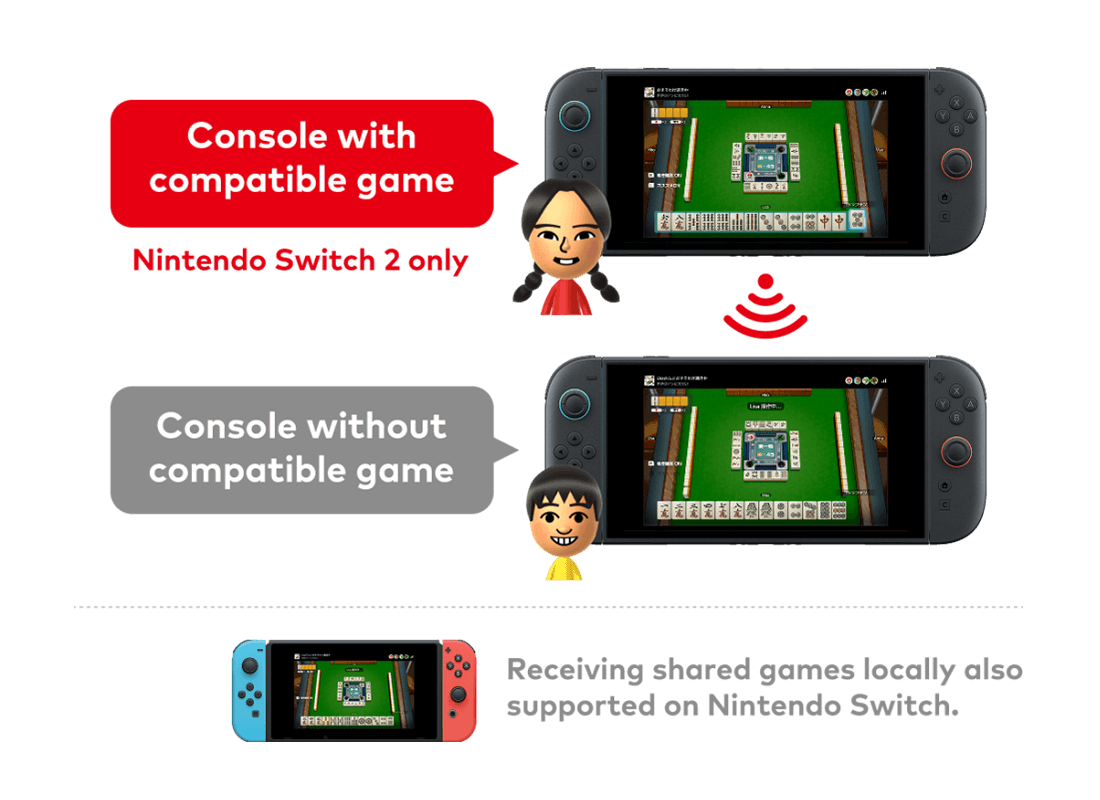
Image: nintendo.com
Nintendo Switch 2 GameShare already has a real supported-games list, but the fine print is the story
Nintendo Switch 2 GameShare is now attached to a growing set of confirmed games, with Nintendo Everything publishing a running list of supported titles on October 5, 2026. The headline feature is simple to understand and easy to underestimate: in select games, one owner can let other players join even if those players do not own a copy.
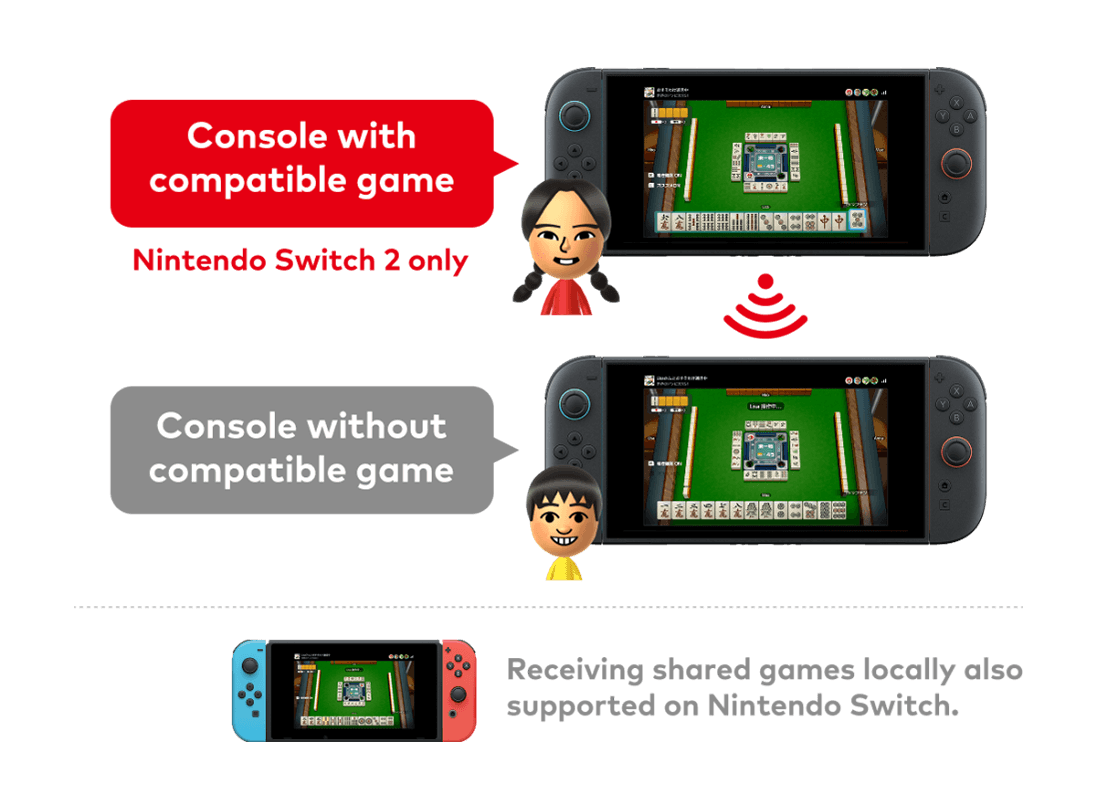
The tension is in the limits. According to Nintendo Everything, only Nintendo Switch 2 systems can share games. Original Nintendo Switch systems can receive a shared game locally, but they cannot act as the host. The outlet also reports that GameShare can connect with up to three other systems at a time, and that online GameShare is supported with other Nintendo Switch 2 systems.
That makes GameShare a practical feature for households, dorm rooms, siblings, partners, and friend groups, especially for games built around short sessions and approachable local multiplayer. It also means buyers should be careful before treating it like a universal family-license system. Nintendo’s own Switch 2 software pages still separate the platform’s game library into Switch 2 exclusives, Switch 2 Edition games, Nintendo Classics, and compatible original Switch games. GameShare support has to be checked game by game.
The confirmed Switch 2 GameShare games named in the current source list
Nintendo Everything’s running list, as provided in the source material for this report, names the following Nintendo GameShare supported games: 4PGP, Bang Bang Bandits, Big Brain Academy: Brain vs. Brain, Brotato, Captain Toad: Treasure Tracker, Card & Casino, Cast n Chill, Chillin’ by the Fire, Chippy&Noppo, Chit Chat Party, and Clubhouse Games: 51 Worldwide Classics.
The outlet’s entry also begins listing “Donkey Kong Ba...” before the supplied source excerpt cuts off. Because the title is incomplete in the material available here, GameLoop is not treating that partial line as a confirmed entry in this article. The same source text includes an apparent note reading “You’re still missing Donkey Kong Country Returns HD entirely,” but it is not presented as a formal listing line, so it should not be read as confirmation of GameShare support from the excerpt alone.
Nintendo Everything says its post will be updated over time, which matters because this is the kind of feature that can expand through software updates, store-page changes, or publisher-side patches. GameFAQs also surfaced the Nintendo Everything article in its news feed, describing it as a list of all Switch 2 games that support GameShare, but the underlying reporting still comes from Nintendo Everything.
The safest way to read the current Switch 2 GameShare games list is as a living compatibility guide rather than a settled launch-era rulebook. If you are buying mainly for GameShare, confirm the exact title on Nintendo’s product page or in the game’s own menu before assuming it will work.
How GameShare works locally, and why small multiplayer games benefit first
Nintendo Everything describes GameShare as a new Nintendo Switch 2 feature that lets select games be played with others who do not own a copy. It also says local sharing can reach players using the original Nintendo Switch, though those older systems can only receive a shared session.
GamingDeputy’s practical guide says the local process starts inside a compatible game on the owner’s Switch 2, where the host selects the GameShare option from the game menu. On the receiving Switch console, the other player uses the GameShare icon on the home menu, selects “Local User,” waits for available local requests, then confirms the session.
For local multiplayer, the most interesting early confirmed names are not the largest brands. They are the session-friendly games that already make sense around a coffee table: Big Brain Academy: Brain vs. Brain, Clubhouse Games: 51 Worldwide Classics, Chit Chat Party, Card & Casino, Brotato, and Captain Toad: Treasure Tracker. These are games where the barrier to entry matters. If a friend only needs a console instead of a console plus a purchased copy, it becomes easier to test a party game, rotate players, or pull in someone who would never buy the game on their own.
That is especially valuable for smaller and more social releases. A game like Chillin’ by the Fire or Cast n Chill, based on the titles alone and the way Nintendo Everything categorizes their GameShare support, appears positioned around relaxed shared play rather than a traditional premium single-player purchase. GameShare gives those kinds of games a cleaner route into a room full of people. One purchase can become the invitation.
Online GameShare is tied to GameChat, and that adds requirements
Local sharing is only half of the system. Nintendo Everything reports that GameShare also supports online play with other Nintendo Switch 2 systems. The source list marks several games as supporting “local users / users in a GameChat session,” including 4PGP, Bang Bang Bandits, Big Brain Academy: Brain vs. Brain, Captain Toad: Treasure Tracker, Card & Casino, Cast n Chill, Chillin’ by the Fire, Chippy&Noppo, Chit Chat Party, and Clubhouse Games: 51 Worldwide Classics.
Nintendo’s U.S. Switch 2 features page explains the broader GameChat setup. Players can start a chat with the C Button, share a game screen while chatting, and use a Nintendo Switch 2 camera or compatible USB-C camera for video features. Nintendo also states that online features including GameChat require internet access, a Nintendo Switch Online membership, and a Nintendo Account. The camera is required for video features, not for every chat function described on the page.
GamingDeputy similarly says online GameShare works through GameChat and requires a Switch Online subscription. That makes the online version of GameShare less like handing a Joy-Con to someone on the couch and more like coordinating a supported session inside Nintendo’s communication layer.
For households, the split matters. A family playing across rooms on the same local network may care most about whether an older Switch can receive the session. A long-distance friend group needs to think about Switch 2 ownership, Nintendo Switch Online, and whether the specific game supports users in a GameChat session. GameShare reduces the number of software copies required in supported cases, but it does not remove every account, hardware, or subscription requirement.
Original Switch games need updates, so compatibility is not automatic
Nintendo Everything draws an important line between older software and Switch 2 software. The outlet reports that Nintendo Switch 1 titles on the GameShare list need an update for the feature to work, while select games exclusive to Nintendo Switch 2 should include the functionality already available.
That distinction should shape buying decisions. Big Brain Academy: Brain vs. Brain, Captain Toad: Treasure Tracker, and Clubhouse Games: 51 Worldwide Classics are originally Switch-era titles. Their presence on a GameShare list does not mean every unpatched older game suddenly behaves the same way on Switch 2. It means those named titles have been identified as supported, with updates required where applicable.
Nintendo’s Malaysian Switch 2 games page gives useful platform context without making a GameShare promise for every listing. It separates Switch 2 games from Nintendo Switch 2 Edition titles and notes that if players already own the original Nintendo Switch game, they can upgrade to the Nintendo Switch 2 Edition by purchasing an upgrade pack. That upgrade path is separate from GameShare support. A Switch 2 Edition can exist without the sources here confirming GameShare, and a compatible older game can need an update before the feature works.
The practical advice is straightforward: do not buy a second copy until you have checked whether the game supports GameShare, whether your receiving system is a Switch 2 or original Switch, and whether the game needs an update. For digital households that already juggle profiles and ownership, GameShare may solve some friction in supported multiplayer sessions, but it is not a blanket replacement for software ownership.
The household purchase question: when one copy may be enough
The clearest consumer benefit is around shared-session games. If one person in a household owns a supported game and can host up to three other systems, as Nintendo Everything reports, then a family may be able to run a four-system local session without buying four copies. That is a meaningful change for games designed around quick rounds, cooperative puzzles, quizzes, and party-table pacing.
The confirmed list leans into that use case. Big Brain Academy: Brain vs. Brain and Clubhouse Games: 51 Worldwide Classics are easy examples because their appeal is immediately social. Chit Chat Party and Card & Casino sound built for groups. Brotato is a tighter action game, but it is also the kind of compact indie hit where low-friction access can turn curiosity into a session.
This is where Switch 2 multiplayer sharing could influence buying habits. A household may buy one copy of a GameShare-supported title with more confidence if the main goal is local play. A friend group may use one owner’s copy as a trial-like social entry point, then decide later who wants their own copy for solo play, hosting, or convenience.
There are still reasons to buy additional copies. GameShare is tied to supported titles and supported modes. The host needs the game. Original Switch consoles can only receive locally, according to Nintendo Everything. Online sharing is limited to Switch 2 systems through GameChat, based on the available reporting. If two people want independent access at different times, or if everyone wants to host, a single copy will not cover every scenario.
What to check before you plan a GameShare night
Nintendo has positioned Switch 2 as a hybrid system with a larger 1080p screen, TV output up to 4K in supported games, HDR, VRR, and frame rates up to 120 fps in compatible games, according to its U.S. features page. Those hardware upgrades help the system feel like a cleaner social machine, especially in tabletop mode, where Nintendo highlights the larger adjustable stand as useful for playing together.
GameShare sits naturally inside that design, but the best reader guidance is still verification. Check whether your game is on a current Nintendo GameShare supported games list. Check whether the support is local only or also listed for users in a GameChat session. Make sure older Switch titles are updated. If you are playing online, confirm that the participants are on Switch 2 systems and have the online requirements Nintendo lists for GameChat.
For now, the confirmed Switch 2 GameShare games in the provided source material point toward a feature built for low-friction play rather than total library sharing. That is good news for the kinds of clever, compact multiplayer games that thrive when someone says, “try this for one round,” and everyone can join before the mood passes.
The open question is how quickly publishers embrace it. If support keeps expanding, GameShare could become one of Switch 2’s most practical quality-of-life features for families and friend groups. If it remains selective, it will be a useful bonus attached to specific games rather than a reason to assume one copy will cover the whole household.