
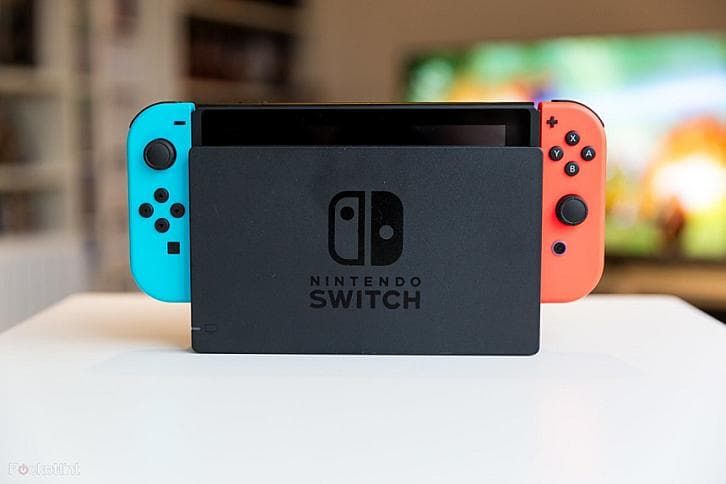

Nintendo says it has no plans to abandon physical media, but Switch 2 buyers still need to understand the split between full cartridges and game-key cards.
Image: gamescreed.com
Nintendo is reassuring fans, but the cartridge question is not settled
Nintendo has publicly said it has “no plans to ditch physical” games, a direct reassurance at a moment when players are watching the console business move further toward digital distribution. The comment came from Bill van Zyll, vice president and general manager for Nintendo in Latin America, in an interview cited by Nintendo Everything and My Nintendo News.
Van Zyll framed Nintendo’s position as consumer-led rather than ideological. “Historically, we’ve been very agnostic,” he said, according to the quoted interview. “We go off what the consumer prefers, and take that into account very heavily. We also have a platform that was just launched. We’re barely just over a year into NS2. It’s got both digital and physical, that capability. There’s no plans to ditch physical. We know how much the fans like it as well, so our position has been to be agnostic.”
That is the strongest confirmed development here: Nintendo is not saying physical media is over, and its current Switch 2 strategy still includes physical distribution. The tension is that “physical” now covers two very different products on Switch 2. A full cartridge and a game-key card both come in a box and go into the console, but they do not offer the same ownership experience for buyers, collectors, or retailers.
The industry backdrop makes Nintendo’s answer politically useful
Nintendo’s reassurance is landing because the rest of the market has made physical media feel less secure. My Nintendo News points to Sony’s publicly discussed plan to move away from discs, saying social media debate has intensified after Sony confirmed plans tied to PlayStation 6 and physical disc production. PCMag describes the broader trend more sharply, saying Sony is dropping disc support and that Xbox’s long-term physical support is also under question.
The provided sources do not line up perfectly on timing. My Nintendo News cites a PlayStation Blog link and describes Sony as ending physical disc production for new PlayStation games in January 2028, while PCMag says Sony is dropping disc support in 2027. Archyde also refers to a planned end to new physical game discs by January 2028. The safe read is that Nintendo’s comments are being interpreted against a real, highly visible competitor shift, even if secondary reports differ in how they describe the date and scope.
That contrast gives Nintendo a clean strategic lane. The company does not have to promise that every release will be a full cartridge to benefit from the message that Nintendo physical media remains part of the platform. For a family-focused retail ecosystem, a collector-heavy first-party audience, and regions where boxed games still carry practical value, the phrase “no plans to ditch physical” is as much a trust signal as it is a distribution policy.
Switch 2 physical media now has two meanings
The important caveat is the Switch 2 physical media split. Nintendo Everything notes that physical releases on Switch 2 come in two forms: full cartridges and game-key cards. PCMag, citing Nintendo’s own support explanation, says game-key cards are a “key” to downloading the full game to the system over the internet. They come in cases and use a card inserted into the Switch 2, but they do not contain the full game data in the way a traditional cartridge does.
PCMag reports that an internet connection is required to download the game files before first play. After that initial download, the card must remain inserted, but the game does not require a continuous internet connection. PCMag also notes, citing GameSpot, that these cards are not tied to a Nintendo account, which means they can be lent, used on another Switch 2 console, or resold.
That combination explains why Nintendo can truthfully maintain a physical presence while collectors remain skeptical. A game-key card preserves some retail behaviors, especially gifting, shelf presence, resale, and lending. It does not preserve the same self-contained archival value as a full cartridge. For a buyer who wants Switch 2 game cards because the full game is on the card, the box alone is no longer enough information.
Collectors are right to read the label, not the press quote
For collectors, the key phrase is not “physical release.” It is whether the release is a full cartridge or a game-key card. Nintendo Everything reports that game-key cards have not been warmly received by passionate collectors, which tracks with the practical concern: a game-key card depends on a download at least once, while a full cartridge is closer to the older expectation of plug-in-and-play preservation.
There is also evidence that the market is not rejecting game-key cards outright. Nintendo Everything reports that Switch 2 game-key card sales increased by 631 percent in the United States. That figure does not prove collectors approve of the format, and the source text does not provide the underlying baseline, time window, or title mix. It does show that the format is being bought in meaningful enough numbers to become part of the Switch 2 retail economy.
Nintendo’s own publishing behavior is part of the story. Nintendo Everything says games distributed by Nintendo have “largely” been proper physical titles. At the same time, it reports that Hyrule Warriors: Age of Calamity, Definitive Edition will be a game-key card on Nintendo Switch 2. That single example matters because it prevents a simple first-party-versus-third-party rule. Even Nintendo-associated releases can use the key-card model, so collectors need to verify each game individually.
Retailers still get shelf presence, but the value proposition changes
For retailers, Nintendo’s continued support for physical games keeps a major console platform in the boxed-games business. That matters for storefront visibility, gift buying, preorders, used sales, trade-ins, and the simple fact that Nintendo boxes have historically been powerful retail objects. Van Zyll’s comment that Nintendo considers consumer preference suggests the company is aware that boxed games still serve parts of the audience that digital storefronts do not reach as cleanly.
Game-key cards complicate that retail pitch without erasing it. A boxed game that requires a download can still sit on a shelf, be wrapped as a gift, and move through resale channels. PCMag’s report that game-key cards are not tied to a Nintendo account is especially important for used-game economics, since account-locked codes would be far less useful after the first owner.
The risk is buyer confusion. A parent, collector, or casual customer may see a Switch 2 case and assume the full game is on the card. If the first-play download is large, inconvenient, or impossible in a low-bandwidth situation, the disappointment lands at the point of use, not during the corporate interview. Nintendo’s “agnostic” stance gives the company flexibility, but retailers will need clear labeling and staff knowledge if the platform keeps mixing full cartridges with game-key cards.
Switch 2 buyers should treat physical releases as a format check
The practical guidance for Switch 2 buyers is simple: do not assume every boxed Switch 2 release works the same way. If you care about preservation, offline setup, or owning the complete game data on the card, look specifically for confirmation that the release is a full cartridge. If you mainly want a box, a transferable card, resale potential, and the ability to play after an initial download, a game-key card may be acceptable.
Nintendo’s reassurance is still significant. The company is saying, through a regional executive, that it does not plan to abandon Nintendo physical games and recognizes that fans value the format. That separates Switch 2 from the harsher all-digital trajectory described in the surrounding PlayStation and Xbox discussion.
But Switch 2 physical media is now a spectrum, not a single promise. Full Nintendo cartridges remain the premium outcome for collectors. Switch 2 game cards can also mean download keys with retail packaging. Nintendo’s current strategy preserves the physical lane, while quietly shifting some of the burden onto buyers to know which kind of physical product they are actually buying.