
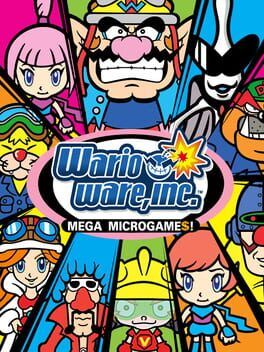
With WarioWare, Inc.: Mega Microgames! now on Nintendo Music, Nintendo’s quietly expanding app is turning into the company’s most comprehensive, official way to stream classic game soundtracks.
Nintendo Music started as a curiosity: a perk for Nintendo Switch Online members that let you stream a handful of familiar themes on your phone. With the arrival of the WarioWare, Inc.: Mega Microgames! soundtrack, it is starting to look less like a bonus and more like Nintendo’s long‑term answer to game music streaming.
The app now pulls from every era of Nintendo hardware, from 8‑bit chiptunes to full orchestral scores. WarioWare’s original Game Boy Advance chaos sliding in alongside The Legend of Zelda: Tears of the Kingdom or Splatoon 3 underlines how broad and deliberate this catalog has become.
A catalog that quietly spans Nintendo history
Browse the Nintendo Music library today and you get a fast sense of how aggressively Nintendo has been filling it out. New titles are added on a weekly cadence, and the running list of supported games reads like a tour of the company’s back catalogue.
On the classic side, the app hits the big pillars you would expect. The Super Mario series is heavily represented, from early NES entries through Super Mario World, Super Mario 64, and into the modern era with Super Mario Odyssey and Super Mario Bros. Wonder. The Legend of Zelda gets similar treatment, starting with the original Famicom outings and stretching forward through A Link to the Past, Ocarina of Time, The Wind Waker, Skyward Sword, Breath of the Wild, Tears of the Kingdom and even handheld entries like Phantom Hourglass.
The breadth goes far beyond Mario and Zelda. Metroid and Metroid Prime, Kirby from the Game Boy era up through Kirby and the Forgotten Land, and Donkey Kong Country’s standout Super Nintendo scores are all present. You can jump from the chunky bass of F‑Zero and F‑Zero X to the sleek grooves of Mario Kart 8 Deluxe, or from Animal Crossing’s laid back town themes to the driving intensity of Fire Emblem: Path of Radiance and Fire Emblem Engage.
Modern Switch hits occupy a big slice of the app as well. Splatoon and Splatoon 2 and 3, Super Mario Odyssey, Super Mario Bros. Wonder, Mario Kart 8 Deluxe, Pikmin 4, Kirby and the Forgotten Land, standalone hits like Princess Peach: Showtime, and the latest entries such as Mario & Luigi: Brothership all sit side by side. For anyone who has bought a Nintendo game in the last decade, the odds are good that its soundtrack is either already available or on the way.
Crucially, Nintendo has not ignored its handheld lineage. Game Boy and Game Boy Advance are present with Super Mario Land, Kirby’s Dream Land and now WarioWare, Inc.: Mega Microgames! itself. Nintendo DS and 3DS libraries get a nod with titles like The Legend of Zelda: Phantom Hourglass, Mario Kart 7, Ocarina of Time 3D, Fire Emblem Awakening, various Nintendogs installments and Animal Crossing: New Leaf. The result is a cross‑section of Nintendo history that goes well beyond the usual nostalgic highlights.
WarioWare arrives with all its micro‑chaos intact
That context is what makes the addition of WarioWare, Inc.: Mega Microgames! feel like a statement. The Game Boy Advance original is famous for its blitz of five‑second challenges, and its soundtrack mirrors that pace with hyperactive stingers, genre mash‑ups and abrupt tonal shifts. Until now, hearing those tracks meant tracking down older hardware, importing a soundtrack CD or relying on uploads that could vanish with a copyright strike.
In Nintendo Music, WarioWare’s soundtrack is treated with the same archival care as more traditionally celebrated scores. The track list breaks out stage themes tied to Wario and his crew, interstitial jingles, menu music and the kind of throwaway microgame cues that usually get lost in the shuffle. Because the app is built for continuous listening, these tiny pieces are sequenced in a way that lets you hear how the soundtrack flows when it is not chopped up by frantic button prompts.
Hearing Wario’s office theme roll straight into the off‑kilter vocal pieces and arcade pastiches shows how experimental the audio team was on Game Boy Advance hardware. The mix of crunchy samples, faux commercials and toybox instrumentation stands apart from Nintendo’s more traditional platformer or adventure scores, and it benefits from Nintendo’s clean, high‑quality encoding. For fans who know WarioWare mostly through memes and clips, this is the first time the full soundtrack has been made this easy to appreciate.
Deep cuts hidden in plain sight
WarioWare’s arrival also highlights what might be Nintendo Music’s best trick: mixing headline soundtracks with deep cuts that used to live only on niche CDs or scattered uploads.
Look through the catalog and the tentpole games are obvious, but what jumps out over time are the smaller or stranger selections. StreetPass Mii Plaza themes, for instance, capture that distinct 3DS‑era whimsy that never had a commercial album. Wii channels and party games contribute breezy, low‑key tracks that once played in the background of menus and family mini‑games but were never preserved in a convenient format.
You notice B sides within big franchises. Instead of just grabbing one representative Mario Kart, Nintendo Music leans into multiple entries so you can trace how the series’ musical identity changed from Mode 7 brass and SNES synths to orchestral, guitar‑driven modern mixes. Fire Emblem’s library brings in both handheld and console entries, letting you jump from the GBA‑style battle themes that defined the series’ Western breakout to the fully orchestrated scores of Awakening, Path of Radiance and Engage.
Even within single games, the app surfaces tracks that used to be afterthoughts. Short fanfares, result jingles, shop themes and map screens sit right alongside iconic main themes and battle music. These were the tracks that once filled YouTube compilations assembled by fans who combed through game files. In Nintendo Music, they show up as first‑class citizens, properly titled, and presented in a clean interface.
WarioWare, Inc.: Mega Microgames! is a perfect example because its soundtrack is almost nothing but oddities. Between mock TV commercials, stings that last only a few seconds and bizarre vocal tracks, the majority of its music would never make the cut for a traditional, retail soundtrack album. By bringing the whole set into Nintendo Music, Nintendo is effectively preserving a slice of its audio history that was at real risk of disappearing into low‑quality rips.
How Nintendo Music presents game soundtracks
Part of what makes these deep cuts work is the way Nintendo Music organizes and plays music. The app groups everything by game, presenting each title’s tracks in a dedicated page that functions like a digital soundtrack booklet. You can browse the full track list in order, shuffle everything, or jump straight to your favorites, all while the app keeps playing in the background on your phone.
Presentation is deliberately simple. Album art from the original game gives each soundtrack a clear identity while consistent metadata makes it easy to search by series or title. Once you choose a game, the player behaves like a modern streaming service, complete with standard transport controls and basic playlist functionality built around favorites and recents.
Nintendo’s weekly update cadence matters here. Rather than seasonal drops or big, sporadic batches, new games appear regularly and get highlighted within the app. That creates a sense of ongoing curation. A new WarioWare album one week, a classic Zelda handheld adventure the next, then a modern Switch release after that. The drip feed encourages listeners to check back often in the same way they might browse a video subscription service to see what has rotated in.
Because this is a mobile app tied to Nintendo Switch Online rather than a standalone subscription, there is no per‑album purchase friction. Once you are in, jumping from a GameCube soundtrack to a Game Boy deep cut or the latest Switch hit is as easy as tapping a new game icon.
Replacing CDs and surviving YouTube takedowns
For long‑time fans, the most surprising part of Nintendo Music is how quietly it has stepped into a role that used to be handled by physical CDs and fan uploads. Throughout the 90s and 2000s, official Nintendo soundtracks were scattered across limited‑run albums, often only in Japan. Owning the music meant importing discs and ripping them yourself.
Later, YouTube became the default archive. Dedicated channels uploaded full OSTs, complete with obscure variations and unused tracks. Those uploads also sat squarely in a legal gray area. Over the last few years, Nintendo has become more proactive about enforcing its rights, which has led to high‑profile removals and channels shutting down. For listeners, that meant playlists disappearing overnight and no obvious official replacement.
Nintendo Music fills that gap. It does not cover every game yet, but the direction is clear. Instead of chasing CDs or hoping that your favorite upload survives the next round of copyright strikes, you have a sanctioned, centralized source that pipes high‑quality audio straight from Nintendo.
The service has limitations. You need a Nintendo Switch Online membership and a smartphone, regional availability is still somewhat restricted and there are still plenty of missing eras and series. But the big picture is that Nintendo is finally building the kind of official, cohesive music library that fans have asked for since the Super Nintendo days.
The inclusion of something as peculiar and historically underrepresented as WarioWare, Inc.: Mega Microgames! is a signal. If that soundtrack merits a full, properly presented release in Nintendo Music, then quirky side projects, handheld one‑offs and cult favorites across the catalog are suddenly in play.
A low‑key essential for Nintendo music fans
Nintendo Music will never have the brand recognition of a new console or a tentpole release, but if you care about game soundtracks it is becoming one of the most important services the company offers. The app now covers the major tentpoles across Mario, Zelda, Kirby, Metroid, Donkey Kong, Animal Crossing, Splatoon, Fire Emblem and more, while steadily layering in handheld favorites and the kind of deep cuts that were previously scattered across the internet.
WarioWare, Inc.: Mega Microgames! joining the lineup crystallizes what the app has been doing slowly in the background. It is not just about nostalgia for a handful of famous themes. It is about treating Nintendo’s soundtracks as a living archive and making them easy to hear, legally and in high quality, long after the original cartridges and discs have gone out of print.
For now, that archive lives on a modest mobile app icon, tucked alongside your other streaming services. Given how much it has grown in a short time and how carefully it is being curated, it may not stay modest for long.