
Nintendo says more than 800,000 people visited the Nintendo Museum by April 2026, a milestone that fits its wider strategy of keeping Nintendo history playable, physical, and commercially active.
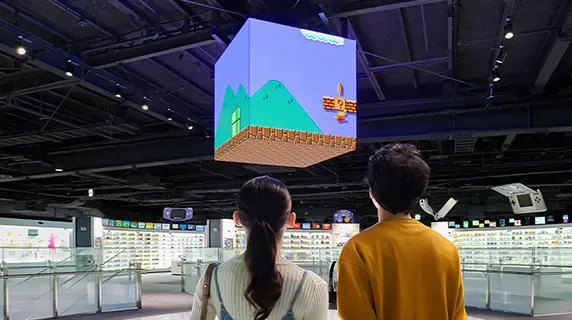
Image: museum.nintendo.com
Nintendo’s museum milestone lands at the center of a larger strategy
Nintendo president Shuntaro Furukawa told shareholders that the Nintendo Museum had passed 800,000 visitors as of the end of April 2026, according to Nintendo’s translated investor Q&A cited by Nintendo Life. The museum opened in October 2024, which means the Kyoto attraction reached that figure across its first year and several additional months of public operation.
The concrete number is the headline, but the more interesting tension is what Nintendo chose to attach it to. Furukawa was not answering a narrow tourism question. He was responding to a shareholder asking how Nintendo thinks about “recording, preserving, and passing on Nintendo’s culture and philosophy of play” through books, the Nintendo Museum, and other archival efforts. In that context, the Nintendo Museum visitors figure becomes part of a wider heritage strategy rather than a simple attendance brag.
Furukawa said Nintendo believes the museum gives visitors “a good opportunity” to encounter products and other items the company has released over the years. He also tied preservation to Nintendo Switch Online, where the company makes software from older systems available to subscribers. That pairing matters. Nintendo is treating its past as something players can visit in Japan, revisit through a subscription library, and continue to associate with current Nintendo hardware.
The museum makes Nintendo history physical, scarce, and destination-based
The Nintendo Museum in Japan is located in Uji, Kyoto, according to Japan Cheapo and other coverage of the site. Japan Cheapo’s 2026 visitor guide describes it as an interactive attraction with two floors, a gift shop, workshop space, and a café next door. The same guide says entry for adults starts at ¥3,300, but visitors cannot buy tickets at the door. Tickets are distributed through a monthly lottery tied to a free Nintendo Account, with applications possible up to three months ahead.
That ticket model shapes the museum’s role. It is not an open-ended retail space where demand can be met simply by adding more stock. The lottery system turns the Nintendo Museum into a planned pilgrimage, especially for overseas fans building a Japan itinerary around a fixed date. The 800,000 visitor figure, confirmed by Furukawa, suggests Nintendo has successfully created a high-demand physical touchpoint for its history while still controlling capacity.
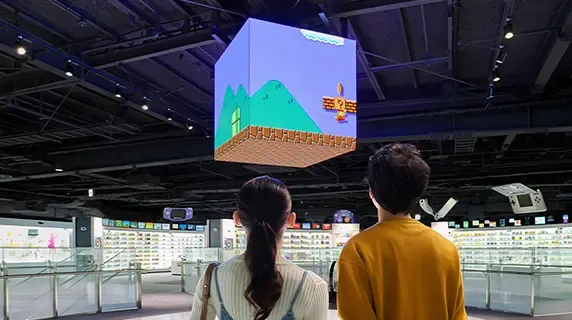
The attraction’s design also supports that strategy. Japan Cheapo reports that visitors receive 10 digital coins to spend on interactive activities, including giant controllers, old consoles, and classic games. My Nintendo News also describes the museum as featuring giant oversized controllers, playable retro consoles, and a café. These details are useful because they show Nintendo is not presenting its history purely as glass-case preservation. The museum experience asks visitors to touch, play, spend limited in-museum resources, and make choices, which mirrors the way Nintendo often frames its products around interaction rather than passive display.
Switch Online turns preservation into a recurring player relationship
Furukawa’s shareholder answer moves quickly from the museum to software access. He said Nintendo is aware of past products being bought and sold as items of historical value, and of efforts to publicly archive game software in the way books and magazines are archived. He added that Nintendo is grateful this reflects recognition of the value of the games it has worked on over many years.
Then comes the constraint. Furukawa said there are “certain challenges” in preserving and exhibiting past games as they are, especially keeping them in a playable state. Nintendo’s answer, at least in the shareholder Q&A, is Nintendo Switch Online. Through that service, Furukawa said, Nintendo makes software from previous systems available to play and will continue initiatives that create opportunities for many people to experience games from the past.
In a separate response quoted by Nintendo Life, Furukawa said Nintendo Switch Online subscribers can play software from NES, Super NES, Game Boy, Game Boy Advance, and Nintendo 64. He also said Nintendo Switch 2 users can play Nintendo GameCube software. Nintendo Life notes that access to some or all of the Nintendo Classics libraries now requires either a basic or expansion tier subscription.
That is the strategic hinge. The museum gives Nintendo history a destination. Switch Online gives it a recurring service layer. A cartridge, disc, or console in a display case preserves memory, but a subscription library keeps older games in the active economy of Nintendo’s current platforms. For players, that means the company’s preservation effort is partly convenient and partly gated. The convenience is centralized access on modern hardware. The gate is the subscription requirement and whatever catalog limits Nintendo chooses to maintain.
Nintendo is separating confirmed access from open-ended preservation
The shareholder Q&A is careful, and readers should be careful with it too. Furukawa did not announce a broad archive, a public preservation program, or a guarantee that every major Nintendo release will become playable through Nintendo Switch Online. He confirmed the systems currently represented in the service as described in the translated answer, including GameCube software on Nintendo Switch 2, and said Nintendo wants to keep exploring “a variety of possibilities” while considering technical challenges and other factors.
That language leaves several questions open. It does not specify which additional games might come to the service, how quickly libraries will expand, whether licensing or technical hurdles will keep some titles unavailable, or how Nintendo will balance faithful preservation against modern usability. Nintendo Life’s report also points to the reality that Switch and Switch 2 users must buy into the appropriate subscription tier to access the retro libraries, which makes the company’s history part of an ongoing paid relationship rather than a one-time ownership model.
From a strategy perspective, that is consistent with the museum approach. Nintendo is curating access rather than releasing the vault. At the museum, visitors spend a limited number of digital coins and move through designed exhibits. On Switch Online, players browse a managed catalog determined by platform support, subscription tier, and Nintendo’s release schedule. In both cases, the company is preserving its past through controlled channels that keep Nintendo at the center of the experience.
Nostalgia is doing two jobs at once
Furukawa described older games on Nintendo Switch Online as serving two audiences. According to Nintendo Life’s translation of the Q&A, he said playable legacy software provides nostalgia for consumers who played those games in the past while giving newer consumers a chance to become familiar with Nintendo’s game series and characters.
That is the key business logic behind Nintendo’s heritage push. The museum satisfies fans who already attach personal history to Nintendo hardware, controllers, characters, and packaging. Japan Cheapo’s guide emphasizes the nostalgia of seeing physical consoles and Japanese and international releases from across Nintendo’s catalog. At the same time, the museum and Switch Online both function as onboarding tools for players who did not grow up with NES, Game Boy, Nintendo 64, or GameCube games.
The distinction matters because nostalgia alone ages with its audience. Nintendo’s stronger play is turning nostalgia into continuity. A visitor who plays with a giant controller in Kyoto, sees older products on display, then returns to a Switch Online library at home is being moved from memory into habit. For younger players, the path works in reverse. A retro game found through a subscription can make the museum’s physical artifacts feel less like ancient hardware and more like the origin point of series and design ideas they still recognize.
Practical guidance for fans planning around the Nintendo Museum
For readers searching for Nintendo Museum visitors or planning a Nintendo museum Japan trip, the confirmed attendance figure is a signal of demand, not a guarantee of easy access. Japan Cheapo reports that tickets are handled by monthly lottery through a free Nintendo Account and that visitors should apply up to three months ahead. Adult admission starts at ¥3,300, according to the same guide, and walk-up ticket buying is not available.
The museum experience described by Japan Cheapo and My Nintendo News includes interactive attractions, playable classic hardware, oversized controllers, historical product displays, a gift shop, workshop space, and café facilities. Japan Cheapo says workshops can include creating Japanese playing cards for an extra price. Those details make it a better fit for fans who want a scheduled, hands-on Nintendo history experience rather than a quick drop-in stop between Kyoto attractions.
For players who cannot visit Kyoto, Nintendo’s own shareholder comments point to Nintendo Switch Online as the main official way Nintendo is currently keeping many older games playable on modern systems. The practical limitation is that access depends on subscription status and tier, with Nintendo Life reporting that basic or expansion subscriptions are required depending on the retro library. Anyone expecting full ownership-style access to Nintendo history should temper that expectation. Nintendo’s current heritage strategy is curated, platform-linked, and ongoing.
The unanswered question is how open Nintendo wants its history to be
The 800,000 visitor milestone shows that Nintendo’s past can still draw a crowd when packaged as an official experience. Furukawa’s comments show the company understands the cultural value of that past and recognizes the preservation challenges around keeping older games playable. What remains unresolved is how far Nintendo will go beyond curated access.
There is a clear player benefit in Nintendo’s current model. Official emulation on modern hardware can reduce the friction of finding old systems, maintaining aging cartridges, or navigating secondhand prices. A museum can contextualize physical products in a way a ROM list cannot. But the model also keeps Nintendo history under tight commercial and technical control, with access shaped by ticket lotteries, subscriptions, supported platforms, and catalog decisions.
That is where the Nintendo heritage strategy now sits. The company has proven that Nintendo history can support a destination in Kyoto and a subscription feature across Switch hardware. The next phase will be judged by how consistently Nintendo expands playable access, how it handles technical preservation challenges, and whether the museum remains a one-site symbol or becomes part of a broader public relationship with the company’s archives.