
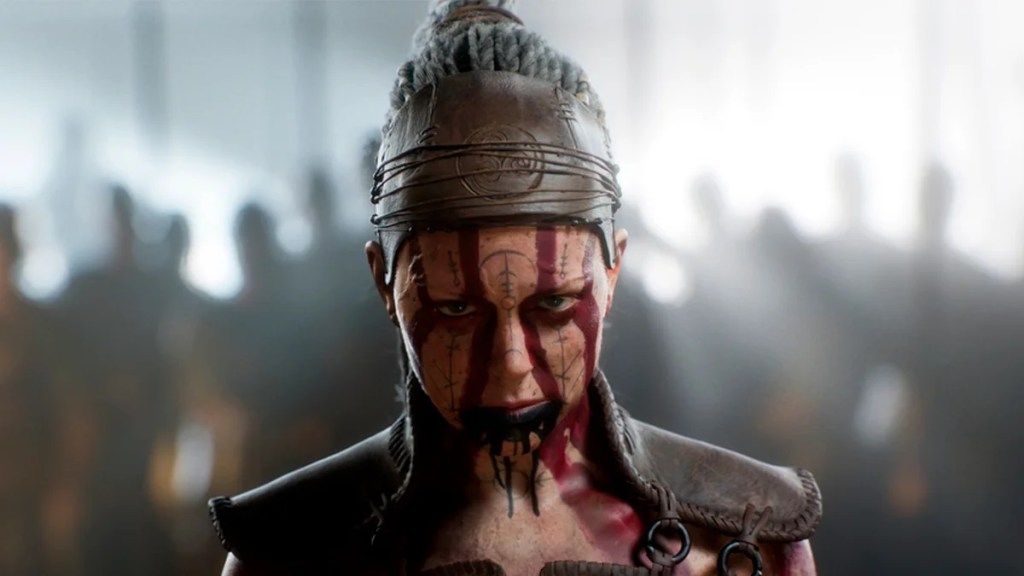

Ninja Theory developers say roles are at risk or have ended after Xbox began consultation on a proposed closure, leaving the next Hellblade game uncertain.
Image: playstationlifestyle.net
Ninja Theory staff say redundancies have started after Xbox’s failed rescue deals
Ninja Theory layoffs have begun appearing in public view, with multiple Hellblade developers saying on LinkedIn that their roles are at risk of redundancy or have already ended after Xbox began consultation on a proposed closure of the studio. The immediate tension is clear: Xbox has not formally confirmed the final fate of Ninja Theory, but the people who build its games are already describing departures, job searches, and unfinished work.
The posts were first spotted by journalist Chris Kerr and have since been reported by outlets including Video Games Chronicle, Eurogamer, Rock Paper Shotgun, and IGN. VGC said it verified that a number of Ninja Theory employees have stated they are either facing redundancy or have lost their jobs. Eurogamer described the posts as the apparent result of the consultation process that followed Xbox’s latest round of cuts.
The confirmed public statements point to affected staff across technical audio, sound design, gameplay programming, performance capture, technical art, character art, and technical direction. Alessio Mellina, identified in the reports as Ninja Theory’s technical sound designer, wrote that after almost 12 years at the studio his role is at risk of redundancy and that he is looking for new opportunities. Gameplay programmer Katrin Mair wrote that it was “incredibly sad” knowing the team would not get to finish what it had been working on. Performance capture technician Xoe Suvari posted that his time at Ninja Theory had ended.
Those are individual disclosures rather than a full staffing announcement from Xbox or Ninja Theory. They do not establish the total number of affected roles. They do, however, show that the redundancy process is no longer an abstract corporate phrase from a restructuring memo. It has reached the people responsible for the sensory and physical craft that defined Hellblade: dynamic audio systems, Wwise integration, Unreal Engine Blueprint work, performance capture pipelines, and the hands-on production that turns Senua’s movement and voices into playable scenes.
Xbox says closure is proposed, not formally complete
The most important distinction is that Xbox’s own wording, as quoted by Eurogamer and VGC, did not announce an immediate completed shutdown. Xbox chief content officer Matt Booty said that “two separate agreements for Ninja Theory fell through” and that the company would “begin consultation with employees on a proposed closure while continuing to explore other paths forward.”
That language matters because it leaves a narrow but real gap between proposed closure and final closure. Eurogamer even corrected an earlier version of its reporting, noting that Xbox had begun consultation on a proposed closure while other options were still being explored. In other words, the studio’s survival is not officially ruled out by the source material, but the redundancy posts show that the process is already damaging the team’s continuity.
The failed agreements are also central to the story. VGC reported that Xbox had been unable to arrange a deal to keep Ninja Theory open or allow it to go independent. Eurogamer reported that Ninja Theory had seemed safer during Xbox’s first wave of cuts because it had apparently entered a partnership with an unnamed company, but that arrangement did not ultimately leave the studio with an owner able to continue operations.
For readers following Hellblade developer news, the practical takeaway is cautious rather than hopeful. The public record supports three facts: Xbox proposed closing Ninja Theory, two separate agreements collapsed, and employees are now publicly describing redundancy risk or departures. It does not support a final statement that every role has been cut, that the studio has legally closed, or that every possible rescue path is exhausted.
Senua’s future is the largest unanswered question
The next Hellblade game is now caught in the same uncertainty as the studio itself. VGC reported that Senua, the third game in the Hellblade series, was announced at the Xbox Games Showcase in June 2026 with a release set for 2027. Eurogamer reported that the game was described by Ninja Theory as a larger and “more expansive” entry compared with previous Hellblade games.
No source material provided here includes a formal cancellation notice from Xbox, Microsoft, or Ninja Theory. VGC says the fate of Senua has not yet been officially confirmed and is now considered uncertain. Rock Paper Shotgun similarly notes that the fate of the Senua game has yet to be formally confirmed, while quoting Mair’s post saying the team would not get to finish what it was working on.
That gap between corporate silence and developer testimony is where the story hurts most. A Hellblade project lives or dies by its continuity of craft. The series is built around close coordination between performance, audio, environment pacing, camera language, and combat rhythm. IGN highlighted Mellina’s role in the technical audio work behind Hellblade’s binaural whispers, while Suvari described years of performance capture work, shoot days, data, set builds, pipelines, and a capture stage he called “top of its class.” Those are not interchangeable production credits. They are the systems and habits a studio builds over years.
If Senua is to continue, Xbox has not said who would finish it, whether the original team would remain involved, or whether the 2027 target reported by VGC still stands. If it does not continue, Xbox has not said so. For now, the only safe statement is that the next Hellblade game remains announced but unresolved, with its development team visibly fragmenting.
The affected roles cut into Hellblade’s signature strengths
The names publicly reported across VGC, Eurogamer, Rock Paper Shotgun, and IGN form a pattern that will be familiar to anyone who has studied Ninja Theory’s work. Alessio Mellina is tied to technical sound design. Daniele Galante and Matteo Tummino are identified in reports as sound designers, with Galante described by VGC as a principal sound designer. Katrin Mair is a gameplay programmer. Loong-Wei Ding is a technical director. Matt Le-Fevre is a senior technical artist. Pietro Berto is a character artist. Xoe Suvari is reported as performance capture staff. VGC also names technical artist Justin Pedersen among those whose jobs are at risk or have ended.
This is not a full org chart, and it should not be treated as one. Still, the public posts touch disciplines that map directly onto Hellblade’s identity. The first Hellblade made its mark through intimate audio staging, close performance capture, and a design style where combat, hallucination, and traversal were paced like scenes in a psychological action drama. Senua’s Saga: Hellblade II pushed that reputation further through visual fidelity and performance-driven presentation. When the public redundancy list includes sound, technical audio, performance capture, and gameplay programming, the risk is not only headcount reduction. It is the loss of institutional memory around how Ninja Theory makes Hellblade feel.
That does not mean another team could never work on the series. Microsoft owns many studios, and IGN reported broader internal changes including World’s Edge and Rare moving under the Activision umbrella, while Obsidian moved under Bethesda. But no source here says Senua has been reassigned, and no source says another team has inherited Ninja Theory’s pipelines. Until Xbox addresses that directly, any claim about a replacement plan would be speculation.
This sits inside a wider Xbox reset with conflicting reported totals
The Ninja Theory redundancy process is part of a larger Xbox restructuring, but the reported scale varies depending on how each outlet frames the waves. VGC says last month’s second wave of planned cuts led to a further 268 layoffs on top of 1,600 in the first wave. Eurogamer describes the broader July “reset” as including 3,200 planned job cuts and several studio cuts. VGChartz also cites the second part of the reset as resulting in 268 layoffs and notes wider Xbox Game Studios changes.
Those figures are not identical, and the provided source material does not fully reconcile them. The safest reading is that outlets are describing different slices of a continuing restructuring: individual waves, planned totals, and studio-level reorganizations. What is consistent across the reporting is that Xbox is reshaping its first-party structure, closing or spinning off some operations, and moving parts of its studio network under larger internal publishing groups.
Ninja Theory’s case is especially destabilizing because the studio had only recently been presented to players as part of Xbox’s future. Eurogamer and VGC both report that Senua was revealed in June 2026, shortly before the studio’s position changed. Eurogamer says that within a month of the reveal, Ninja Theory was put up for sale by Microsoft. IGN notes speculation that the Senua trailer may have been intended to increase buyer interest because Microsoft would have known it did not plan to publish the title, but that remains speculation in the provided source material rather than a confirmed Microsoft statement.
The result is a credibility problem for Xbox’s studio messaging. A game can be announced on a showcase stage, carry a release window in reporting, and still enter uncertainty almost immediately if the studio behind it becomes part of a business reset. For players, developers, and potential hires, that makes the label “Xbox studio” feel less stable than it once did.
For Hellblade players, waiting is the only responsible read
There is no reported change here to the availability of earlier Hellblade games in the provided source material, and there is no new platform, price, or preorder information for Senua included in the sources. The question players can reasonably ask is whether the next Hellblade remains something to expect in 2027. Based on the available reporting, the answer is that it was announced with that target according to VGC, but its future is now uncertain and has not been formally clarified by Xbox.
Anyone following Ninja Theory redundancy news should avoid treating social posts as a complete cancellation notice, but also avoid minimizing them as routine churn. These posts come after Xbox publicly said two agreements fell through and consultation had begun on a proposed closure. They include staff saying they are at risk, staff saying their time at the studio has ended, and at least one developer saying the team would not get to finish its work.
The next concrete development to watch is not another rumor about a buyer. It is an official statement from Xbox or Ninja Theory that answers whether the studio will close, whether any alternative path remains active, and whether Senua continues under Ninja Theory, another team, or not at all. Until then, the Hellblade studio layoffs stand as the clearest signal yet that the series’ future has moved from showcase promise to production uncertainty.