
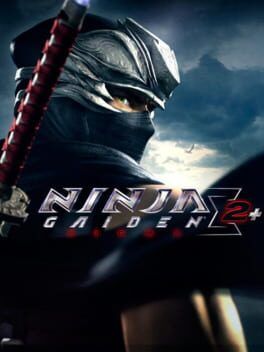
How a single player, a broken AI partner, and 10 hours against three bosses turned Ninja Gaiden Sigma 2 Plus’ notorious Vita Platinum into a legend for retro trophy hunters.
Ninja Gaiden has never pretended to be fair. From the NES days through the Itagaki-era reboots, the series built a reputation on exacting inputs, ruthless enemies, and a complete lack of sympathy for anyone who dared pick “Normal.” But even by Ninja Gaiden standards, one challenge sat in a category of its own: the Platinum trophy for Ninja Gaiden Sigma 2 Plus on PlayStation Vita.
For 13 years, that Platinum existed more as a threat than a reward. Guides slapped it with a tongue-in-cheek “∞ hours” estimate. Trophy forums treated it as a cautionary tale. Reddit threads described it as unobtainable in practice, a design mistake locked behind a dead handheld. On paper, there were a few recorded Platinums. In reality, none were proven. The consensus settled into place: this one just was not going to happen.
Then a Japanese player named Tqvry decided to prove everyone wrong.
The hardest version of an already brutal game
Ninja Gaiden Sigma 2 Plus is the 2013 Vita port of Team Ninja’s PS3 action game. It crams a full-blown Ninja Gaiden into a handheld, adds Ninja Race and Tag Missions, and then quietly bakes in one of the cruellest trophy requirements Sony’s ecosystem has ever seen.
The problem is not the base story. Beating Sigma 2 Plus on successive difficulties is tough, but it is the brand of toughness Ninja Gaiden fans sign up for. Dodging, on-landing attacks, iframe abuse, and weapon mastery all matter. It is punishing but readable.
The real wall is in the endgame Tag Missions and two specific gold trophies that gate the Platinum: Power of Two and, especially, Dynamic Duo.
Dynamic Duo demands that you clear all Tag Missions on Turbo difficulty with a co-op partner. On PS3 and later ports, that “partner” is a real human you can find via online play. Sharp coordination, character synergy, and voice chat can turn these missions into grueling but feasible co-op feats.
On Vita, there is no online. No ad-hoc fix. No patch that rebalanced the list. Instead, the port quietly saddles you with an AI partner that barely qualifies as a teammate. It burns through its health, rushes into lethal combos, and melts in the very encounters that are tuned for two highly skilled humans.
That single structural change turns Dynamic Duo from a hardcore co-op challenge into a near-solo gauntlet where you are functionally one player doing a two-player job.
Why Dynamic Duo became infamous
Trophy hunters had more than a decade to throw themselves at Sigma 2 Plus, and the community had time to dissect what made Dynamic Duo feel so hopeless.
First is the mission design. The hardest Tag Missions are not just waves of trash mobs. They are multi-phase endurance matches that pair high-damage enemy squads with bosses that are already notorious in the main game. On Turbo, everything is faster. Enemies track more aggressively, punish recovery harder, and erase health bars with a few mistimed dodges.
Then add the AI partner. Instead of providing cover or setup opportunities, it becomes a liability. It dies early, forces you to burn consumables or revives poorly, and often drags enemy aggro into the worst possible spots. What should be a complementary duo becomes a scenario where you are babysitting a glass cannon that refuses to defend itself.
The mission that would eventually define the Platinum, the one that held out the longest, throws three bosses at you at once. In the PS3 ecosystem, that is a brutal stress test of communication and shared knowledge. On Vita, with the AI partner flailing, the mission becomes a prolonged 3-on-1 duel where your theoretical ally mostly contributes to the chaos.
This is why guides on PSNProfiles and PlayStationTrophies did something you rarely see: they openly warned players away. Difficulty 10/10. Time to Platinum described in terms closer to eternity than a normal grind. Posts from back in 2013 already had people asking if anyone had actually done it. Ten years later, the answer was still effectively no.
Tqvry’s 20‑month odyssey
According to coverage from Eurogamer, IGN, Kotaku and tracking on PSNProfiles, Tqvry started seriously chasing the Vita Platinum knowing exactly what they were signing up for. The run would stretch across roughly 20 months. Story clears, difficulty stack, weapon familiarity, survival muscle memory, and then, finally, a full-on obsession with Tag Missions.
By the late stages, it had become a single-goal project. Every remaining obstacle looped back to Dynamic Duo. Every tactic was about compensating for the AI. Positioning that denied enemies clean lines to your partner. Aggro control so you could keep the most dangerous foes on you and away from the computer-controlled liability. Meticulous routing through each wave to minimize randomness.
The final mission did not fall in some clean, triumphant 20-minute victory lap. It took around 10 straight hours of attempts on stream, cycling through failures that would instantly kill the AI, wipe out health bars in seconds, or spiral into chaos once all three bosses were active and enraged.
When the successful run finally came, it carried a twist that has already become part of the legend. Partway through the fight, one of the bosses clipped weirdly into the environment and got partially stuck. Not fully neutralized, not soft-locked, but constrained just enough that the battlefield was slightly less suicidal.
It was the kind of bug you cannot plan around and cannot reproduce on command. A once-in-a-hundred-attempts quirk of old code, physics, and camera angles. The run still demanded flawless execution. The other bosses were fully live, the AI was still a liability, and one mistake could still shred 20 months of effort. But in a game where everything is stacked against the player, that momentary glitch acted like the universe momentarily exhaling.
Viewed coldly, some will say the Platinum required luck. That is true. So did many world-first raid clears and no-hit runs before it. But the randomness would have been meaningless if Tqvry had not already put in hundreds of hours to be ready for the one time circumstances tilted in their favor.
Legitimacy in the age of hacked trophies
Tracking sites had technically listed Sigma 2 Plus Platinums before. But in a trophy ecosystem where save-editing and hacked unlocks are rampant, numbers alone do not tell the story.
That is why this particular run hit differently. Tqvry streamed the final stretch. The footage, corroborated by PSNProfiles and discussed in multiple outlets, gives something even rarer than a completion percentage: context. You can see the AI getting shredded. You can watch the trial-and-error as strategies morph across attempts. You can feel the exhaustion as the hours pile up during that last mission.
It is that transparency that led Eurogamer and IGN to frame this as the first proven, legitimate Platinum for Ninja Gaiden Sigma 2 Plus. Others may have done it quietly. Some earlier completions are almost certainly the product of tools or manipulated saves. But this is the one the broader community can point to and say: we saw that happen.
In a hobby where achievement lists are easily polluted, that matters. Legitimacy is not just a technical state of a profile. It is a shared belief that a particular milestone reflects real play, real struggle, and real problem-solving on the hardware it was designed for.
Why this kind of feat still matters in 2026
Ninja Gaiden Sigma 2 Plus is not a new release. The Vita is a sunset platform. Trophy hunting itself sits in a niche compared to modern live-service grinds. Yet this story cut through the noise, trending across enthusiast sites and forums far removed from the usual achievement discords.
Part of that is simple spectacle. Having a player claw their way through one of the hardest Platinums associated with the PlayStation brand, more than a decade after release, makes for a clean headline. But underneath the novelty is something more lasting: a reminder that retro games and their ecosystems continue to live new lives as challenge spaces.
For retro achievement hunters, feats like this serve three big roles.
First, they reframe old catalogues. A Vita port that many wrote off as a curiosity or a cautionary tale suddenly becomes the site of one of the system’s defining achievements. It moves from “unobtainable meme” to “the mountain someone finally climbed.”
Second, they preserve difficulty culture from a very specific era. Ninja Gaiden Sigma 2 Plus belongs to a time when action games still demanded high execution and did not always compromise for approachability. Its hardest content was not tuned for analytics, retention curves, or a battle pass. It was built to test reflexes and pattern recognition in a very pure sense. Seeing someone master that in 2026 is like watching a modern climber finally free a notoriously unforgiving route bolted in the 2000s.
Third, they give small communities a shared story. Forums and discords that had been joking for years about Sigma 2 Plus being impossible suddenly have a reference point, a name, and a proof-of-concept. Even players who will never touch Turbo Tag Missions gain something to appreciate. The very fact that it was done becomes communal lore.
The strange beauty of “impossible” goals
The Ninja Gaiden series has always been about flirting with the impossible. No-damage boss runs, low-level clears, weapon-restricted victories all exist in a space where most players will never participate directly yet still find value in watching them unfold.
The Sigma 2 Plus Platinum fits that lineage. Most Vita owners will never chase it. Even among dedicated trophy hunters, it sits outside what is realistically on the table. But the fact that it finally fell means something important for how we think about old games and their hardest content.
Impossible-seeming goals act like lighthouses for niche communities. They are not there because everyone should dock at them. They are there to mark the furthest edge of what a game allows when someone refuses to accept received wisdom about what can and cannot be done.
When someone like Tqvry reaches that edge, the reward is more than a Platinum ping and a line of text in a profile. It is the transformation of a legend into a documented reality. A decade of “no one has done this” instantly flips into “this has been done, and here is how.”
For Ninja Gaiden fans, that is a perfectly fitting legacy for Sigma 2 Plus on Vita. The port that trapped players with a reckless AI partner and a sadistic trophy list will no longer be remembered only as a design oversight. It will also be remembered as the arena where one player spent 20 months wrestling with some of the harshest action-game content on a handheld and came out holding one of the rarest Platinums in the PlayStation ecosystem.
The game did not get easier. The hardware did not change. Someone just got better, patient enough, and perhaps stubborn enough, to push it further than anyone else managed in 13 years.
And for retro achievement hunters, that is exactly the kind of story that keeps old libraries worth revisiting.