
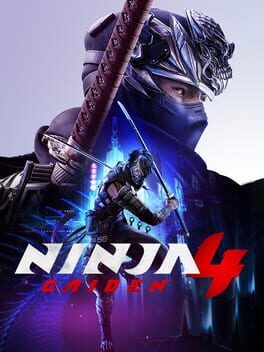

A deep dive on Ninja Gaiden 4’s The Two Masters DLC: story setup, what each new chapter adds, how Solitaire and Jakotsumon could reshape high‑level play, and whether Abyssal Road and the new Trials justify the $14.99 price tag.
Narrative setup: when two masters are not enough
The Two Masters is pitched as a true post‑game epilogue, not a side story. It unlocks after you clear Ninja Gaiden 4’s main campaign, picking up in a Tokyo that finally looks like it survived the apocalypse. The Dark Dragon’s miasma is gone, the skies have cleared, and daylight actually sticks around long enough for you to see the city’s scars.
That brief peace does not last. With the Divine Dragon Order shattered, a new faction moves in to fill the power vacuum, tapping into the remnants of the Dark Dragon’s power to open a gate to another dimension. Where the base game framed the conflict as a desperate defense against encroaching corruption, The Two Masters shifts the tone to containment and clean‑up. You are no longer the underdog; you are the nuclear option.
Ryu and Yakumo are framed as equal partners at this stage. Yakumo is no longer the rookie standing in Ryu’s shadow, and the story leans on that. The DLC’s title is literal: this is about how two very different masters respond to a world that still sees them as walking weapons, and what it costs to keep wielding that power after the main villain is already dead. Expect more focused banter, more explicit mirroring of techniques and philosophies, and a few lore drops that point at where a hypothetical Ninja Gaiden 5 might go with its dual‑protagonist structure.
Chapter breakdown: three slices of post‑game punishment
The Two Masters adds three sequential story chapters that sit after the finale, using sunlit Tokyo and the dimensional rift as contrasting backdrops. Official descriptions only sketch the broad strokes, but taken together with the reveal trailer and press details, you can read each chapter as a distinct combat lab: one for crowd control, one for pressure and mobility, and one for pure boss‑rush spectacle.
Chapter 1: Sun over Shibuya – crowds, fiends, and vertical arenas
The opener is set in a bright, reclaimed Tokyo district, with the sky finally clear of miasma. That visual reset is important because the encounter design builds around line‑of‑sight and verticality instead of the oppressive fog of the base game.
New enemy types show up immediately. There are lighter, quasi‑human cultists that chain ranged sigil shots and quick sidesteps, forcing you to weave in Flying Swallow‑style gap closers while managing cross‑fire. Mixed into those groups are the first wave of new fiend variants that punish staying grounded, leaping in arcs designed to catch delayed dodges and sloppy Bloodbind transformations.
The set‑pieces lean on traversal and crowd management. Rooftop chases, narrow skywalks, and multi‑tier plazas ask you to think in layers, not lanes. For high‑level players, this is where Yakumo’s new Solitaire scythe starts to make sense, sweeping through clustered enemies along curved paths that feel hand‑authored for its crescent hitboxes.
The chapter boss taps into that design: a fast, humanoid opponent augmented with tethered fiend limbs, essentially a one‑on‑one duel that occasionally spawns mini‑adds mid‑combo. The fight is built to punish tunnel vision. If you ignore the summoned threats, you get clipped; if you focus too hard on adds, the boss punishes you with delayed guard‑break strings. It is a test of situational awareness and the first wake‑up call that this DLC assumes you already mastered the base campaign.
Chapter 2: The fractured gate – pressure, mobility, and dual‑protagonist flow
The second chapter pushes you closer to the dimensional breach. Visually, the world starts to warp: tilted highways, frozen debris in mid‑air, and distorted city blocks that twist into arena‑like spirals. Combat pacing accelerates alongside the geometry.
Here, new mid‑tier fiends become the main attraction. They are tuned to close distance quickly with lunges, short teleport hops, and tracking projectiles that curve in late. On paper, they are simple; in practice, they introduce a constant low‑level pressure that makes defensive turtling nearly impossible. Ryu’s Jakotsumon serpent gauntlets shine in this setting, with fast forward‑moving strings and new aerial options that let you meet that pressure head‑on instead of backing away.
Set‑pieces in this chapter play like extended trials. You drop into warped arenas where waves blend melee rushers with hazard manipulators that tilt or shrink the safe zones as fights progress. There is a clear intent to make you swap between Ryu and Yakumo more assertively, leaning on their different toolkits to solve specific enemy mixes. The chapter works as a live tutorial for the DLC’s new weapons, while still being demanding enough that you cannot simply button‑mash your way through.
The boss encounter here is closer to a classic Ninja Gaiden spectacle: a massive fiend fused with dimensional residue, taking the form of a multi‑segment serpent‑like creature that snakes through collapsing architecture. Hitboxes shift between grounded tail sweeps and aerial head dives, encouraging creative use of Bloodbind Ninjutsu to reposition and latch onto weak points. For speedrunners, this fight looks like the most exploitable one, with ample opportunities to pre‑position for phase skips if you can maintain damage output across its sprawling body.
Chapter 3: Heart of the Abyss – multi‑phase nightmare and mechanical payoff
The final chapter takes place fully beyond the gate, in a nightmare dimension that fuses feudal motifs with corrupted Tokyo landmarks. Every encounter here is framed as a test of everything you have learned, with enemy waves that remix previous variants while layering on new, more aggressive elite fiends.
These elites lean into delayed timing and armor windows. Expect enemies that can hyper‑armor through single hits, punish poorly timed Izuna Drops with reversal throws, and force smart use of weapon transformations mid‑string. The layouts are tighter and more hostile, with fewer safe corners and more attacks that track evasive habits players leaned on in the main game.
The last boss is a true capstone: a human‑sized antagonist linked directly to the gate’s core, fought across multiple phases that shift tempo rather than simply adding health. Early phases resemble a high‑speed duel mirroring Ryu and Yakumo’s movesets, while later phases layer in arena‑wide hazards and summon patterns reminiscent of Abyssal Road’s endurance waves. It feels like a bridge between story and endgame challenge, and it is where the DLC most clearly expects you to think like a lab‑driven player rather than a casual action fan.
New weapons, new meta: Solitaire and Jakotsumon
Yakumo’s Solitaire scythe
Solitaire gives Yakumo a longer reach and a very different rhythm. Where his default kit leans on swift, close‑to‑mid‑range strings with clean cancel windows, Solitaire adds big arcing swings, vacuum pulls, and multi‑hit spins that linger in space.
In high‑level play, this opens up several possibilities. First, Solitaire’s crowd control lets you pre‑emptively control wave spawns, pulling enemies into advantageous clumps for Bloodbind finishers and Izuna Drop chains. Its slowest swings are likely unsafe on higher difficulties, but the scythe’s inherent range means you can flirt with those riskier strings while staying just outside common retaliation zones.
For speedrunning, Solitaire is a double‑edged option. Its large hitboxes should chew through standard mobs faster, especially in rooms where enemies spawn at the edges of the arena. However, animation length will matter. If the scythe’s strongest combos do not cancel into movement or ninpo quickly, optimal runs might reserve Solitaire for specific wave setups or Abyssal Road floors, then switch back to lighter weapons for boss phases and traversal segments. The most powerful use case may be wave manipulation, forcing certain AI groups to stagger into your path at just the right spacing to enable room‑clear shortcuts.
Ryu’s Jakotsumon serpent gauntlets
Jakotsumon redefines how Ryu controls the mid‑range. They are fast, close‑quarters weapons that excel at sticking to enemies, chaining short dashes and lunges into fluid strings. In a series historically built around katana precision and aerial control, giving Ryu a dedicated rushdown tool has big implications.
At a high level, Jakotsumon looks tailored to aggression. Fast start‑ups and built‑in forward movement will let advanced players maintain constant contact, shaving off recovery frames that normally go into step‑cancels and repositioning. If the gauntlets inherit any armor frames or counter properties, they could become the go‑to pick for no‑damage runs where the best defense is smothering offense.
For speedrunners, the key question is movement tech. If Jakotsumon strings chain into slides or cancel into jump states earlier than the Dragon Sword or Tonfa equivalents, you may see route planners redesigning entire chapters around serpent‑gauntlet locomotion. Think repeated gauntlet lunges used as a pseudo dash‑cancel across long hallways, or aerial juggles that carry bosses to corners where you can lock them down with wall interactions.
In both weapons’ cases, Bloodbind Ninjutsu interaction will be crucial. If Solitaire and Jakotsumon forms enable unique Bloodbind transformations or shorten the setup time for classic techniques like Izuna Drop, they could quickly become cornerstones of the top‑tier meta rather than optional toys.
Abyssal Road: structure, difficulty, and rewards
Abyssal Road is the DLC’s headline challenge mode, an endurance gauntlet that unlocks only after you complete The Two Masters story. It is designed very explicitly for veterans and lab monsters.
Structurally, Abyssal Road functions as a tower of 100 bespoke combat encounters, each building on prior floors with new enemy combinations, arena tweaks, and hazard layers. You can expect checkpoints at fixed intervals, but the mode is built so that a single sloppy run can send you back multiple floors, especially in its upper tiers where enemies hit harder and their stagger thresholds tighten.
Early floors serve as a sampler platter of the DLC’s new enemy types, giving you controlled spaces to learn their rhythms. Mid‑tier floors begin mixing elites with objective twists such as time limits, reduced healing options, or environmental hazards like shifting platforms and laser grids. The final stretch transitions into near‑boss‑rush territory, with named mini‑bosses and remixed versions of story bosses showing up under different constraints.
Difficulty tuning assumes you have not only cleared the base game but also engaged with its higher difficulty settings. Damage values are punishing, and many encounters are tuned so that panic dodging and mashy offense will get you killed quickly. The mode clearly wants players to optimize builds, master the new weapons, and understand enemy priority at a glance.
Rewards come primarily in the form of new Special Blood Essence and enhancement options for both Ryu and Yakumo, giving you extra incentive to keep pushing even if you are already comfortable with the base game’s hardest settings. For min‑maxers, Abyssal Road is where you squeeze the last drops of power out of both protagonists.
New Trials: precision tests for specific skills
Alongside Abyssal Road, The Two Masters adds fresh Trials that function as targeted training grounds. Where Abyssal Road is about endurance and adaptation, these Trials hone individual skills: parry timing against specific enemy types, efficient wave clearing within strict time limits, or maintaining aerial strings without touching the ground.
Trials are unlocked as you progress through the DLC’s story, with some requiring specific weapon unlocks. They act as micro‑puzzles: you are dropped into compact arenas with clearly telegraphed conditions, and success comes from finding the right combination of weapon, ninjutsu, and routing through enemy groups. Expect leaderboard support or at least internal grading, which should make them a natural playground for speedrunners looking to lab out tech before applying it to full‑mission runs.
These Trials also serve an important purpose in onboarding players to Abyssal Road. By isolating key mechanics and enemy types, they shorten the learning curve, letting you practice dangerous patterns in a controlled environment instead of discovering them the hard way on floor 87 of the endurance mode.
Price, length, and value: must‑buy or wait‑for‑sale?
The Two Masters is priced at $14.99 and is free if you already own the Deluxe Edition or pick up the Deluxe Upgrade. In terms of raw content, you are looking at three full post‑game chapters, two new weapons with meaningful mechanical identity, a 100‑floor endurance mode, and a set of focused Trials.
Early estimates from the available previews and official descriptions suggest around 3 to 5 hours to clear the new story chapters on a first run, depending on your difficulty setting and how comfortable you are with Ninja Gaiden 4’s combat. Abyssal Road and the Trials can easily double or triple that if you aim to clear every challenge and optimize builds. For players who live in training mode and replay mission‑based content, this is effectively an endgame expansion that slots neatly into the series’ tradition of brutally replayable challenge modes.
Whether it is a must‑buy comes down to how you play Ninja Gaiden 4:
If you are the type of player who beat the story once and moved on, The Two Masters might feel like a pricey epilogue. The narrative beats are designed for fans already invested in Yakumo and Ryu’s shared arc, and the difficulty spike in both the chapters and Abyssal Road will likely frustrate anyone who never touched higher difficulties.
If you are a veteran or an aspiring master, this leans strongly into must‑buy territory. Abyssal Road is clearly built for you, the new weapons have real meta potential, and the boss and enemy design in the three chapters look tuned specifically to challenge high‑skill play. Speedrunners and combo‑lab enthusiasts in particular will get a lot of mileage out of the new movement and routing possibilities that Solitaire and Jakotsumon introduce.
On balance, The Two Masters feels less like a cosmetic side pack and more like the Missing Hard Mode Endgame that modern action games sometimes skip at launch. If Ninja Gaiden 4’s core combat loop already has its hooks in you, this DLC is likely worth the full $14.99. If you are only mildly curious or still working through the base game on lower difficulties, waiting for a sale or a bundled discount with the Deluxe Upgrade is the safer call.