
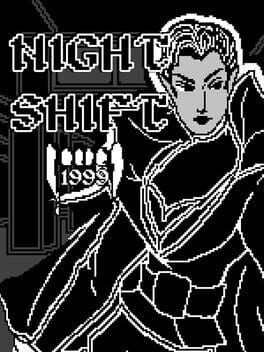

The Night Shift: 1999 demo is a stylish 1‑bit visual novel about juggling vampirism, retail drudgery, and complicated customers. Here’s how its branching dialogue and social sim vibes echo Coffee Talk and VA‑11 Hall‑A.
Night Shift: 1999 has finally sunk its teeth into Steam with a free demo, and it is one of the most striking visual novels to pop up this year. Developed and self‑published by Georgina de Manning, it takes the quiet, talky charm of games like Coffee Talk and VA‑11 Hall‑A and filters it through a harsh 1‑bit palette, a fluorescent Australian convenience store, and the small problem that you are an immortal vampire trying to hold down a late‑night job.
Set in Kings Cross, Sydney in the final year of the millennium, the demo drops you into a single late shift where the hum of fridges and flicker of tube lights feel as important as any line of dialogue. You are centuries old, but right now your immortality is less pressing than cleaning the slushie machine, enduring weird customers, and figuring out whether you can get through the night without drinking anyone’s blood.
A 1‑bit aesthetic that feels like a dusty CRT
Night Shift: 1999 uses a stark black and white 1‑bit presentation that instantly separates it from most cozy visual novels. Characters, store aisles, and city streets are drawn with thick, confident lines and big blocks of shadow that recall old Macintosh adventures more than modern anime‑style VNs. The look is intentionally limited but expressive, leaning on clever use of contrast, patterns, and screen shake to sell mood.
The setting does a lot of work here. Fluorescent lights wash the shelves in pale white while the world beyond the automatic doors sinks into inky black. Occasional flashes of abstract imagery underline your character’s vampiric nature, like jagged teeth shapes or eyes floating in the dark. It all reads immediately, even with a bare minimum of pixels, and it supports the story’s themes of alienation and monotony without losing a sense of style.
If you enjoy how Coffee Talk and VA‑11 Hall‑A use color to set the mood in their cafes and bars, Night Shift: 1999 achieves a similar effect through contrast instead. Every face and posture has to work harder without color, which makes each customer’s design and animation pop that much more.
Vampirism meets retail drudgery
At the heart of the demo is its premise. You are a vampire who has seen eras rise and fall, but you are currently stuck at a small convenience store trying to pretend you are just another tired worker. Customers drift in and out through the night, each with their own baggage and quirks. The tension comes from how you respond to them while keeping your hunger and secrets under control.
The tone walks a careful line between mundane and supernatural. On one level you are dealing with the same frustrations any late‑night retail worker recognizes: rude customers, awkward small talk, boredom when the store goes quiet, and the loneliness of working when everyone else is asleep. On another level, there is the constant awareness that you are something other than human. Lines about scent, heartbeat, or the taste of the air remind you that there is a predator just under the fluorescent‑lit surface.
The demo heavily emphasizes that you have a choice: keep your darker urges in check and try to connect with people, or indulge them and risk burning what little life you have rebuilt. It uses conversations and small, grounded scenarios rather than big action scenes to sell that conflict, which keeps it aligned with the grounded vibe of other drink‑and‑talk visual novels.
Branching dialogue that rewards attention
Night Shift: 1999 structures its demo around conversations with a handful of visitors during your shift. Mechanically, you are mostly selecting dialogue options, but the amount of reactivity is where it starts to shine. Your choices subtly shift tone, reveal or hide details about your past, and steer customers toward different moods or confessions.
Some dialogue choices are clearly risky, nudging you toward letting the vampire off the leash with more predatory or invasive remarks. Others are gentler, keeping the mask in place and letting you act like a normal person. The demo hints at multiple ways scenes can play out on repeat runs, with customers opening up or shutting down based on how empathetic, distant, or hungry you come across.
Fans of Coffee Talk and VA‑11 Hall‑A will recognize this focus on emotional temperature. Where those games use drink recipes as a way to tune conversations, Night Shift: 1999 relies entirely on your words. The result feels a bit more like a classic visual novel, but with the same spirit of quietly nudging people’s lives from behind a counter.
A social sim in miniature
While the demo is relatively short, it already sets up the skeleton of a social simulation. Between your immortality, your day job, and the people drifting through the store, there are clear hints that the full game will ask you to juggle relationships and responsibilities across multiple nights.
The Steam page teases that choosing restraint will be rewarded with a better understanding of what it means to live again, while leaning into your vampiric nature may lock you into a much bleaker path. That suggests long‑term flags and branching routes that alter not just the fate of side characters, but your own sense of identity. In other words, your social choices should matter beyond a single conversation.
Instead of stat numbers and time blocks, Night Shift: 1999 seems interested in social sim elements expressed through changing dialogue, shifting dynamics, and who is willing to come back to your store at all. That is exactly the kind of low‑key, character‑driven structure that fans of VA‑11 Hall‑A’s regulars or Coffee Talk’s returning customers can latch onto.
Why fans of Coffee Talk and VA‑11 Hall‑A should pay attention
If you are drawn to late‑night, text‑heavy games about listening to people and gently steering their lives, Night Shift: 1999 fits snugly into that lineage. Instead of mixing drinks or pulling espresso shots, you are scanning snacks, restocking shelves, and hiding your fangs. The store counter replaces the bar as a stage where strangers briefly intersect and reveal more than they mean to.
The similarities go beyond premise. All three games prioritize mood, character writing, and repeat playthroughs over big mechanical complexity. They create cozy, liminal spaces that feel safe even when heavy topics like loneliness, trauma, or in this case predation are in play. Night Shift: 1999’s 1‑bit look keeps that experience visually distinct, giving it a moody, photocopied‑zine feel instead of the lush color palettes of its inspirations.
For players who love poring over different routes, experimenting with dialogue, and chasing alternate endings, the demo is a promising first taste. It already shows that Georgina de Manning has a strong handle on pacing, atmosphere, and how to make a simple conversation feel loaded with unspoken history.
Demo verdict
As a slice of what is to come, Night Shift: 1999’s Steam demo delivers exactly what it needs to. The 1‑bit presentation is bold, the writing leans into both the drudgery and drama of working nights, and the branching choices point toward a replayable, socially driven visual novel.
If you have spent nights in Coffee Talk’s café or VA‑11 Hall‑A’s cyberpunk bar and have been looking for another quiet game about messy people in a strange city, this is an easy demo to recommend. Turn down the lights, imagine the buzz of a broken fluorescent sign, and see whether this vampire retail worker can keep their hunger under control until sunrise.