

Nexus Mods’ new owners want easy mod installation to feel like browse, click, play. For Skyrim mods and PC RPGs, the hard part is turning messy load orders into reliable systems.
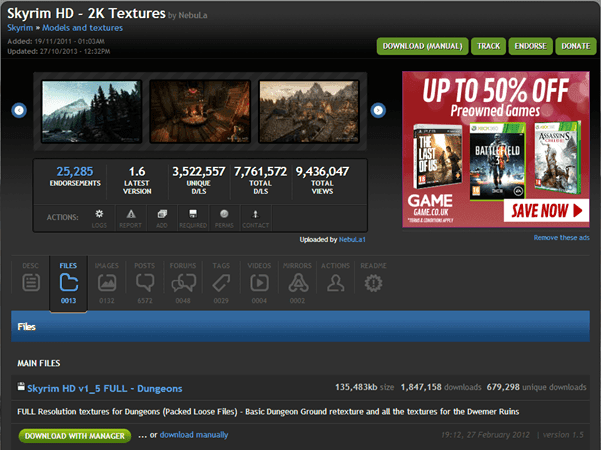
Image: discover.hubpages.com
Nexus Mods’ new owners are aiming at modding’s oldest friction point
Nexus Mods’ new leadership has put a clearer shape around its long-term ambition: make installing mods feel, in Victor “Foledinho” Folmann’s words, “Spotify-easy” for players while giving creators tools that are “GitHub-powerful.” In a public letter covered by PCGamesN, Kotaku, and Rock Paper Shotgun, Folmann described a future where a player can “browse, click, play,” rather than spend hours chasing requirements, comment-thread fixes, and load-order advice.
The tension is obvious to anyone who has ever rebuilt a Skyrim setup after one missing dependency broke a save. Nexus Mods is already the central hub for much of PC modding, but Folmann’s letter argues that the site has historically treated mods as files. His proposed shift is to treat them as systems, with Nexus Mods handling more of the dependency resolution, setup validation, and change deployment that players currently manage themselves.
That is an ambitious promise, and the sources do not describe a finished consumer product launching today. Kotaku notes that Folmann’s letter does not lay out exactly how Nexus Mods reaches that point. PCGamesN quotes Folmann asking users to “judge us by what we deliver over the next year.” For now, the confirmed development is a strategic direction from Nexus Mods’ new owners, not a one-click replacement for every fragile mod list already sitting on PC players’ drives.
The real target is the load order, not the download button
The phrase “Nexus Mods Spotify” is catchy, but the sharper technical claim in Folmann’s letter is about changing the model underneath the platform. As Rock Paper Shotgun reports, Folmann wrote that for nearly 25 years Nexus Mods has modeled mods as files, then argued that “mods are systems” with dependencies, conflicts, load orders, versioning, and environments.
That distinction matters because downloading a mod is rarely the whole job. A texture replacer may be simple. A quest overhaul, animation suite, combat rebuild, weather stack, or script-heavy RPG mod can depend on other files, specific versions, external tools, or a careful position in a load order. The player-facing pain often arrives after the download, when the game launches with missing menus, invisible items, broken scripts, or a crash before the title screen.
Folmann’s proposed platform would move more of that work into Nexus Mods itself. Rock Paper Shotgun describes the aim as a system that handles as much dependency resolution, setup validation, and change deployment as possible. Kotaku reports that Folmann wants the difficult parts to be handled by Nexus Mods so modding becomes easier to maintain and more reliable.
In RPG terms, the pitch is less like handing players a bigger inventory and closer to building a better character planner. The goal is not simply to store more mods. It is to understand how the pieces interact before the player commits them to a save file.
Skyrim shows why easy mod installation is still the next barrier
Skyrim remains the clearest example of both the promise and the peril of PC modding. KeenGamer’s guide notes that The Elder Scrolls V: Skyrim has been out for nearly 15 years and remains popular thanks to community modding support. The same guide warns that installing Skyrim mods incorrectly can cause crashes and “unfixable errors,” and it points out that many mods are PC-only because they require third-party tools such as Skyrim Script Extender, or SKSE, to inject complex scripts into the game.
That is the exact terrain Nexus Mods’ new vision is trying to tame. A Skyrim player is rarely choosing one isolated tweak. They are assembling a build: visual mods, bug fixes, UI changes, perk overhauls, quest expansions, survival systems, animation frameworks, body meshes, audio packs, ENB-adjacent graphics setups, and patches between patches. The longer the campaign, the more valuable stability becomes. A broken load order on a level-three test save is an annoyance. A broken load order 90 hours into a guild questline is a lost character arc.
Console players already have a more controlled modding path through in-game menus, but KeenGamer notes that Xbox and PlayStation options are far more limited than PC. That gap is important. Nexus Mods’ “browse, click, play” ambition is aimed at the PC ecosystem’s abundance problem: the best version of your RPG can be the one you build yourself, but the building process asks players to think like maintainers.
For Skyrim mods specifically, a more automated Nexus Mods would be most valuable if it can understand requirements, warn against incompatible combinations, preserve known-good configurations, and make version changes less dangerous. The sources do not confirm that all of this is solved. They do confirm that Nexus Mods’ leadership sees the current file-based model as the root of long-running user frustration.
The ownership change gives the plan weight, and raises expectations
This push comes after a major change at the top of Nexus Mods. Rock Paper Shotgun reports that last June, site founder Robin “Dark0ne” Scott stepped back and new leaders from Danish firm Chosen came in, chiefly Chosen CEO Victor Folmann. Kotaku frames the same transition as the first ownership change in Nexus Mods’ 20-plus-year existence and says many users feared the site might fall apart or change in harmful ways, while adding that things have mostly stayed stable a year later.
Folmann’s own update, as reported by Rock Paper Shotgun, casts the first year as groundwork rather than flashy feature delivery. He cited work including a redesigned mod upload form, improved detection of child sexual abuse material and viruses, and modathons. He also said Nexus Mods had grown from around 42 staff when he joined to 75, or 87 counting people hired and waiting to start.
That staffing detail is one of the more concrete signals in the whole story. Easy mod installation is not only a cleaner interface problem. It requires platform engineering, moderation, security, tooling for authors, and enough support capacity to deal with the edge cases PC players create by mixing games, launchers, versions, script extenders, and years of community fixes.
Folmann told the community, according to Rock Paper Shotgun, that he came in thinking he knew what to expect but “didn’t fully appreciate the scope of it.” That admission is useful. It suggests the new owners are discovering the same thing veteran mod users already know: the hard part is not imagining a smoother Nexus Mods. The hard part is preserving the creative chaos that made the site valuable while reducing the chores that keep new players away.
Collections are the bridge between today’s Nexus Mods and the automated future
Nexus Mods is not starting from zero. Rock Paper Shotgun connects Folmann’s systems-focused vision to the site’s existing emphasis on Collections, which Nexus Mods’ own modding wiki describes as ready-made modlists for games, often built around themes. Collections already point toward a future where a player chooses a curated experience instead of assembling every file by hand.
For RPG players, that model has clear appeal. A good collection can express a design philosophy: survival Skyrim, vanilla-plus Skyrim, modernized combat Skyrim, a graphics-first build, or a roleplay setup tuned for thieves, mages, hunters, or vampire campaigns. If Nexus Mods can make those collections repeatable across machines and resilient to version changes, it would lower the cost of experimenting with different playthrough identities.
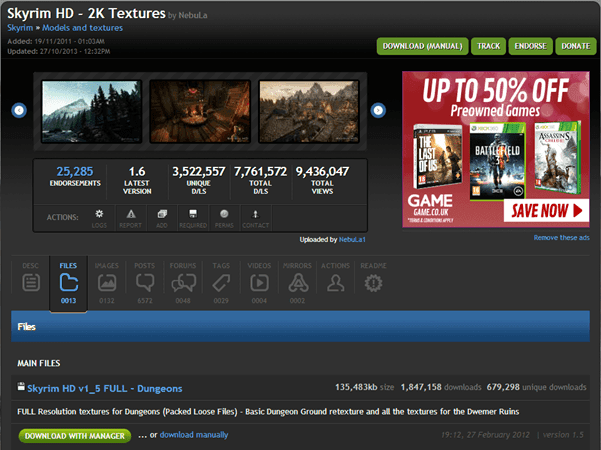
There is also a creator-side challenge. PCGamesN reports Folmann’s stated goal of making Nexus Mods powerful for authors to create, publish, manage, and collaborate. That matters because automation cannot simply flatten authors’ work into a playlist without respecting versioning, permissions, requirements, and update control. One Nexus listing included in the source material, the Cyberpunk 2077 mod “NSG Now Playing for Spotify,” shows how even a single modern mod page can involve a version number, update history, Nexus requirements, off-site requirements, permissions, bug reports, posts, and a virus scan status. That page is for a different game and a different kind of Spotify connection, but its structure illustrates the metadata burden that any broader automation system has to understand.
The most promising version of this future would make the invisible rules legible. If a shared link brings a player to a working modded game, as Folmann envisions in the quotes reported by PCGamesN and Kotaku, the platform has to know far more than where the download lives. It has to know whether the build still works.
Automation will help, but PC modding will still need informed players
The practical advice for Skyrim and PC RPG players is to treat this as a direction to watch, not a reason to abandon current caution. The sources do not announce a release date, price, supported game list, or final feature set for a new one-click Nexus Mods system. Folmann’s clearest near-term request, as PCGamesN reports, is that users judge the company by what it delivers over the next year.
Until those tools exist in players’ hands, the old rules still apply. For Skyrim mods, KeenGamer’s warning about crashes and severe errors remains relevant, especially for setups using SKSE or other third-party tools. Players should keep reading requirements, watching for version notes, and avoiding major mid-playthrough changes unless a mod author says they are safe. Collections may reduce setup work, but they do not remove the need to understand whether a collection fits your game version, your installed edition, and your tolerance for instability.
For returning players, the upside is clear: a more automated Nexus Mods could make it easier to start a new RPG run around a coherent fantasy instead of a spreadsheet. For new players, easy mod installation could turn PC modding from an intimidating craft into a normal part of choosing how to play. For authors, the better outcome is a platform that reduces repetitive support questions while giving them stronger publishing and collaboration tools.
The risk is that “Spotify-easy” sounds simple in a way modding rarely is. Skyrim’s greatest modded playthroughs are built from interlocking choices, and those choices still need authors, curators, and players who care about how systems interact. Nexus Mods’ new owners are betting that the next era of PC modding depends on making that complexity manageable. The test will be whether the platform can automate the chores without hiding the choices that make modded RPGs worth returning to.