
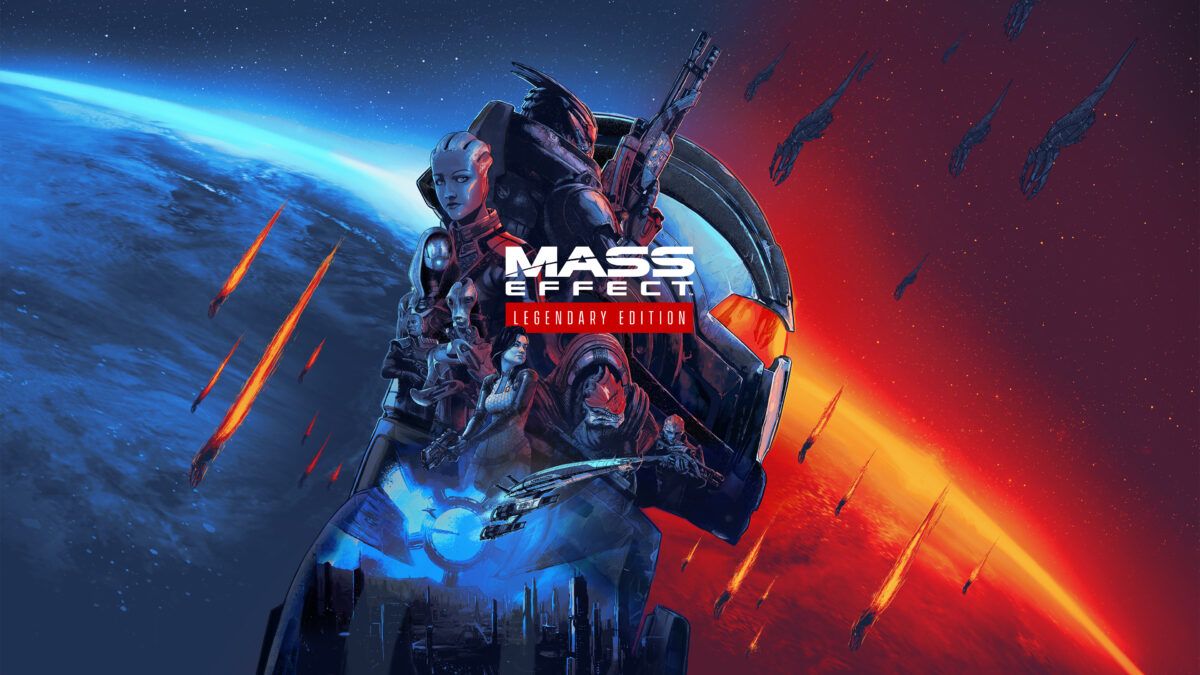

Former BioWare designer Armando Troisi argues pessimism around the next Mass Effect may be overstated because original trilogy veterans remain at the studio, but the game still has no confirmed title, date, platforms, or detailed feature set.
Image: blog.bioware.com
A former Mass Effect lead sees reason for confidence, with one major caveat
Armando Troisi, a cinematic designer on the original Mass Effect and lead cinematic designer on Mass Effect 2, says the current BioWare team does not need outside advice on the next Mass Effect because several developers tied to the original trilogy are still there. Speaking to FRVR, Troisi named Preston Watamaniuk, Derek Watts, and Parish Ley as veterans who, in his view, already understand what the series needs.
That is the strongest concrete development here: a former senior Mass Effect creative is pushing back against the assumption that BioWare has lost the knowledge required to make a successful new entry. His confidence, however, comes with a condition. Troisi told FRVR that BioWare can deliver if “people get out of the way” and let game creators work.
Eurogamer and VGC both reported Troisi’s comments from the FRVR interview, framing them around the same tension facing the next Mass Effect. BioWare has a beloved RPG legacy, but the studio is also carrying public skepticism after recent projects and years of changing industry priorities. Troisi’s argument is not that success is guaranteed. It is that the talent and institutional memory still exist, and that the project’s biggest danger may be interference, unclear direction, or pressure to chase formats BioWare is less naturally built around.
What is actually confirmed about the next Mass Effect
The safest confirmed fact is narrow: the next Mass Effect game is in development at BioWare. VGC noted that BioWare assured players last November that the next game was still in development. The provided source material does not include an official release date, confirmed platforms, a price, a gameplay reveal, system requirements, or a final title.
That matters because much of the public shorthand around the project remains unofficial. FRVR refers to the game as “presumably titled Mass Effect 4,” while Eurogamer’s headline uses Mass Effect 4 as a search-friendly label. For readers, that should be treated as convenient naming rather than a confirmed title from BioWare or Electronic Arts in the supplied material. The same caution applies to larger assumptions about protagonists, squad structure, save imports, combat model, open-world scope, or how the game will handle the consequences of the original trilogy and Mass Effect: Andromeda.
FRVR’s article says the next game is “deep in development” and describes BioWare as having shifted attention toward it following Dragon Age: The Veilguard. Those are FRVR’s descriptions, not a full production roadmap from BioWare in the provided sources. The only practical planning advice available from the current record is patience: there is no source-backed reason here to expect an imminent launch window, pre-order campaign, or platform breakdown.
Troisi’s optimism is based on craft memory, not nostalgia alone
Troisi’s central point is personnel. He told FRVR that “a lot of people” on the project were there during the originals, adding that Watamaniuk, Watts, and Ley “know” what to do. VGC identifies Watamaniuk as a lead designer, Watts as an art director, and Parrish Ley as a lead cinematic animator. Troisi said he did not think there was anything he could tell them that they did not already know.
For an RPG audience, that is a specific kind of reassurance. Mass Effect’s identity depends on many departments solving the same problem at once: cinematic framing, mission pacing, party banter, combat readability, build expression, and the illusion that a dialogue choice has weight beyond the immediate conversation. A studio can own the brand and still struggle if those parts are not aligned. Troisi is arguing that at least some of the people who understand that alignment remain inside BioWare.
He connected that confidence to a personal memory from leaving the studio after Mass Effect 2. Troisi said Watamaniuk wrote “passion and craft is excellence” on a card from colleagues. His point was not simply sentimental. He used the anecdote to argue that the current team still has both traits, and therefore does not need a former developer’s lecture on how Mass Effect should feel.
The BioWare formula Troisi wants protected
Troisi described BioWare’s strength to FRVR as a “single-player, interactive narrative driven, deep combat, progression-driven game.” Eurogamer quoted him saying that when BioWare breaks that down, “there’s nobody that can touch them.” That is a strong claim, but it is also carefully tied to a particular form of game: cinematic RPGs where story delivery, character investment, combat systems, and character growth reinforce each other.
His language is especially relevant because Mass Effect has always lived at the intersection of RPG and action game expectations. The next Mass Effect will not be judged only on whether it has familiar alien species, N7 iconography, or a dramatic reveal trailer. It will be judged on whether squad composition matters, whether powers and weapons create satisfying builds, whether missions make space for role-playing decisions, and whether cinematic storytelling supports rather than flattens player agency.
None of those systems are confirmed for the new game in the provided sources. Troisi’s comments are best read as a design diagnosis, not a feature list. He is saying BioWare’s best path is to focus on the style of game it historically made well. He is not confirming that the next Mass Effect will have a specific class system, morality structure, mission hub, loyalty quest format, or combat loop.
The interference concern comes from BioWare’s recent history
Troisi’s “people get out of the way” line is doing a lot of work. He acknowledged to FRVR that games of this scale involve many pressures, including companies and stakeholders. He also said BioWare had to live through the live service era, which he described as still happening but “maybe not as prevalent.”
VGC connected his comments to reports that Dragon Age: The Veilguard struggled after earlier live-service plans changed. Eurogamer similarly framed Troisi’s point around the risk of teams being pushed into unfamiliar territory, citing the kind of late pivot some have pointed to around Veilguard’s development. The source material does not prove that the next Mass Effect is facing the same problem, and it does not include a statement from EA or BioWare about the new game’s business model. The confirmed point is that Troisi sees outside pressure and format-chasing as hazards for BioWare-style RPG development.
FRVR also cited a prior interview with former BioWare lead Mark Darrah, who said many of the studio’s issues trace back to publisher EA’s “complicated relationship to shipping games at all.” That is Darrah’s assessment, not a current company statement. Placed next to Troisi’s comments, it shows why optimism around the next Mass Effect is conditional. The argument from these former BioWare developers is not that the brand name alone will carry the project. It is that the team needs a clear mandate and room to execute.
Skepticism is understandable, but the current evidence does not support fatalism
PC Gamer framed Troisi’s remarks against broader skepticism around BioWare after Anthem, Mass Effect: Andromeda, and the divisive reception to Dragon Age: The Veilguard. That context is important because players are not inventing their caution from nothing. BioWare’s recent reputation has been shaped by troubled launches, changed expectations, and debate over whether the studio can still produce the kind of RPG that made its name.
Troisi’s response is that the pessimism may be overstated. He told FRVR, “I think that they can do it. I’m rooting for them.” His reasoning is narrower than blind faith: original-trilogy veterans remain, BioWare knows its strongest lane, and the studio is at its best when building single-player, narrative-led RPGs with deep combat and progression.
There are also limits to how far his reassurance can go. Troisi left BioWare after Mass Effect 2, according to Eurogamer and VGC. He is speaking as a veteran of the series and a former insider, not as a current BioWare spokesperson. He does not provide production milestones, staffing numbers, budget details, engine information, or release timing. His comments are a useful counterweight to doom-laden speculation, but they are not a substitute for BioWare showing the game.
For players, the right stance is watchful patience
If you are waiting for the next Mass Effect, the practical read is simple: the game is alive, but almost everything buyers need before making a decision remains unannounced. There is no confirmed launch year in the supplied sources. There are no confirmed platforms, performance targets, editions, upgrade paths, or PC requirements. There is also no source-backed confirmation here of how the game will position itself in Mass Effect continuity.
That makes Troisi’s comments encouraging rather than decisive. For players who care about RPG systems, the key future signals will be concrete ones: how BioWare presents progression, whether companions have meaningful mechanical and narrative roles, how combat supports different builds, and whether quest structure allows player choice to breathe. A cinematic trailer can establish mood, but the first serious gameplay reveal will tell us much more about whether BioWare is returning to the strengths Troisi described.
Until then, the fairest expectation is neither collapse nor coronation. A former BioWare designer with direct Mass Effect experience believes the studio still has the people and craft to make the next Mass Effect work, provided they are allowed to build the kind of game BioWare is best known for. The rest remains unconfirmed, and for a series built on difficult choices, that uncertainty is the part players will have to sit with a little longer.