
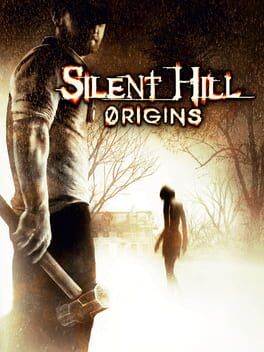

A Wall Street Journal profile reportedly lists Silent Hill among Roy Lee’s game projects, but no new film has been officially announced. For horror fans, the fit is tempting and dangerous.
Image: IGDB
Store links: Silent Hill 2 on Steam
A reported Silent Hill project arrives before the fog has cleared
Hollywood producer Roy Lee is reportedly attached to a new Silent Hill project, according to a Wall Street Journal profile cited by Video Games Chronicle, Push Square, CGMagazine, and Bloody Disgusting. The concrete detail is narrow but significant: the Journal reportedly lists “Japanese horror classic Silent Hill” among roughly 20 movies and television shows based on games that Lee has in development or production, alongside properties such as God of War and Battlefield.
That wording leaves important gaps. Konami has not announced a new Silent Hill movie in the source material provided. There is no public release date, director, cast, distributor, plot description, rating, or confirmation that the project is definitely a theatrical film rather than another screen format. Video Games Chronicle specifically notes that a new Silent Hill film has not been confirmed, while Bloody Disgusting is more cautious, saying the listing does not make clear whether the project is a movie or a TV series.
The tension is immediate because Lee is coming off a very different kind of horror-adaptation headline. VGC reports that Lee produced Zach Cregger’s new Resident Evil film, which is currently leading the U.S. box office and is on course to become the highest-grossing Resident Evil film domestically. VGC also cites Rotten Tomatoes scores of 95% from critics and 91% from audiences for that Resident Evil release. That success makes the phrase “Resident Evil producer Silent Hill” potent search bait, but it does not answer the harder question: whether Silent Hill can survive the same translation into cinema without losing the pressure that makes it work as a game.
Roy Lee’s track record is the reason this report has weight
The Wall Street Journal profile, as summarized by VGC, frames Lee as a producer with a long history of working around established brands and licensed material. VGC lists his credits as including U.S. remakes of Asian horror films such as The Ring, The Grudge, Dark Water, and The Eye, then larger IP projects including The Lego Movie, Godzilla: King of the Monsters, Doctor Sleep, Godzilla vs. Kong, A Minecraft Movie, and the modern It films and related Welcome to Derry series.
That résumé matters because Silent Hill is not a clean four-quadrant franchise waiting for a simple monster showcase. It is a horror name built on mood, dread, distorted spaces, and punishment by atmosphere. Bloody Disgusting describes the 2006 Silent Hill film as an attempt to embrace the nightmarish imagery and atmospheric dread that separated the game series from its peers. Those are filmable qualities, but they are also easy to flatten into production design if the adaptation treats the fog, sirens, nurses, and rusted corridors as iconography rather than pressure.
Lee’s recent association with Cregger also shapes expectations, even though it should not be overstated. VGC and Push Square both say there is no indication Cregger is involved with any Silent Hill project. That distinction is crucial. The reported new Silent Hill movie is being discussed in the wake of Cregger’s Resident Evil success, but the sources do not attach him to Silent Hill as director, writer, or producer. At this stage, Lee’s reported involvement is the story, not a creative team.
Silent Hill’s film history is a warning sign, not a roadmap
The franchise has already had several chances on screen, and the reception history is bleak. Push Square cites Metacritic scores of 31 for Silent Hill from 2006, 16 for Silent Hill: Revelation 3D, and 34 for Return to Silent Hill. VGC reports that Return to Silent Hill was released in January 2026, had no involvement from Lee, and sits at 18% from critics and 28% from audiences on Rotten Tomatoes.
Those numbers do not prove a new adaptation is doomed, but they do show why this Silent Hill film report lands differently than a fresh licensing announcement. A new attempt would not be introducing a beloved horror property to film for the first time. It would be walking into a room where audiences have already seen the walls peel, then watched the structure fail to hold.
The first Silent Hill film still has defenders in horror-game circles because it pursued some of the series’ visual language, but the broader critical record cited by Push Square and VGC is poor. The later entries carry heavier baggage. CGMagazine describes Silent Hill’s live-action past as rocky, pointing to the widely disliked Silent Hill: Ascension in 2023 and the panned Return to Silent Hill in 2026. Ascension was not a traditional film, but CGMagazine’s point is useful for the current moment: recent screen-adjacent Silent Hill experiments have not given fans a stable sense that the series is safe outside games.
That is the high-risk fit. Resident Evil can bend toward siege action, sci-fi infection, or survival set-pieces and still remain recognizable to many viewers. Silent Hill has less room to run. Too much exposition drains it. Too many creatures turn it into a haunted-house parade. Too much lore accounting can suffocate the private, diseased feeling that gives the town its pull.
The game-horror problem: Silent Hill’s fear is interactive by design
From a survival-horror perspective, Silent Hill is difficult to adapt because its threat is not only the monster in the hallway. It is the uncertainty of what that hallway costs you. In games, dread comes from pacing, limited resources, obstructed visibility, unreliable sound, awkward routes, and the knowledge that turning back may be as dangerous as pressing forward. The player’s hand on the controller completes the trap.
Film has other tools: framing, silence, performance, editing, production sound, and the audience’s inability to look away. But a Silent Hill horror adaptation has to replace survival pressure with cinematic pressure. That means the fog cannot be mere atmosphere. It has to deny information. The audio cannot be decorative industrial noise. It has to make the viewer listen for a threat before the image confirms it. Enemy design cannot exist only for recognition shots. It has to express the story’s psychological injury without becoming a checklist of familiar silhouettes.
Bloody Disgusting argues that Cregger’s Resident Evil succeeded by trying to replicate the tension of playing the game rather than faithfully adapting decades of lore. That is Bloody Disgusting’s interpretation, not a confirmed blueprint for Silent Hill. Still, it points toward the central creative decision any new Silent Hill movie would face. Does it chase canon fidelity, or does it chase the sensation of being trapped in a place that understands you too well?
The report does not answer that. No writer or director has been named in the provided sources. No source says whether the project would adapt Silent Hill 2, create a new story, reboot the film continuity, or connect to Return to Silent Hill. Until that changes, the strongest practical read is caution. Lee’s producing history can open doors, but Silent Hill’s fear lives or dies in execution.
Recent franchise momentum cuts both ways
The timing makes business sense. TheGamer describes Silent Hill as no longer starved for content, citing Konami’s push for annual gaming releases and the movie released earlier in 2026. CGMagazine similarly frames the franchise as having seen a renaissance, while also stressing that its recent non-game and live-action efforts have struggled with fans and critics.
That split is the current Silent Hill condition in miniature. The name has heat again, but heat can burn through patience quickly. A new screen project following Return to Silent Hill would arrive under scrutiny from viewers who have already seen a recent attempt stumble. It would also be judged against the wider video game adaptation market, where a well-reviewed Resident Evil film has changed the immediate conversation around horror games at the box office.
There is a business incentive to move fast when a related adaptation is performing. VGC reports that Lee’s Resident Evil is both critically successful and commercially strong in the U.S. Push Square says having a producer with that level of success on a Silent Hill film could represent a change in fortune for Konami’s adaptations, but that remains expectation rather than fact. The sources do not say Konami has announced the project, nor do they confirm how rights, studio partners, or distribution would work.
For horror fans, the useful comparison is not “Resident Evil worked, so Silent Hill will.” It is that Resident Evil’s latest reported success raises the bar. If audiences have just rewarded a horror-game film that critics and moviegoers embraced, then a new Silent Hill movie cannot rely on brand recognition and a familiar siren. It would need a reason to exist after three poorly received films.
What is confirmed, what is still fog
Confirmed through the provided reporting: a Wall Street Journal profile reportedly lists Silent Hill among game-based projects connected to Roy Lee. VGC identifies Lee as a producer on Zach Cregger’s Resident Evil and Weapons, and says Lee has numerous other game-related projects in the works, including God of War, Dragon’s Lair, Horizon Zero Dawn, and A Minecraft Movie: Squared. VGC also reports that Return to Silent Hill was released in January 2026 without Lee’s involvement and performed poorly with critics and audiences on Rotten Tomatoes.
Still unannounced: an official new Silent Hill movie from Konami or a studio partner, a title, release window, format, director, writer, cast, story premise, continuity, rating, filming start, and distribution plan. The phrase “new Silent Hill movie” is how several outlets are reading the report, but the underlying Journal wording described in the source material covers movies and television shows. Bloody Disgusting explicitly flags that ambiguity.
For readers wondering whether to expect trailers or casting soon, the answer is to wait for a formal announcement. This is a credible industry signal because of where it appears and who is reportedly involved, but it is not the same as a greenlit production with a date. The practical stance is measured interest: Lee’s horror and IP background makes the report worth watching, while Silent Hill’s screen record makes confidence premature.
Silent Hill has always been most dangerous when it withholds answers. This time, the unanswered questions are industrial rather than supernatural, but they matter just as much. The franchise has momentum, a producer reportedly circling it, and a market newly receptive to horror-game adaptations. It also has a graveyard of films proving that the town does not forgive shallow visits.