
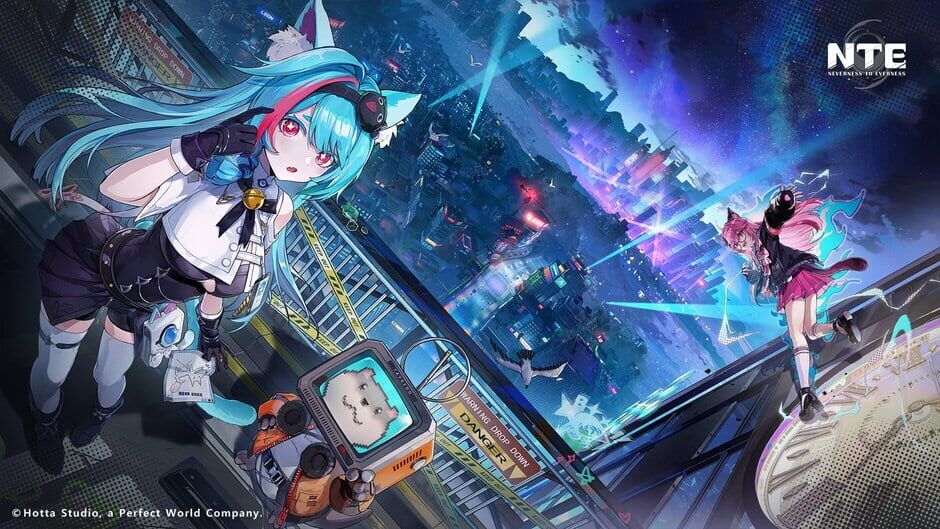

Stacking Neverness to Everness against The Seven Deadly Sins: Origin and Dissidia Duellum Final Fantasy, from combat identity and monetization promises to platform plays and target audiences.
The 2026 Gacha Arms Race
Neverness to Everness is not just another anime open world RPG quietly sliding into the 2026 calendar. It is arriving into a crowded, very specific arena where The Seven Deadly Sins: Origin and Dissidia Duellum Final Fantasy are all fighting for the same habit loop: your nightly log-in, your banner pulls, and your social time.
Line them up and you get three very different theses about where character‑collecting games go next. One bets on urban sandbox chaos, one on licensed multiverse adventuring, and one on tight arena PvP. Once you dig into combat identity, monetization, and platform strategy, it becomes clear they are not chasing exactly the same player.
Combat Identity: Three Different Takes on Action Gacha
Neverness to Everness is the most traditional action RPG in the trio, but its structure is closer to a supernatural GTA than to Genshin. Hotta Studio drops you into Hethereau, a seamless modern city where you can swap between flashy exorcists and then immediately steal a supercar, drift through rain-slicked intersections, or provoke the police into a full wanted-level chase. Combat uses real-time, character‑swapping abilities, but the important thing is how often fights spill into the wider sandbox: kiting mobs into traffic, using vertical city spaces, or weaving supernatural skills around physics‑driven vehicles and destructible props. First-person driving and on-foot exploration double down on the illusion that this is a living place first and a combat arena second.
The Seven Deadly Sins: Origin pushes closer to the classic open world gacha playbook. Impressions and previews highlight its four-character party system and a “link‑up” combat flow where you tag in heroes like Tristan or Howzer mid‑combo to extend juggles and elemental reactions. It is bright and responsive, but the world is built around the IP. Bosses, dungeons, and overworld puzzles are there to showcase favorite characters and recreate anime moments. The result is a combat system that lives and dies on how much you enjoy optimizing team comps around gacha‑pulled heroes.
Dissidia Duellum Final Fantasy is the most specialized. Instead of an open map, it builds everything around 3v3 “team boss battle arena” matches where two squads race to burn down a giant enemy faster than the other side. Think of old Dissidia’s chase-heavy, homing-attack brawls retooled for phones, then turned into a competitive score race. Positioning, targeting priority, and skill rotations are tuned for short, intense sessions. There is exploration only in the social and menu sense; every design decision is about making fights readable on a small screen, matchmade quickly, and replayable.
Stacked side by side, Neverness to Everness is selling total lifestyle immersion, The Seven Deadly Sins: Origin is selling party tinkering in a familiar anime universe, and Dissidia Duellum is selling match‑to‑match mastery.
Monetization: “F2P Friendly” vs Old‑School Whales
Neverness to Everness is deliberately positioning itself as the anti‑frustration gacha. Articles, previews, and marketing repeatedly stress no traditional “50/50” pity coin flips, higher base rates on featured characters, and the removal of predatory weapon banners. Closed‑beta breakdowns point to a more structured character acquisition system layered with a Monopoly‑style board of guaranteed milestones. The message is that spending adds speed and flexibility, but core roster building is predictable.
That does not mean it will be generous in every respect. There are already systems around cars, properties, and life‑sim activities that feel tailor‑made for cosmetics and convenience purchases. But the hard commit to reliable unit access suggests Hotta and Perfect World want to outflank Genshin‑style fatigue and build long‑term trust that your grind will actually pay off.
The Seven Deadly Sins: Origin, by contrast, looks far more conservative. Netmarble’s own history and early monetization breakdowns point to a multi‑layered structure reminiscent of Grand Cross: rotating premium banners, constellation‑style upgrade systems, battle passes, time‑limited cosmetics, and possibly stamina‑or resource‑gated progression. Most early write‑ups land on a familiar conclusion: aggressive but playable as long as you understand you are inside a machine that really wants you rolling often.
Dissidia Duellum Final Fantasy sits closest to the classic mobile gacha template. Official materials already call it free to play with in‑app purchases, and community chatter around the beta points to unlockable characters and cosmetic customization for classic FF heroes. Given Square Enix’s recent mobile track record, it is reasonable to expect:
- Paid pulls for new icons and variants
- Cosmetic bundles themed around numbered Final Fantasy entries
- Progression accelerators tied to gear and skill enhancement
In short, Neverness to Everness is trying to differentiate by attacking banner anxiety directly, Seven Deadly Sins: Origin relies on a proven but heavy system, and Dissidia Duellum appears ready to lean on nostalgia‑driven spending.
Platform Strategy: Who Wants To Live On Your Phone vs Your Desk
Neverness to Everness is playing the widest multi‑platform card. The April 29, 2026 launch hits PC, PS5, iOS, Android, and Mac, with cross‑platform play and progression. The PC build supports Unreal Engine 5.7 features along with DLSS 4 and Multi‑Frame Generation, which pushes it firmly into the “real PC game” space instead of feeling like a mobile port. That strategy matters because it chases both traditional MMO/ARPG players at the desk and gacha veterans on mobile without making either version feel like an afterthought.
The Seven Deadly Sins: Origin is also multiplatform, but with a more conventional split. PC, PS5, and mobile builds are planned, yet the design DNA is clearly mobile‑first. UI layouts, daily systems, and gacha loops are tuned around phone sessions, then scaled up to console and PC. That approach can pay off in reach, but it rarely satisfies high‑end PC action fans the way Neverness to Everness appears to be trying to do.
Dissidia Duellum Final Fantasy takes the opposite stance. It is explicitly an iOS and Android title with no announced PC or console port, shaped around short sessions, fast matchmaking, and one‑hand‑friendly controls. Rather than fight in the open world action space, it aims for the spot currently occupied by games like Brawl Stars and other arena battlers, only dressed in Final Fantasy iconography.
Functionally, this means Neverness to Everness is competing for the same hardware time as big-budget PC and console ARPGs, while Seven Deadly Sins: Origin and Dissidia Duellum are primarily battling other mobile live service titles.
Who Each Game Is Really Targeting
Neverness to Everness feels engineered for burned‑out gacha veterans and open world enjoyers who are tired of being trapped in combat-only theme parks. If you like the idea of a single account that lets you:
- Mainline supernatural story arcs one night
- Grind boss instances with friends the next
- Spend an entire weekend tweaking cars, homes, and side hustles
then NTE is trying to be your new forever game. The emphasis on cross‑platform support, PC‑grade tech, and less punishing acquisition systems all skew toward players who treat live service titles like part of their daily routine rather than occasional check‑ins.
The Seven Deadly Sins: Origin is far more direct about its target: fans of the anime and of Netmarble’s previous RPGs. The combat and exploration may be engaging, but everything is scaffolded around IP familiarity and roster attachment. If you want to pull your favorite sins, build mixed‑era dream teams, and see alternate‑universe storylines play out, it is built for you. The trade‑off is that if you do not care about the franchise, the aggressive monetization under the hood becomes a lot more visible.
Dissidia Duellum Final Fantasy is angled at competitive mobile players and long‑time FF fans hungry for a new spin on Dissidia’s ruleset. Matches are short, readable, and easy to queue, which fits commuters, students, and anyone whose prime gaming time is their phone. The gacha carrot is less about a living world and more about assembling legacy FF hero trios with the right kits for the current meta.
Feature Stacking: How Neverness to Everness Actually Stands Out
Stacking the three on paper clarifies why Neverness to Everness is drawing attention so quickly.
On combat identity, it is the only one marrying high‑end action systems with a fully simulated city, mesh‑blending warping traversal, and physics‑driven driving. Seven Deadly Sins: Origin has robust, link‑heavy combat but lives in the shadow of every other anime open world launcher, while Dissidia Duellum narrowly focuses on arena clarity and depth.
On monetization, Neverness to Everness is at least attempting to move the conversation forward by removing weapon banners and easing character pity, which could pressure competitors if it lands. The Seven Deadly Sins: Origin and Dissidia Duellum both seem content to iterate on known, revenue‑sure designs.
On platform strategy, NTE feels like the only one fully committing to PC and console parity instead of treating them as prestige mirrors of a mobile core. If the PS5 and PC builds feel as good as their spec sheets suggest, that alone will sell the idea that this is “a real game that happens to be gacha,” not “a gacha that happens to be on PC.”
And on audience targeting, Neverness to Everness is clearly shooting for a broader, lifestyle‑driven demographic that wants social spaces, crime‑system antics, and side activities on top of combat. The other two focus more narrowly: one on IP devotion and hero collecting, the other on competitive FF-flavored PvP.
For players staring at a 2026 calendar filled with live-service experiments, the choice cuts along those lines. If you want a city to live in and a banner system that respects your time, Neverness to Everness looks like the most interesting bet. If you want to live inside an anime you already love, The Seven Deadly Sins: Origin will give you exactly that. And if you mostly want to grind ranked queues and min-max FF trios in quick bursts, Dissidia Duellum Final Fantasy is waiting on your home screen.