
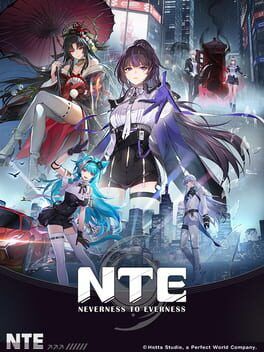

How Neverness to Everness’s Hethereau City setting, anomaly-hunting hook, and Co‑Ex multiplayer test aim to set it apart from Genshin‑style giants on PS5.
A New Urban Fantasy Challenger On PS5
Neverness to Everness is lining up to be PS5’s next big anime gacha RPG, but it is not just chasing Genshin Impact’s fantasy postcard. Hotta Studio, the team behind Tower of Fantasy, is pivoting to a dense, contemporary city instead of rolling hills and floating islands. With the Co‑Existence, or “Co‑Ex,” multiplayer test on the horizon, this is the first real chance for PS5 players to see whether its anomaly‑hunting hook and gentler monetization can genuinely stand apart from a crowded field of free to play anime games.
Hethereau City: Modern Metropolis With Supernatural Static
The story opens in Hethereau City, a modern global hub where glass skyscrapers and neon billboards sit uncomfortably close to the impossible. “Anomalies” bleed into the urban sprawl like supernatural glitches in reality, warping streets, objects, even people. Rather than being tucked far away in dungeons, the weirdness is baked directly into the city, so a casual evening drive can twist into a brush with something otherworldly.
You play as Hethereau’s first unlicensed Anomaly Hunter, a freelancer who operates in the grey zone between official agencies and desperate civilians. Your base of operations is Eibon, a slightly musty antique shop that survives by taking on anomaly‑related commissions from the public. That framing gives the game an almost detective‑show structure. One moment you are sifting through requests on the shop counter, the next you are tracing a distortion that has turned an ordinary storefront into a liminal space full of hostile entities.
Unlike many gacha RPGs that lean on high fantasy kingdoms, Hethereau is somewhere between a near‑future Asian megacity and a surrealist theme park. Streets are thick with traffic, public transport includes things like “ghost trains,” and ordinary venues hide side activities. You can stop to clear an anomaly, then drift into an arcade to chase a high score, go fishing under an overpass, play mahjong in smoky corners, or shop seasonal street stalls. Apartments are not just static menus either. You can buy or rent property, decorate it, and eventually tap into Anomaly Furniture systems that tie progression back into your home space.
That modern, playful setting changes the feeling of exploration. Instead of gliding across empty fields, you are weaving through crosswalks and shortcuts, hopping into a car or bike, and treating the whole city as a connected hub where daily life, side stories, and monster hunting constantly collide.
The Anomaly Hunter Fantasy
At the core of Neverness to Everness is the fantasy of being the person the city calls when reality misbehaves. Anomalies are more than just monsters to farm. They are framed as cases that arrive through Eibon’s door, commissions you accept from nervous customers who have seen something they cannot rationalize.
That premise supports a more episodic structure than many gacha adventures. Instead of simply pushing along a straight main quest, you work through case files and side stories that each focus on specific anomalies or neighborhoods. One case might have you tracking disturbances in a subway line, another could center around a warped mall where time skips during closing hours. The supernatural incidents thread through the city’s social fabric, which gives characters and factions an excuse to keep crossing paths with you.
Combat still leans into flashy anime action. Trailers and previews show a roster of stylized agents, each with their own weapons and elemental quirks, tag‑teaming enemies in close‑quarters arenas. Where the hook differs from Genshin‑style outings is the weight placed on investigation and cleanup rather than pure world saving spectacle. You are there to identify the anomaly, get to the heart of what is causing the distortion, and then neutralize it, typically with a boss fight or a set‑piece dungeon at the end.
Because humanity in Hethereau already lives side by side with anomalies, the game plays more like urban crisis management than a heroic fantasy epic. It is about coexistence and containment as much as it is about power escalation.
Co‑Ex Multiplayer Test: A Structured Tour Of The City
The upcoming Co‑Ex test is Hotta’s next big milestone and the clearest window so far into how Neverness to Everness will feel on PS5. Recruitment is open across PS5, PC and mobile, with a closed beta planned for early next year. Sign‑ups run through the official site, where prospective players pre‑register and fill out a questionnaire, then wait to see if they are selected. Progress from this test will be wiped, but account data is designed to sync across platforms, which hints at launch parity and cross‑progression for console users.
Rather than being a small technical trial, Co‑Ex is pitched as a content slice centered on multiplayer and shared activities. Hotta is promising large scale Anomaly Dungeons that require coordinated play, alongside more casual urban content to sample Hethereau’s daily life. These dungeons function as co‑op raids built inside warped pockets of the city, giving players structured goals, multi‑phase bosses, and the chance to experiment with team compositions in a controlled scenario.
Beyond the big dungeons, the test adds new urban activities and systems. There are expanded hangout spots, more minigames, and a prison feature that seems tied to capturing or dealing with specific enemies. It all serves a purpose as a vertical slice. PS5 players get a feel for how combat, traversal, city life, and co‑op blend together before launch, while the developers gather data on balance, server performance, and how people actually move through Hethereau.
The structure is also deliberately limited. Time‑boxed access and a full data wipe keep this from becoming a stealth soft‑launch, which should let Hotta adjust progression pacing, drop rates, and co‑op rewards without the pressure of a persistent economy.
Monetization That Tries To Break The 50/50 Curse
Where Neverness to Everness most directly takes aim at Genshin‑style contemporaries is in how it talks about gacha. Hotta and publisher Perfect World are positioning the game as free to play with premium pulls, but they are loudly advertising a few key departures from the standard formula.
The headline change is the removal of the dreaded 50/50. In many gacha RPGs, including Genshin, hitting pity does not always guarantee the banner character. You often have to win a coin flip or fail once before you are assured the limited unit. Neverness to Everness instead promises that the current promoted S rank character is guaranteed within 90 pulls on that banner. There is no secondary pity that forces you to miss the unit once before getting it.
On paper, that is a huge psychological shift for character collectors. It does not suddenly make the grind gentle, but it means every pull marches steadily toward a known destination instead of occasionally resetting your hopes. For players who approach these games as long term hobbies, predictability can matter more than raw generosity, and NTE seems designed to lean into that.
The weapon side is where Hotta tries a different tactic. Signature weapons, often the priciest part of any build in gacha titles, are not locked purely behind weapon banners. Messaging around Neverness to Everness emphasizes that you can unlock key gear through play. Whether that means grindable blueprints, crafting systems, or event rewards, it breaks the usual pattern where optimal loadouts require diving into a second expensive banner even after you have secured a character.
Combined with campaign rewards, daily activities, and likely battle pass style systems, the overall pitch is that NTE wants to look more approachable and less punishing than some of its rivals. In a market where “how bad is the gacha” is the first question a lot of players ask, that alone helps it cut through the noise.
How It Stacks Up To Genshin‑Style Heavyweights On PS5
On PS5 specifically, Neverness to Everness arrives in a very different landscape than Genshin Impact did. Console players already have multiple anime gacha options, from sprawling fantasy epics to more compact urban action games. That saturation means presentation and combat are no longer enough. A new entry has to sell a distinct world, a flexible structure, and a tolerable economy.
Neverness to Everness makes its pitch on three fronts. First is the setting, which leans into a coherent, explorable city full of modern conveniences and supernatural screwups instead of another continent of magic forests. Hethereau is built to feel lived in, with daytime distractions like driving, shopping, and interior customization sharing space with spectral outbreaks and anomaly hunts.
Second is the anomaly hunting structure. Framing main content as commissions and cases gives Hotta room to tell smaller, more self contained stories. That should suit a live service cadence where new anomalies, neighborhoods, and side characters can be layered into the city over time without constantly escalating the global stakes.
Third is monetization that tries, at least in its initial form, to blunt the sharpest edges of the gacha meta. Removing the 50/50 pity twist and tying signature weapons to gameplay instead of pure pulls do not magically make the game non‑commercial, but they send a message about the kind of friction the team is trying to avoid.
Whether those ideas are enough to push Neverness to Everness into the same conversation as the genre’s giants will depend on how they feel in practice during the Co‑Ex test. But as PS5’s next big anime gacha hopeful, it already has a clearer identity than many of its peers: a supernatural city where you punch holes in reality, drive between commissions, and build a life in the cracks between the anomalies you are supposed to contain.