

Netmarble’s Q3 2026 revenue and profit missed expectations after launches slipped, pushing the company’s rebound hopes toward a packed 2027 pipeline.
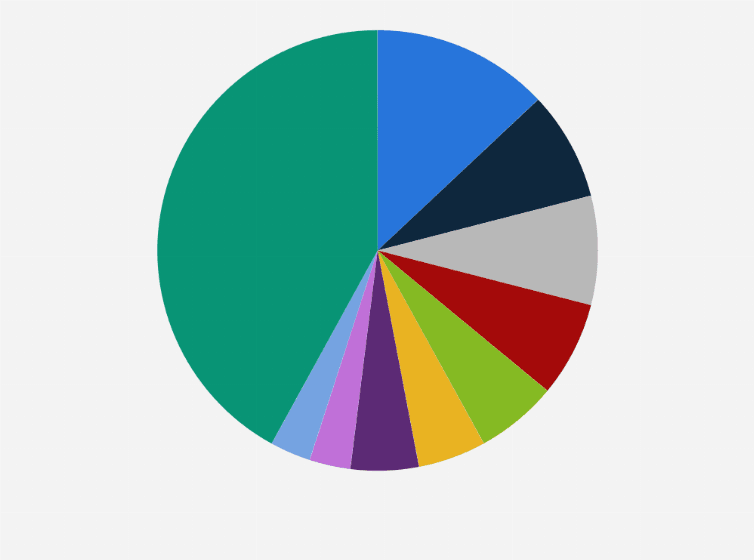
Image: statista.com
Netmarble’s quarter missed the timing window
Netmarble reported Q3 2026 revenue of 634.7 billion won, about $433 million, and operating profit of 50.4 billion won after delayed game launches reduced the quarter’s new-release lift. According to Netmarble’s financial results distributed through GamesPress, revenue declined year over year because of delays in new game launches. Seoul Economic Daily, citing the company’s November 5 regulatory filing, reported the same revenue and operating profit figures and said both came in below market expectations.
The gap is the core tension in Netmarble earnings this quarter. FnGuide had forecast revenue of 730.8 billion won and operating profit of 82.4 billion won, according to Seoul Economic Daily and MMOHuts. Actual revenue therefore landed 96.1 billion won under that forecast, while operating profit was 32 billion won below the estimate. For a publisher with a live-service-heavy portfolio, that shortfall is less about one isolated weak product and more about pipeline timing. When a launch window slips, the marketing spend, staffing load, and live operations base do not vanish, but the initial revenue spike moves into a later quarter.
The reported Netmarble Q3 2026 revenue decline was 8.8% year over year and 15.3% quarter over quarter. Operating profit fell harder, down 44.6% year over year and 37.1% quarter over quarter, according to Seoul Economic Daily, MMOHuts, and JKN. Net profit was reported at 22.2 billion won, or $15.19 million in Netmarble’s English-language release. JKN noted that the figures are K-IFRS consolidated tentative results and may change after review by external auditors.
Delayed launches cut into the profit story, not only sales
The clearest read on the Netmarble profit drop is that fewer fresh releases meant weaker high-intensity launch revenue. JKN attributed the decline to the fading initial revenue effect of Sol: Enchant, which launched in the second quarter, and a smaller contribution from new titles in Q3. That matters because a gacha, RPG, MMO, or casual casino-style title usually does its most efficient monetization when acquisition, returning-player curiosity, and launch events all collide. If that window is absent, older titles have to carry the quarter with updates and recurring spend.
Netmarble’s own public statement framed the response around quality and discipline. CEO Kim Byung-gyu said, in the company’s GamesPress release, that Netmarble is focused on reinforcing the fundamentals of its live portfolio and raising the quality bar for new titles. Seoul Economic Daily quoted him saying the fourth quarter plan is to improve profitability through updates to major titles and efficient spending while preparing a new lineup intended to support mid- to long-term growth.
That is a defensive posture for the rest of 2026. The company is not presenting Q4 as a sudden release avalanche in the source material provided. Instead, it is pointing to updates for current games, cost management, and preparation for 2027. For players, that suggests the near-term calendar should be judged by live game events and regional rollouts rather than by expecting every delayed title to reappear immediately before year-end.
The live portfolio is diversified, but no single game carried the quarter
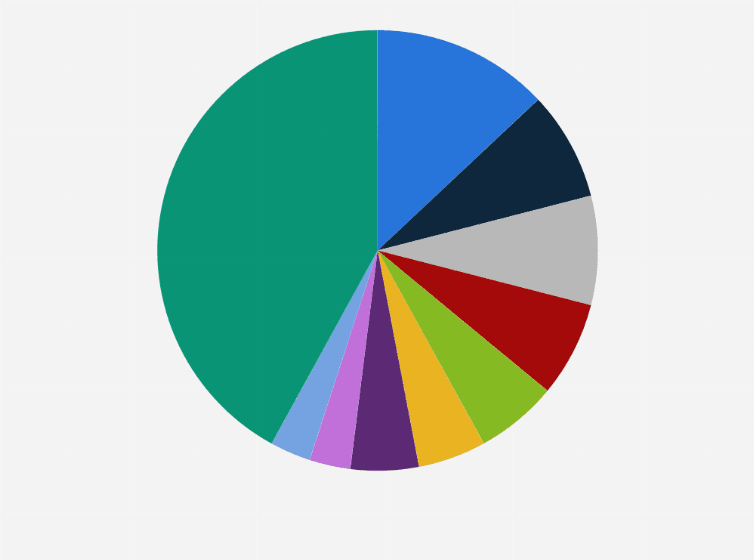
Netmarble’s Q3 mix shows a company with breadth, but breadth did not fully offset the launch gap. In the GamesPress release, Netmarble said casual games accounted for 37% of revenue, RPGs 32%, MMORPGs 25%, and other genres 6%. MMOHuts highlighted the MMORPG share for online players, noting RF Online Next and VAMPIR among stronger performers.
The title-level split also points to a portfolio without one overwhelming driver. Netmarble’s English-language release listed Sol: Enchant, Marvel Contest of Champions, and Lotsa Slots at 8% of Q3 revenue each. Cash Frenzy, Jackpot World, and RF Online Next each accounted for 7%. VAMPIR contributed 5%, while The Seven Deadly Sins: Origin and The Seven Deadly Sins: Grand Cross each contributed 4%, according to the same release.
From a strategy perspective, that mix is both insurance and constraint. A diversified portfolio reduces dependency on one game’s patch cycle, but it also means the absence of new launches is spread across the whole revenue engine. If the top titles each sit in the high single digits rather than dominating the chart, the publisher needs either steady live-ops improvement across many products or a reliable cadence of new releases. Q3 exposed what happens when that cadence slows.
Overseas revenue remains the center of Netmarble’s business
Netmarble’s global footprint remained the biggest stabilizer in Q3. Overseas revenue reached 476.2 billion won, or 75% of total revenue, according to Seoul Economic Daily and MMOHuts. GamesPress reported the same regional distribution: North America led at 40% of revenue, followed by Korea at 25%, Europe at 12%, Southeast Asia at 10%, Japan at 8%, and other regions at 5%.
That regional shape affects how delayed launches are felt. North America being the largest single region means the company’s performance is tied heavily to markets where user acquisition costs, platform fees, and marketing competition are intense. Korea remains a major base at a quarter of revenue, but Netmarble’s recovery plan cannot be read as a domestic-only fix. The company’s 2027 lineup and China licensing plans are part of the same global revenue puzzle.
There is also a cost angle. JKN reported total operating expenses of 584.3 billion won, down 3.4% year over year and 12.7% from the previous quarter. Commission expenses fell 6.9% to 209.3 billion won, but their share of total operating expenses rose to 33%, compared with 32.3% a year earlier and 31.4% in the previous quarter. That detail helps explain why lower revenue can pressure profit sharply. Even when spending is cut, platform and payment-related cost structures can keep margins tight.
The 2027 pipeline is now carrying investor expectations
Netmarble is shifting attention to a much heavier 2027 schedule. The company says it plans to release more than 13 new titles next year. GamesPress said seven titles are planned for the first half, including Shangri-La Frontier: The Seven Colossi in Japan and Solo Leveling: KARMA in Korea and Japan, with six more planned for the latter half, including Pearl in Blue and Evilbane. Seoul Economic Daily also reported more than 13 titles, naming Shangri-La Frontier and Babel Protocol among the announced games.
There are some naming differences across English-language reports. Seoul Economic Daily and MMOHuts refer to Shangri-La Frontier: The Seven Strongest Species, while Netmarble’s GamesPress release calls it Shangri-La Frontier: The Seven Colossi. JKN lists Shangri-La Frontier, Solo Leveling: Karma, WB All-Stars Raising, Guardian Tales: Dig-Dap, Fall in Blue, Evilbane, Wilderness, Babel Protocol, Project D, Project X, Project C, Dark Priest, and Project M. JKN also reported that CEO Kim Byung-kyu said 10 titles are self-published and three will be released through overseas subsidiaries.
The delay issue is most concrete in JKN’s account of the earnings announcement. JKN reported that some titles originally planned for the second half of 2026 were adjusted to 2027, with Netmarble saying the schedule changed while reviewing development results and incorporating improvements for Mongil: Star Dive and The Seven Deadly Sins: Origin. There is an ambiguity here: Netmarble’s GamesPress release also lists The Seven Deadly Sins: Origin as a Q3 top performer at 4% of revenue. The provided sources do not clarify whether JKN is referring to a broader launch, regional rollout, content milestone, or another production schedule tied to that title.
China licenses and AI efficiency are part of the rebound plan
Netmarble’s 2027 recovery is not limited to new global launches. GamesPress said Solo Leveling: ARISE and The King of Fighters All Star have received publishing licenses in China and are slated for release there. Seoul Economic Daily and MMOHuts also reported planned China releases for those two existing games. The source material does not provide specific release dates, platforms, pricing, or monetization terms for those China launches.
China licensing matters because it can create a second commercial life for existing games without the same risk profile as building a new title from scratch. Still, a license is not the same as booked revenue. Until Netmarble gives launch dates and operating details, those releases should be treated as scheduled opportunities rather than confirmed Q1 or Q2 earnings drivers.
JKN also reported that Netmarble plans to improve publishing efficiency and profitability through an AI-based work environment and improved payment structures. According to JKN, the company said it is building AI use into development, launch, and service processes. That reads like a margin strategy as much as a production strategy: if launches are delayed, Netmarble needs the future pipeline to arrive at higher quality without letting development and live-service overhead swell faster than revenue.
How to read Netmarble game delays from here
For investors and players tracking Netmarble game delays, the practical takeaway is timing. Q3 confirms that delays have already hit revenue, operating profit, and expectations. The company’s answer is not a single rescue launch, based on the source material, but a broader 2027 slate supported by existing-game updates, cost controls, China releases, and internal efficiency work.
That makes the next few quarters a test of execution. If Netmarble can keep live games stable through Q4 while giving clearer dates for the 2027 lineup, the missed Q3 can be framed as a painful schedule shift. If release windows remain vague, the market may continue treating the pipeline as a promise rather than a forecastable revenue base.
Players should wait for title-specific announcements before making plans around platforms, release dates, or regional access. The confirmed facts are the Q3 decline, the delayed-launch explanation, the regional revenue split, the genre mix, the planned 2027 slate of more than 13 games, and the China licensing status for Solo Leveling: ARISE and The King of Fighters All Star. The open questions are when each delayed game will actually ship, whether quality improvements can justify the extra time, and how much of the 2027 pipeline can convert anticipation into sustained live-service revenue.