
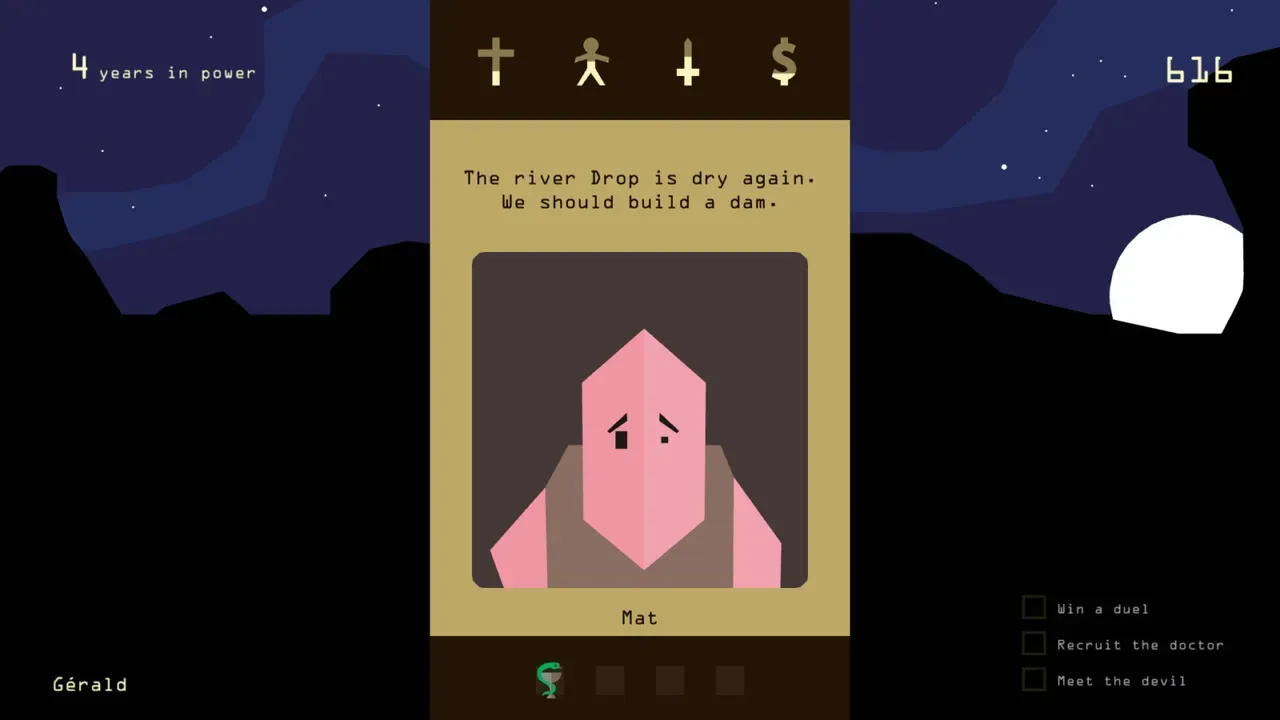

Nerial is entering hibernation after 13 years and 11 published games, with staff affected as the Reigns and Card Shark founders return to indie development.
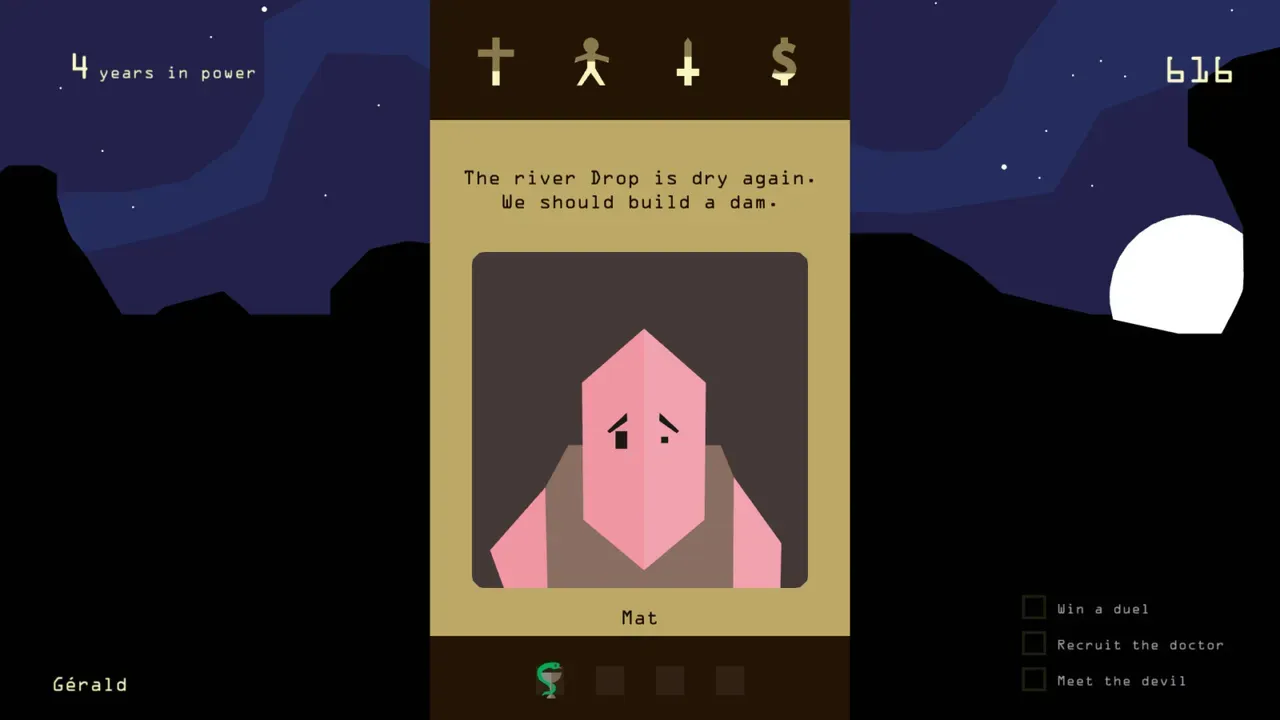
Image: hitmarker.net
Nerial is ending development after 13 years
Nerial, the studio behind Reigns, Card Shark, and The Crush House, is ending development after 13 years and 11 published games. In a statement posted to the studio’s social media account and reported by Rock Paper Shotgun, Shacknews, Mobilegamer.biz, Kotaku, and VGChartz, founders Tamara and François Alliot said they had “decided together with our partners at Devolver to end development at the studio.”
The studio described the move as “entering hibernation mode,” language that leaves a little emotional room between a shutdown and a permanent disappearance. The operational effect, though, is severe. Rock Paper Shotgun reported that the team is now “seeking new opportunities,” and Shacknews similarly reported that Nerial will end new development and release its existing staff. Mobilegamer.biz said the statement did not reveal exactly how many developers were affected, while LinkedIn posts from the founders named several Nerial staff members now looking for work.
That tension is the story. This is a Reigns developer closing after building one of the clearest indie design identities of the last decade, but the announcement is framed less as a single failed project and more as a strategic retreat from the structure Nerial had grown into. The founders say they still intend to make games. The company that made those games is stopping.
The founders are stepping back, not leaving games
The Alliot statement, as quoted by Rock Paper Shotgun and VGChartz, says Nerial’s closure is “the end of Nerial as we know it,” but “not the end of game dev” for the founders. They wrote that they are “going back to our roots,” with François Alliot’s drive to make games “as strong as ever,” but that they first need to “take a break and reflect on everything that’s happened.”
Tamara Alliot echoed that framing on LinkedIn, according to Rock Paper Shotgun, writing that Nerial had been a huge part of her and François Alliot’s lives for 13 years and that they were stopping “with great sadness” because they had “the best team in the world.” She also asked people to hire affected Nerial staff, naming Oscar Harrington-Shaw, Helen O’Dell, Neil Goodman, Gordon Speirs, Ben Obikoya, Neil Bull, and AJ Kerr. François Alliot wrote separately on LinkedIn, according to Rock Paper Shotgun, that he is going “back to being pure indie.”
Kotaku’s interview with François Alliot adds the clearest business context from the founders’ side. He described the decision as mutual with Devolver Digital, said he was happy with the relationship, and said the closure was tied both to industry pressure and to a personal need to rethink his indie career. He pointed to the post-COVID industry crash and said “AI” was “sucking out all the air from the room,” while also explaining that running an internal studio had pulled him into work that was not purely creative.
There is a small reporting wrinkle in the titles used for the founders. Rock Paper Shotgun identifies Tamara Alliot as CEO and François Alliot as creative director, while Shacknews describes them as co-CEOs. The consistent fact across the reports is that the announcement came from the husband-and-wife founders who led the studio and are now planning to pause before deciding what comes next.
Nerial’s legacy is a catalog of sharp constraints
Nerial’s reputation rests on games with tight rules and a strong sense of authorship. Reigns, released in 2016, became the studio’s breakthrough. Kotaku describes it as a major success at launch, built around Tinder-inspired swiping, short strategic decisions, and dark humor about power and mortality. Rock Paper Shotgun calls it an “elegant, lightweight strategy game” played by swiping right or left.
That design vocabulary mattered because it scaled. Nerial and Devolver expanded Reigns into licensed and themed adaptations including Game of Thrones, Animal Farm, Three Kingdoms, and The Witcher, according to the studio statement quoted by VGChartz. Mobilegamer.biz reports that Reigns: Three Kingdoms was released through Netflix, while several Reigns games have appeared through Apple Arcade and Google Play Pass. This was a studio that understood how to turn a compact system into a repeatable format without making every release feel interchangeable.
Card Shark pushed in another direction. Rock Paper Shotgun describes it as a period puzzler built around the mechanics and performance of cheating at cards, while Shacknews praised the 2022 release for its story and adaptation of card tricks into gameplay. The Crush House, released on PC in 2024 according to Mobilegamer.biz, was Nerial’s most ambitious project by the studio’s own farewell statement as quoted by VGChartz. Rock Paper Shotgun describes it as a game about people being reduced to content by gamified surveillance systems.
The throughline is constraint as strategy. Nerial’s games often asked players to read limited information, exploit rhythm, and accept consequence. That made the studio’s voice unusually clear in a market crowded with larger systems and louder production values. It also made the business fragile in the way many auteur-led indie teams are fragile: the brand was strong, but the studio still needed each project, platform deal, or publishing arrangement to carry real weight.
The catalog stays with Devolver, according to François Alliot
One practical question for players is what happens to Nerial’s existing games. Kotaku reports that Devolver Digital is keeping the rights to Nerial’s existing catalog, and François Alliot said he was happy to let Devolver have it. His explanation, as reported by Kotaku, was that he had already said everything he could say with those games. He also described Devolver as “very good friends.”
That is the clearest available answer on the studio legacy. Nerial as a development team is ending, but the Reigns, Card Shark, and related catalog do not appear, based on the sourced reports, to be reverting to the founders or disappearing into an unresolved rights dispute. None of the provided reports quote Nerial or Devolver announcing delistings, shutdown dates, price changes, or platform removals. For players, the practical guidance is simple: there is no sourced indication here that existing games are being pulled immediately, but future updates, ports, or new Nerial-developed entries are no longer something to assume.
The ownership structure is central. Devolver acquired Nerial in 2021 for an undisclosed fee, according to Mobilegamer.biz, after previously publishing several Reigns games. Kotaku reports that François Alliot said becoming an internal studio meant each Nerial game needed to be a Devolver game and Devolver needed to publish all Nerial games. He said that fit Reigns and Card Shark well, but also described a process of “second guessing” that reduced the “concentrated energy” he associated with being pure indie.
For a strategy-minded reader, that is the key resource trade. Publisher ownership can reduce certain risks, but it can also narrow the decision tree. If every project must pass through one publisher identity, funding model, and release strategy, the studio’s creative options become easier to coordinate but harder to improvise around. Alliot’s comments suggest Nerial’s next phase, whatever form it takes, will be smaller and less institutionally loaded.
The layoffs are the human cost of a smaller decision tree
The Nerial layoffs are not an abstract line item. Tamara Alliot’s LinkedIn post, quoted by Rock Paper Shotgun, directly names affected staff and asks the industry to hire them. That list includes narrative and writing, art direction, programming, QA, and production roles. Those disciplines describe a functioning studio pipeline, not a loose collective winding down after a hobby project.
Mobilegamer.biz reports that LinkedIn suggests approximately eight people have lost their jobs, including the founders, but also notes that the official statement did not disclose a number. Rock Paper Shotgun’s reporting states that the whole team is now seeking new opportunities. The safest reading is that Nerial’s development staff has been affected by the decision, while the exact headcount depends on which public posts are counted and how the founders’ own next steps are classified.
This is where the phrase “hibernation” becomes uncomfortable. It preserves the possibility of future creative work from the founders, but it does not soften the immediate labor outcome for the team. Nerial was small enough that losing development capacity means losing the studio’s day-to-day organism. The institutional memory behind a game like Card Shark sits in writers, artists, programmers, producers, and QA leads as much as in founders or IP ownership.
That distinction matters for the Card Shark studio shutdown specifically. Devolver may hold the catalog, and the founders may return to independent development, but the group that built Nerial’s recent games is dispersing. Studio legacy survives through released work, through rights ownership, and through people moving into new teams. Only one of those is neatly controlled by a publisher.
The wider indie squeeze is visible between the lines
The founders did not give a single detailed financial cause in the original closure statement, and Rock Paper Shotgun notes that the announcement does not go deep on the reasoning beyond the need for change after 13 years. Kotaku’s interview fills in some of the surrounding pressure. François Alliot said recent releases Card Shark and The Crush House were less lucrative than Reigns, while the original Reigns had performed very well for the studio roughly a decade earlier.
Mobilegamer.biz adds external estimates from AppMagic, not official publisher figures, that the original Reigns generated about $6.2 million since its 2016 launch, Reigns: Game of Thrones generated about $2.2 million, and Reigns: The Witcher generated about $191,000. Those numbers should be treated as market estimates rather than audited revenue, but they sketch the commercial arc: a breakout format, meaningful licensed expansion, then a much harder environment for later entries and adjacent experiments.
Devolver’s broader position is also part of the context. Rock Paper Shotgun points to an August shareholder circular in which Devolver’s bosses said they wanted to cease trading on the London Stock Exchange after an industry-wide “period of significant disruption and volatility.” The same document, as quoted by Rock Paper Shotgun, referred to “several impairments of underperforming titles” in an “increasingly competitive and unpredictable market environment.”
That does not prove Devolver’s financial situation caused Nerial closing. The sources do not establish that direct line, and the founders frame the decision as mutual and personal as well as commercial. It does show the meta Nerial was playing in. Smaller teams are being asked to survive a market where discovery is tougher, platform deals are more selective, parent companies are scrutinizing performance, and even respected studios with recognizable design identities can end up without a sustainable next move.
What to watch after Nerial’s hibernation
The confirmed endpoint is narrow but important: Nerial is ending development, its staff are affected, and the founders intend to take time off before returning in some independent form. There is no announced new studio name, no new project, no platform plan, no funding model, and no date for François and Tamara Alliot’s return. Anything beyond that is expectation, not announcement.
For players, the likely near-term impact is absence rather than disruption. The sources do not report immediate changes to buying or playing Reigns, Card Shark, or The Crush House. Shacknews links to the Steam page for Reigns, and the broader catalog remains associated with Devolver according to Kotaku’s reporting on rights. If you were waiting for a new Nerial-developed Reigns entry or another systems-heavy narrative experiment from the same team, the closure makes that unlikely under the old studio structure.
For developers watching the indie game layoffs cycle, Nerial is a warning about portfolio shape. A breakout hit can create a studio, a publisher relationship can professionalize it, and licensed expansions can extend the curve. But once the market changes, every layer added to protect a team can also become another constraint. Alliot’s desire to return to “pure indie” suggests a smaller, lower-overhead approach where fewer people are exposed if an idea fails to find an audience.
That may be the rational move for the founders, but it is also a bleak signal for the sector. If a studio with Reigns, Card Shark, and The Crush House behind it cannot keep its team intact, the next wave of indie sustainability may look less like scaling up and more like deliberately staying small. Nerial’s games were often about surviving bad choices with limited information. Its closure now reads like the industry applying that same pressure back onto the people who make them.