

A code-copying accusation between two Needle in a Haystack lookalikes has turned a viral Steam trend into a trust problem for indie developers and players.
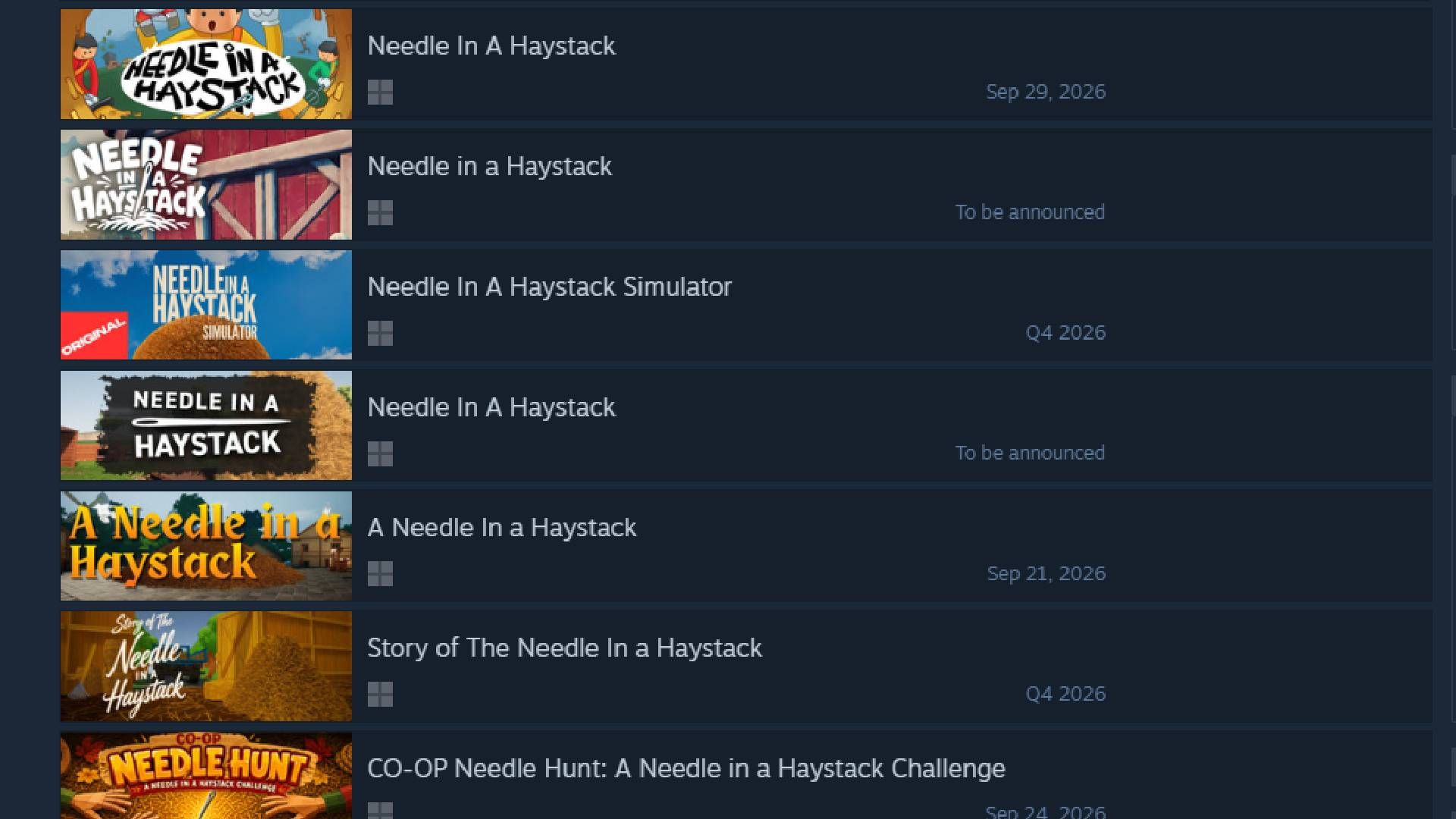
Image: kotaku.com
A clone dispute has turned Steam discovery into the story
NoGlyph, the studio behind Steam game Needle In A Haystack, has accused Little Field Studios’ A Game About Needle In A Haystack of copying actual code from NoGlyph’s game, according to a Steam post from NoGlyph cited by Kotaku and PC Gamer. The charge is unusually specific: NoGlyph says it found 13 of its classes inside Little Field Studios’ game with the same names, that more than half of the functions in that section matched exactly, and that some of NoGlyph’s own error messages were still present word for word, including one pointing to a shader from NoGlyph’s project that does not exist in the accused game.
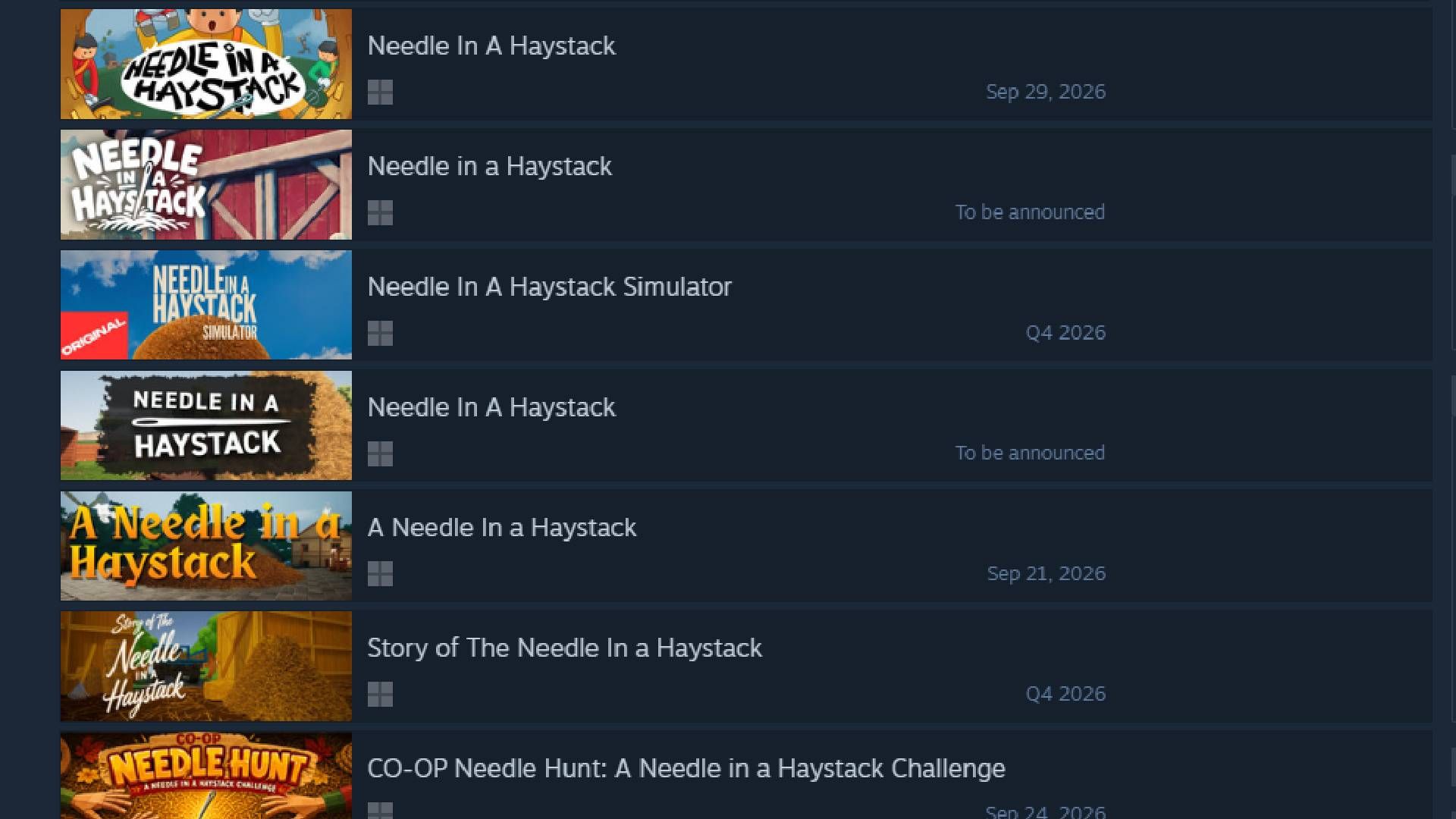
That is the concrete allegation at the center of the latest Needle in a Haystack clone controversy. It is also where the story becomes larger than one developer calling out another. NoGlyph’s Needle In A Haystack is itself one of many games that appeared after Studio Bitdot’s Needle In A Haystack Simulator went viral in August, when social clips showed a game built around the literal premise of finding one needle among millions of pieces of hay. Kotaku reported that, as of its October 18 story, it counted at least fourteen clones of Studio Bitdot’s original game on Steam.
The tension is obvious. A studio accused of making a clone is now accusing another studio of cloning its clone at the code level. For players browsing Steam, the practical problem is even simpler: when a viral idea turns into a storefront pileup of nearly identical names, premises, screenshots, and release windows, how do you know which page represents the original work, which is a fast imitation, and which may be riding the algorithm with AI-assisted production?
What is confirmed, and what is still allegation
The confirmed timeline comes from public reporting and store-linked claims. Studio Bitdot’s Needle In A Haystack Simulator became a viral Steam topic in August after social media clips circulated, according to Kotaku. NoGlyph’s Needle In A Haystack released on Steam on September 29, according to Kotaku’s report. Little Field Studios’ A Game About Needle In A Haystack released on October 16, and NoGlyph posted its code-copying accusation on October 17.
NoGlyph’s claim is about code, not merely genre overlap. In the Steam post quoted by Kotaku and PC Gamer, NoGlyph says the accused game contains copied code from its game and emphasizes that the complaint is about “actual code,” not a similar idea or similar mechanics. A mirrored report included in the provided source material attributes an additional Discord comment to NoGlyph lead developer Jahvin, saying Little Field Studios’ game contains 39 same-named methods that are byte-for-byte identical. Because that detail is from a secondary repost rather than the directly provided Steam post text, it should be treated as a reported claim rather than an independently verified technical finding.
The AI part needs the same care. Kotaku frames the incident in the context of vibe coding and AI-assisted decompilation, and PC Gamer places the dispute inside a wider wave of what it calls vibe-coded Steam games and AI-enabled clones. But Kotaku also notes that NoGlyph’s Steam post does not outright accuse Little Field Studios’ game of being “vibe-coded slop.” Kotaku further reports that NoGlyph’s own game does not appear to be vibe-coded and does not have an AI disclaimer on its Steam page. In other words, the public record supports a code-copying accusation and a wider industry concern about Steam AI copycat games. It does not, based on the provided material, establish that Little Field Studios used AI to copy NoGlyph’s project.
The strategy behind copycat speed on Steam
From a market strategy perspective, this is the predictable failure mode of a storefront built around visibility spikes. A small game goes viral, players search for the hook, and Steam’s open publishing pipeline creates an incentive for fast entrants to capture confused searches, wishlists, or impulse buys before attention moves on. The Needle in a Haystack clone wave is a clean example because the premise is legible in one sentence and the titles are easy to mimic.
Kotaku reported several similarly titled games appearing after the viral moment, including names such as A Needle In a Haystack and Story of The Needle In a Haystack. That naming pattern matters. A player searching Steam for the game they saw on social media may not remember whether the original was called Needle In A Haystack Simulator, Needle In A Haystack, or A Game About Needle In A Haystack. In a crowded storefront, that confusion is a business opportunity.
AI tools intensify that incentive even when a specific case has not been proven to use them. PC Gamer reported that Steam Next Fest’s press preview landing page showed 8,011 matches for an October event, roughly double the number of demos in June 2026, and compared that with just over a thousand demos in June 2022. PC Gamer linked the surge in low-effort clone concern to the rise of AI tools such as Claude Opus, while acknowledging that it could not confirm how many specific games were AI-made. The key shift is not that every lookalike is generated by AI. It is that the perceived cost of imitation has fallen, and that changes the risk calculation for every small developer deciding whether to show a prototype publicly.
Small developers now have to play defense before launch
The most damaging part of Steam indie game clones is not always a lost sale on day one. It is the pre-launch strategic penalty. Viral visibility used to be one of the few ways a small team could punch above its marketing budget. Now, public momentum can also act as a signal flare for imitators.
The provided PC Gamer and Head Topics material points to that anxiety beyond the haystack games. It cites Alliance Arts Inc. changing plans for Drunken Goddess Reflux, a “Russian roulette drinking survival” game, after concerns that a public demo could enable imitating or replicating the game’s presentation and gameplay before launch. According to the report, the studio would instead hold closed-environment play sessions for people who read and agree to participation requirements.
That is a grim tradeoff. Steam Next Fest and public demos are supposed to help discovery, gather feedback, and convert wishlists. If developers feel they must hide demos to avoid being cloned, the discovery system becomes less useful for the exact teams that need it most. In strategy terms, the meta shifts from “show early and build demand” toward “show late, restrict access, and preserve novelty.” That may protect a premise, but it also reduces the number of legitimate player signals that can help a good indie game survive launch week.
Valve’s storefront trust gap is now visible to ordinary players
The Needle in a Haystack clone dispute highlights a trust gap that players can see without technical knowledge. Steam may list release dates, developer names, publisher names, user reviews, tags, screenshots, trailers, and AI disclosures where applicable, but a crowded search result can still make lookalikes difficult to parse. When several games use the same core phrase and arrive in a tight release window, the store page itself becomes part of the contest.
That is why this incident lands differently from an ordinary argument about similar mechanics. A genre can have many entries built around the same idea. Sorting games, hidden-object games, incremental games, and joke simulators all borrow from shared design language. NoGlyph’s public allegation is narrower and more serious because it says specific code artifacts survived inside another release. If true, that is not a dispute over inspiration. It is a dispute over production provenance.
For Valve, the hard problem is scale. PC Gamer’s reported 8,011 Steam Next Fest matches illustrates the volume pressure around discovery and moderation. Even if only a fraction of those games are low-effort copies, the review burden is large and the player-facing damage can occur quickly. A copied or confusing listing does not need long-term success to dilute search results, harvest wishlists, or redirect attention during a viral window.
How to check a lookalike before you wishlist or buy
Players cannot decompile a game before wishlisting it, and they should not be expected to police Steam’s catalog. Still, the Needle in a Haystack clone dispute offers a useful checklist for anyone facing a wall of nearly identical store pages.
Start with release timing and developer identity. In this case, Kotaku identifies Studio Bitdot’s Needle In A Haystack Simulator as the original viral haystack game, with clips circulating in August. NoGlyph’s Needle In A Haystack released September 29, while Little Field Studios’ A Game About Needle In A Haystack released October 16. When a game appears shortly after another title goes viral and uses an extremely similar title or premise, that does not prove misconduct, but it is a reason to slow down.
Read the store page rather than relying on the capsule image. Check whether the developer has prior releases, whether the screenshots show distinct systems rather than the same joke repeated, and whether the description explains a real design beyond the viral hook. If a Steam page includes an AI content disclosure, treat that as information, not an automatic verdict. If it lacks a disclosure, do not assume AI was absent, since Kotaku notes NoGlyph’s page has no AI disclaimer while also saying NoGlyph’s game does not appear to be vibe-coded.
Look for developer updates and public responses. NoGlyph’s accusation is visible because the studio posted about it on Steam. In fast-moving clone disputes, official posts, patch notes, and community updates can tell you who is addressing concerns and who is staying silent. Also check user reviews after release, especially reviews that mention performance, broken systems, asset reuse, missing features, or suspicious similarities. For a game built on a viral premise, waiting a few days can be the strongest consumer move.
The unanswered question is how Steam handles the next viral premise
The current dispute has not resolved the most important questions. The provided sources do not include a response from Little Field Studios, a Valve enforcement action, or an independent technical audit of the accused files. They also do not establish that AI was used in this specific alleged copying incident. The strongest supported facts are NoGlyph’s public code-copying accusation, the sequence of releases, the reported number of Needle In A Haystack Simulator clones on Steam, and the broader concern from outlets and developers that AI-assisted workflows are accelerating copycat production.
That is enough to make the Steam trust issue real. Viral indie games depend on a fragile timing window. If a developer shows too little, nobody notices. If a developer shows too much, imitators may race them to the search results. If players cannot distinguish the original from a fast lookalike, the storefront rewards speed and confusion rather than craft.
Needle In A Haystack Simulator’s premise is almost comically literal, but the market lesson is serious. The next viral Steam idea may not be as easy to name, and the next clone wave may be harder to untangle. Until storefront tools, disclosures, and enforcement catch up, players should treat lookalike pages as a signal to investigate, and small developers will keep weighing every public demo against the risk that someone else can turn their momentum into a competing Steam page.