
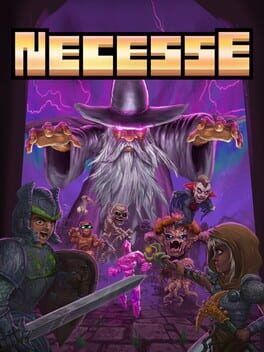
How Necesse’s first big post‑launch update rebalances close combat, streamlines settlements, and quietly rewrites the survivalbox rulebook with friendly wildlife and evolving systems.
Necesse wasted no time proving that leaving Early Access was not the finish line. Just a couple of months after its 1.0 launch on PC, Fair Games Studio has rolled out Version 1.1, a deceptively modest patch that says a lot about how this survivalbox intends to grow.
Instead of chasing flashy new biomes or a big headline boss, Necesse 1.1 digs into the systems that players actually live with: melee viability, encounter pacing, settlement management, and even the tone of its world. The result is an update that makes the game feel fairer, more readable, and a little more whimsical, without losing the scrappy edge that defines it.
The “true melee” fix: Close combat finally gets its due
Melee has always been part of Necesse’s toolkit, but in practice it trailed behind ranged and magic once you pushed into harder content. Closing the gap on fast or chunky enemies, eating unavoidable hits, and watching your armor disintegrate turned pure melee builds into a self‑imposed challenge rather than a real option.
Version 1.1 directly tackles that problem. The update improves resilience for what the devs call “true melee” weapons, the ones that require you to be right in an enemy’s face instead of leaning on projectiles or wide arcs. Paired with buffs to resilience‑related trinkets, the new values let melee characters actually stay in the pocket longer without getting shredded for every swing.
This is not framed as a one‑and‑done fix. Fair Games describes 1.1 as a first step toward fully viable melee builds, with more tuning on the way. That matters for a survival sandbox, where combat is not just about winning fights but about how you choose to express your build. When a game like Necesse is at its best, “I’m a shield‑and‑sword diver who leads from the front” should be every bit as valid as “I kite with spells from the back line.”
By bolstering resilience instead of simply inflating raw damage numbers, the patch changes how melee feels. You still need to commit to your swings and read enemy patterns, but surviving mistakes is more reasonable. That nudges Necesse away from glass‑cannon one‑shots and toward the kind of deliberate brawling that suits its pacing.
Incursions get tougher, but less lethal
That same philosophy shows up in the way 1.1 retunes incursions. These timed, punchy encounters are meant to be a break from methodical dungeon delves, but they had a habit of turning into spike‑damage roulette, especially for newer players.
The update bumps incursion enemy health while dropping their damage. Encounters still ask you to stay on top of adds, position smartly, and bring a build that can keep pressure on, but a single slip is less likely to erase you in a couple of hits.
For melee builds, this is especially important. More durable enemies give close‑quarters fighters time to leverage their new resilience instead of instantly regretting every step into the fray. For ranged and hybrid builds, incursions become more about sustained output and less about praying you never get tagged.
It is a subtle shift, but it underlines where Necesse wants to land in the survivalbox spectrum: challenging and often unforgiving, yet not so brittle that experimenting with styles or gear feels like a mistake.
Settlements that feel like actual communities
Combat tweaks might grab the headlines, yet a huge part of Necesse’s long‑term hook lives in its settlements. Once the early‑game scramble for gear and bosses slows down, your village or growing town becomes the real campaign, and managing settlers efficiently is the difference between a smooth operation and an unruly mob.
Version 1.1 targets exactly that layer of play. The standout change is the ability to search settlers by name or role. If you have ever tried to remember which miner had the better stats or which guard you equipped with that rare weapon, this is the kind of change that immediately slots into your muscle memory.
On top of that, you can now assign settlers to groups. That single feature quietly unlocks a much higher ceiling for organization. Want a dedicated expedition crew you can pull together quickly for a boss run or an incursion? Tag them as a group. Prefer tidy labor divisions between crafters, farmers, and guards? Groups let you sort that without scrolling through a mass of names every time.
For a genre that often treats NPCs as glorified storage and crafting menus, Necesse continues to push in a more systemic direction. Settlers are not just passive infrastructure. They form squads, respond to your planning, and make the world feel like something you are actively orchestrating rather than simply inhabiting.
Friendly sharks and a softer survivalbox tone
The most eye‑catching addition in 1.1 is not a new weapon type or boss, but a collection of “friendly creatures” that bring a different texture to the world: butterflies, fireflies, cave cropplers, and yes, sharks.
Sharks in Necesse are not the blood‑in‑the‑water threat you might expect from a survival game. The patch notes and coverage lean into the joke that these sharks are “friend‑shaped,” and the team went so far as to follow up in 1.1.1 by removing Shark Fin Soup and replacing fins with scales as a drop. That tiny change tells you a lot about how Fair Games sees the tone of Necesse’s world.
Instead of treating every creature as potential loot or a hazard to be neutralized, the game is starting to fill in space with beings that simply exist alongside you. Butterflies and fireflies turn otherwise utilitarian areas into places that feel lived in. Sharks relax the usual videogame assumption that anything toothy in the water must be hostile.
For a survivalbox, those are important aesthetic choices. The genre has long leaned on brutal hostility as the default mood, from hunger meters to ambient predators. Necesse’s 1.1 update suggests a different tack, one where danger is present in structured activities like incursions and boss hunts, but the overworld can also be playful and even a little cozy.
More maps, perks, and the slow burn of post‑launch support
Version 1.1 also slips in a handful of additions that speak to Necesse’s future rather than any single patch cycle. New maps for fights like the Chieftain, Cursed Crone, and Sage & Grit broaden the way repeatable content plays out, similar to the existing dungeon and pirate maps. Incursion trees gain new perks and quests, folding more rewards and build choices into what used to be straightforward side content.
None of these changes redefine Necesse on their own. Instead, they show a studio iterating quickly in response to lived‑in play. Many of the bug fixes and quality of life tweaks in 1.1 come directly from community reports. The follow‑up 1.1.1 hotfix that tweaks shark drops is another example of how nimble the team intends to be.
In a genre where some games stagnate once they hit 1.0, Necesse is aligning itself with the survival and sandbox titles that treat launch as the moment the real design work begins. Combat balance is being revisited. Settlements are getting more tools to become genuine hub systems. The world is being repopulated with life that is not only there to hurt you.
What 1.1 says about Necesse’s future
Taken together, the melee buffs, incursion retuning, settlement tools, and friendly wildlife point to a clear vision for Necesse’s post‑launch life. This is not a game chasing content bloat or shock‑value difficulty. It is a survivalbox that wants you to stick around, experiment, and build something that feels personal.
Making “true melee” viable opens up room for players to express themselves in combat instead of defaulting to safe ranged metas. Grouped settlers and better search tools turn the settlement layer into a real management game rather than a chore. Friendly sharks and ambient critters signal a world that can afford to be charming without losing bite where it counts.
If Version 1.0 was Necesse’s statement that it could stand alongside the big names in the survivalbox space, Version 1.1 is its quiet promise that it will not stop evolving just because it reached “full release.” For players, that means a game that is not only more balanced and approachable today, but one that looks ready to keep changing in thoughtful, player‑driven ways.