
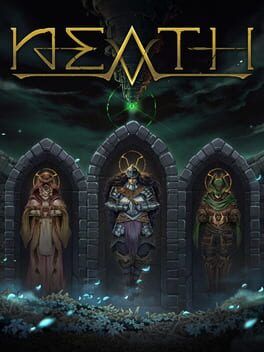

How Neath turns Rogue Legacy’s wild runs into a grim, god‑warped tactical RPG that could define strategy gaming in 2026.
Cellar Door Games is walking away from cheerful, bouncy castle‑crawling and straight into the pit. Neath, announced during the PC Gaming Show: Most Wanted 2025 and slated for 2026, is the studio’s first full pivot from side‑scrolling roguelite action into a grim, turn‑based strategy RPG. Where Rogue Legacy and its sequel were about momentum, constant motion and barely controlled chaos, Neath is about stopping, thinking and then twisting fate itself.
An irradiated inverted tower and a god that will not sit still
Neath takes place in a decaying world overshadowed not by a mountain or a citadel but by an inverted tower that reaches down into the earth. It is irradiated, corrupt and visibly wrong, a kind of cosmic drill that has chewed reality into layers of horror and ruin. That tower is both the backdrop and the structure of the game. Every run is a descent into its warped floors, with each plunge guided and sabotaged by a fickle god.
That god’s presence is expressed through Taboos, shifting divine edicts that literally rewrite the rules of a given run. A Taboo can twist enemy behavior, change how abilities function or alter fundamental expectations about positioning and safety. Cellar Door’s earlier work used traits and random modifiers as fun chaos levers, but they rarely changed what kind of game you were playing. Neath’s Taboos are more oppressive and systemic, closer to a dungeon master changing the campaign mid‑session. The tower is irradiated in a narrative sense, soaked in divine fallout that mutates every dive.
This upside‑down megadungeon also gives Neath a very different rhythm to Rogue Legacy’s sprawling castles. The new game leans into 90s dungeon crawler vibes, trading quick platforming loops for a feeling of claustrophobic advance: floor by floor, encounter by encounter, never sure which godly mood swing will define the next stretch.
From jump‑and‑slash to plan‑and‑sacrifice
Rogue Legacy’s structure rewarded twitch reflexes and on‑the‑fly improvisation. Neath replaces that with a turn‑based system that moves more like a tabletop session than an action platformer. At its core is a constantly shifting turn order you directly manipulate. Every action is a lever that changes who acts next, and crucially, you are not limited to your own party. You can dictate what enemies do on their turns, steering them into vulnerable positions, forcing them to waste actions or even making them harm each other.
Two key mechanics define this combat model. Engagement locking lets you trap units into commitments, forcing them to see attacks and actions through while you plan around the outcome. The attack resolve system breaks each exchange into clear steps, so you can puzzle out sequence and consequence. Instead of watching a blur of animations, you are reading the battlefield as a stack of cause‑and‑effect moments that you can reorder and exploit.
This is a radical shift from Cellar Door’s past games. In Rogue Legacy, an enemy attack pattern was something to dodge around in real time. In Neath, it becomes a resource you hold in your hand. You know that this cultist will swing at your weakest ally three “ticks” from now, unless you shove them off a ledge, lock them into a different engagement or force them to waste their turn on a mind‑addled ally you have already written off.
Fear and mental collapse feed directly into this system. Enemies can freeze your warriors in terror, locking them out of acting and turning them into liabilities on the grid. Neath’s answer is not just a curative spell but physical intervention. You might knock an enemy back to break their hold, shovel an ally out of a kill zone or willingly move another character into the path of a lethal strike. The game is quietly nudging you toward the kind of grim tactics other SRPGs only gesture at: rescue through sacrifice, and victory at the cost of someone’s mind or body.
If Rogue Legacy encouraged you to treat each hero as a disposable lottery ticket, Neath wants every loss to hurt. The moment‑to‑moment is less about raw execution and more about valuation. Who is worth saving this turn, and who will you let the tower claim so the others can get one floor deeper?
Roguelike structure with slower, sharper teeth
Beneath the combat layer sits a roguelike loop that borrows the studio’s love for randomization but swaps out the slapstick tone for creeping dread. Runs are built around ascending the tower’s inverted layers, with each floor offering new enemy combinations and environmental effects shaped by current Taboos and event encounters.
Those encounters are where the “godly whims” concept really digs in. You may stumble into an altar that offers powerful relics at a terrible cost, or a reality‑bent room where the usual rules of turn order or positioning are temporarily shredded. The impression is of a god that is not simply malevolent but bored, constantly rewriting its own rules to see how far it can push the mortals in its toy tower.
Permadeath ties all of this together. Cells of warriors are not meant to be permanent fixtures; they are destined to be spent. When a character dies, they are gone for that run, and the specific synergies and tactical lines you had built around them go with them. That makes the tower itself feel like an attrition machine. Every floor you survive is bought with someone’s last stand, someone else’s sanity, or an opportunity you sacrificed three rooms ago. Between runs, meta‑progression and unlocks will carry over in a way familiar to Rogue Legacy fans, but within a single descent the loss of a party member is final and immediately felt.
Neath is not chasing a pure roguelike template. It is closer to Into the Breach, where each run is short, brutal and heavily shaped by a few key decisions and synergies. The difference is that here you are micromanaging a full party inside an unstable dungeon, not a trio of mechs on a clean grid. That introduces a density of information and consequence that Cellar Door has never attempted before.
Party management in a world that wants to break them
For Neath to stand out in 2026’s crowded SRPG field, its party management needs to be more than a stat puzzle. Early details hint at a focus on fragility and synergy over raw power. You control a band of fragile warriors, each carrying abilities that are less about solo heroics and more about interaction.
Relics and unlockable skills slot these warriors into tightly interlocked roles. A shieldbearer who can take hits in place of allies meshes with a glass‑cannon caster whose abilities grow more powerful as allies survive near‑death experiences. A control‑oriented support might specialize in knocking enemies into specific tiles, pairing neatly with a debuffer who spreads zones of terror or corruption that punish any unit forced into them, friend or foe.
The trick, and Neath’s potential secret weapon, is that everything feeds back into the mutable turn order. Positioning, status effects and sacrifice are not just tactical flourishes; they are ways to rewrite the upcoming script of actions on the timeline. A healer who tends wounds might also move that ally’s turn forward. A relic might let you banking an unused action as an interrupt you can cash in when a boss is about to unleash something devastating. Over time, your party becomes less a group of individuals and more a machine for manipulating sequence itself.
Godly whims threaten that machine at every step. Taboos can undercut comfortable builds or force new synergies. A run where healing is diminished will push you toward damage redirection and preemptive control. A rule that punishes clustered units turns heavy support compositions into liabilities. You are not just building a party that works; you are building one that can adapt when the god gets bored of your current solution.
Permadeath raises the stakes on every recruitment and upgrade decision. Losing a lynchpin character with a rare relic or a hard‑earned ability is not just a hit to your numbers; it might collapse an entire strategy. Neath will live or die on how it rewards players for enduring that pain, whether through long‑term unlocks that invite fresh approaches, or through runs that remain short and explosive enough that failure feels like an invitation to experiment rather than a punishment.
Why Neath could be a 2026 standout
Neath’s pitch is not just “Rogue Legacy, but tactical.” It is Cellar Door Games attempting something structurally and tonally different: a grim, systems‑heavy roguelike where you do not just optimize damage, you negotiate with an unstable god and an equally unstable timeline.
Three elements in particular give it a shot at standing out in 2026:
First is the setting. The irradiated inverted tower is not a reskinned dungeon; it is a physical metaphor for the entire design. Everything points downward and inward. The deeper you go, the stranger the rules, the more warped the reality. It taps into the same eldritch curiosity that drives games like Darkest Dungeon or Sunless Sea, but channels it through a concrete tactical structure instead of pure narrative.
Second is the “control both sides” combat hook. For a genre that often leans on predictable initiative bars and safe, repeatable patterns, Neath’s insistence that you can and should dictate enemy behavior feels fresh. It turns every encounter into a logic puzzle where the monsters are just more pieces on your board.
Third is the fusion of godly whims and roguelike structure. Randomness in roguelikes is usually about loot and layouts. Letting a capricious deity rewrite the underlying tactical rules during a run is a more aggressive, more interesting layer of volatility. If Cellar Door can keep those changes legible and fair, it could give Neath the kind of memorable, “you won’t believe what this run did to me” stories that define the best games in the genre.
Rogue Legacy’s legacy will always be about heirs hurtling through a cartoonishly lethal castle in search of gold and glory. Neath asks a different question: what happens when those heirs are slow, breakable humans picking their way down a poisoned tower while a bored god flicks the rules around like puzzle pieces? If the answer lands, Neath will not just be Cellar Door’s post‑Rogue Legacy experiment. It could be one of strategy RPG’s defining pivot points in 2026.