
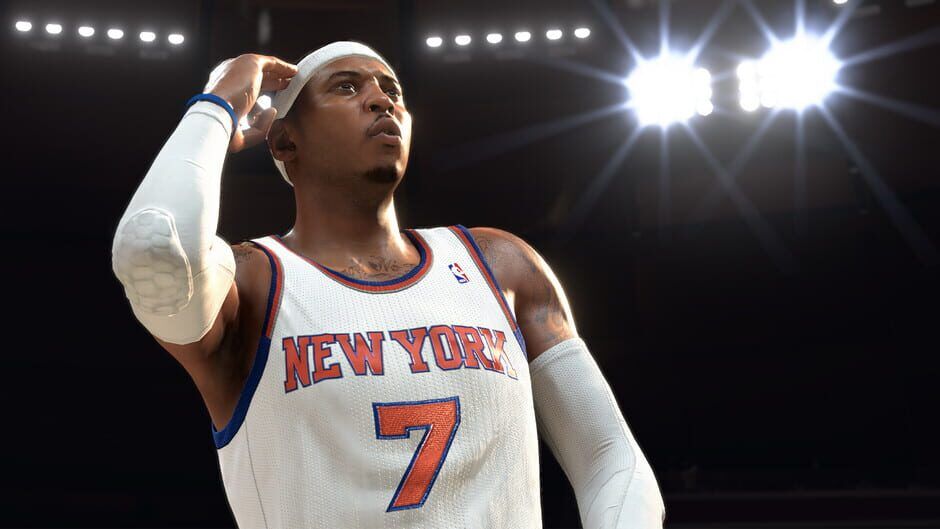

A player-focused breakdown of NBA 2K26 Season 4 and Update 4.0: how MyCAREER, MyTEAM, and The W really change, what the community says is still missing, and what it all means for 2K26 as a live-service game.
NBA 2K26 Season 4 is live alongside Update 4.0, and on paper it looks like a typical mid-year content drop: an All-Star theme, new rewards, and a thick set of patch notes. Underneath that marketing layer is a more important question for anyone still grinding 2K26: does Season 4 actually change the way you play?
This explainer walks through what Season 4 and Update 4.0 mean where it really matters: MyCAREER, MyTEAM, and The W. It also looks at what players say is still missing, and how this season fits into 2K26’s long-term, live-service arc.
MyCAREER: All-Star Weekend Becomes A Real Arc
Season 4’s headline for MyCAREER is that All-Star Weekend is no longer just a cinematic pit stop. The season is themed entirely around the run-up to Los Angeles All-Star, and your MyPLAYER is pushed into that spotlight.
The big change is how integrated the core All-Star events feel from a player perspective. The 3-Point Contest, Slam Dunk Contest, and the All-Star Game itself are framed as career milestones instead of one-off minigames. If you care about immersion, Season 4 makes the mid-season stretch feel like a genuine high point in your MyCAREER schedule rather than a scripted obligation you click through for VC.
In The City, the rewards track leans hard into that spectacle. Cosmetic headliners like the Tyrese Haliburton Big Head Mask at higher tiers, the All-Star Hockey Jersey, and the cel-shaded Hyperfade Suit give you some of the loudest fits in 2K26 so far. The Hyperfade Suit is the first of its style in The City, so visually it sends a clear signal that you hit the top of the seasonal grind.
Where Season 4 feels more like evolution than revolution is in the loop itself. You still earn XP the same way, and the grind curve is familiar if you have played the first three seasons. For returning players, Season 4 does not rip out progression systems. Instead it tries to make the middle of the NBA calendar feel special, then stacks more cosmetics and themed events on top.
The returning Lunar New Year “Wear & Earn” events fit neatly into that pattern. You equip specific themed gear, hit the courts, and get a little XP and cosmetic bump for playing during the window. For anyone who logs in daily, these are nice accelerators. For lapsed players, they are a gentle way back in, but they do not dramatically shorten the overall grind.
Update 4.0 itself is very light in career-specific systems changes. The standout note is a fix for a hang when entering a third NBA season, which matters if you push a single MyPLAYER long term. Outside of that, gameplay tuning is conservative and mostly stability focused, so your builds and usual playstyle carry straight into the new content.
MyTEAM: One Of The Strongest Seasonal Ladders Yet
If you main MyTEAM, Season 4 is more impactful than a quick read of the rewards track might suggest. The progression ladder is stacked from the moment you log in.
Everyone starts Season 4 with an Amethyst Tyrese Maxey Evo at Level 1 that can evolve up to a 94 OVR. For casual and budget players, this is a ready-made backcourt piece you can build around from day one. It lowers the barrier to having a competent guard without spending on packs.
At the other end of the ladder sits a 99 OVR Dark Matter Russell Westbrook at Level 40. He is clearly the aspirational chase card for the season, built for an aggressive, downhill style that fits how many players already attack in online play. The middle tiers are not filler either, with cards like Diamond Thabo Sefolosha, Pink Diamond DeAndre Jordan, Galaxy Opal Coach Tyronn Lue, and a 99 OVR Dark Matter Angel Reese in the higher 30s filling several roles on budget lineups.
Taken together, Season 4’s reward structure gives you a viable path to a competitive lineup almost purely through playing. You can build a solid core of guards, wings, a defensive big, and even a top-end coach without touching the auction house. That does not erase the pay-to-win edge of pack openings, but it does mean dedicated grinders are less boxed out of high-level teams.
Where Update 4.0 factors in is performance and reliability. A smoother game with fewer hitches during online play matters more in MyTEAM than anywhere else, and 4.0 is primarily about fixing stability issues rather than changing meta-defining mechanics. There is no new badge economy or major overhaul to how XP is earned. If you understood the MyTEAM grind in Season 3, you can hit the ground running in Season 4.
Pro Pass and Hall of Fame Pass now sit over the top of this structure with 40 additional reward tiers. For paying players, these passes add extra layers of cosmetics and premium cards such as a Galaxy Opal Aaron Gordon. The practical effect is that there is now a clear separation between three lanes: free players grinding the main ladder, players who buy a single seasonal pass, and players who invest in the highest tier. From a design angle, Season 4 leans harder than ever into that tiered progression ecosystem.
The W: Slow But Steady Progress
The W continues to grow in small and deliberate steps rather than headline-grabbing overhauls. Season 4 introduces new weekly and seasonal challenges that align with the WNBA free agency window, which gives the mode some welcome real-world texture.
The reward track gets another refresh, and while there are no radical structural changes, the message is clear: Visual Concepts is treating The W as part of the same seasonal cadence as MyCAREER and MyTEAM. For dedicated W players, that consistency matters. You can expect a reason to log in each week, earn new cosmetics, and push your player forward without worrying that support will quietly dry up mid-cycle.
At the same time, Season 4 does not solve long-standing requests around deeper franchise-style management, cross-mode integration with NBA content, or a more robust online competitive structure. The W is in a better place than it was earlier in the generation, but Season 4 keeps it in the “solid side mode” bucket rather than elevating it to a true co-headliner.
What The Community Says Is Still Missing
Season 4 and Update 4.0 land in a familiar tension for the 2K community. The content is generous on paper, but many players feel that the underlying issues of 2K26 remain mostly untouched.
On the online side, players still want more decisive action on latency, input delay, and server performance during peak hours. Update 4.0 is largely bug-fix-driven and does not advertise deep netcode work, which has led to predictable skepticism in competitive circles. Until players see consistent improvement over several weekends, “stability patch” is just a phrase in the notes.
Monetization is another sore point. While Season 4’s reward ladders are some of the most player-friendly of the cycle, the presence of multiple premium passes on top of packs and VC grinds reinforces concerns that 2K26’s best cosmetics and some of its most exciting cards are locked behind additional spending. The fact that progression systems themselves remain mostly untouched only fuels the sense that 2K prefers to layer monetized paths on top of existing grinds instead of meaningfully rebalancing them.
In MyCAREER and The City, players continue to ask for more variety in core gameplay objectives and less emphasis on repetitive quest structures. Season 4 reskins that loop with All-Star flair and flashy rewards, but does not dramatically change the to-do list for a typical session. If you were already burning out on delivery-style quests and fetch objectives, nothing in Update 4.0 meaningfully rewrites that experience.
For The W, the biggest criticism is scope. The new challenges and rewards are welcome, but they do not address calls for deeper modes that mirror the ambition of MyCAREER or MyTEAM. WNBA fans still see a gap between how prominently 2K markets the league and how much development time the dedicated mode appears to receive.
How Season 4 Fits The Live-Service Trajectory
Looked at across all modes, NBA 2K26 Season 4 feels like a classic mid-cycle live-service chapter that prioritizes retention over reinvention.
On the positive side, it shows that Visual Concepts is committed to a consistent seasonal drumbeat. Every major mode gets something new to chase. The return of Rivet City Championship taps into nostalgia from NBA 2K16 and proves the developers are willing to revisit and repurpose older content that the community still loves. The soundtrack update curated by A-Trak is another reminder that 2K treats music as part of the game’s identity, not an afterthought.
At the same time, Season 4 also confirms where 2K26 is not likely to move much this year. The update does not introduce sweeping gameplay systems, new economy rules, or radical changes to how XP flows. Instead, it layers content, cosmetics, and progression rewards on top of a foundation that is already well understood.
For players, the practical takeaway is straightforward. If you enjoy the core of NBA 2K26 and just wanted more to do, Season 4 delivers. MyCAREER gets a more meaningful All-Star arc, MyTEAM offers one of its best reward ladders yet, and The W continues to grow in small but steady steps. If you were hoping for a structural reset to grinds, monetization, or online performance, Season 4 and Update 4.0 mostly confirm that those bigger shifts will have to wait for either later in the cycle or the next yearly release.
Season 4 will not change anyone’s mind about NBA 2K26, but it does a strong job of rewarding the players who are still here. Whether that is enough in a live-service era with more competition every year is the question that will hang over the rest of this game’s life.