
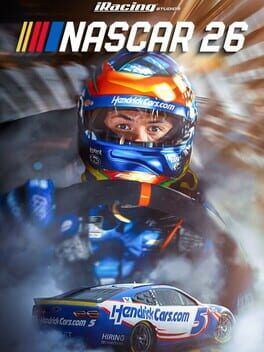
The final NASCAR 26 dev diary outlines launch timing, Career, The Chase, dynamic tracks, handling changes and platform availability on PS5, Xbox Series X|S and PC.
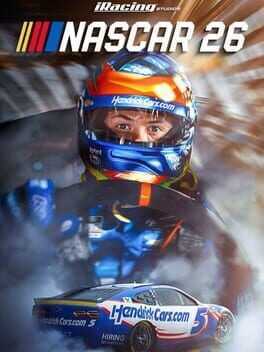
Image: IGDB
Store links: NASCAR 26 on Steam
A final feature pitch lands as early access begins
NASCAR 26’s final pre-launch developer diary has arrived right as the buying decision gets real. Operation Sports reported that Dev Diary #4 was released ahead of Gold Edition early access on September 15, with the Standard Edition following on September 18. That timing gives PS5 and Xbox Series X|S players a last official look at the game’s major systems before launch, but it also leaves the most important question unanswered until players get extended time with it: how much of the handling and race-weekend ambition holds up outside a trailer.
The confirmed launch picture is clearer than it was earlier in the summer. A GamesPress release from NASCAR and iRacing Studios lists NASCAR 26 for PlayStation 5, Xbox Series X|S and PC via Steam, launching September 18. Daily Downforce separately lists the Standard Edition at $59.99 and the Gold Edition at $79.99, with Gold releasing September 15. MSN’s release-info coverage says the Gold Edition includes four monthly Paint Scheme Packs from September through December, 1,000 Career Rep Points, a $10,000 Career Mode bonus and VIP Employees.
For the NASCAR 26 launch, the tension is between scope and verification. The sources point to a bigger, broader sequel with new modes, cross-platform multiplayer, dynamic tracks, improved physics and AI, side drafting and more training tools. None of the provided material is a performance analysis or review, so buyers should treat this dev diary as a feature roadmap rather than proof that the full package is polished on day one.
Career Mode is being framed around long-term team building
The final NASCAR 26 dev diary, as covered by Operation Sports, puts Career Mode near the center of the pitch. The outlet says the mode is designed to reflect more of a real NASCAR race weekend, with ideas pulled from NASCAR broadcasts, websites and the sport’s presentation. The meaningful part for returning players is that Career is described as extending beyond preparing a car for the next race. Operation Sports reports that team investments, facility upgrades and long-term planning can affect progress months or years later.
That aligns with the earlier GamesPress release, which described an improved career mode featuring weekly strategic planning that follows the player throughout a driving career. Daily Downforce’s running feature list also names Team Facility Upgrades and the Door Bumper Clear Podcast in Career Mode among confirmed additions. Taken together, the confirmed direction is clear: iRacing Studios is trying to make Career feel less like a linear event ladder and more like a team-management arc layered over the driving.
The unanswered part is balance. The sources confirm upgrade systems, planning and career bonuses, but they do not explain how aggressively those bonuses affect progression, how VIP Employees change the Gold Edition economy, or whether the $10,000 Career Mode bonus meaningfully speeds early-game development. That matters for racing fans who prefer earning pace through setup work and driving consistency rather than edition-linked boosts. Before buying Gold primarily for Career advantages, check the platform store description and any launch-week player reporting on how those bonuses are applied.
The Chase gets a standalone role alongside Career and Championship
NASCAR 26’s most straightforward mode addition is The Chase. Operation Sports reports that The Chase will appear in Career and Championship while also receiving its own standalone mode. In that standalone version, players can compete in the Cup Series, O’Reilly Series or Craftsman Truck Series, choose which drivers make the field, select where they begin and run the final 10 races while pursuing a championship.
The official GamesPress release similarly describes The Chase as a customizable standalone mode built around fighting for a championship over the last 10 races against the field of the player’s choice. For fans who do not want to commit to a full career calendar, that is the practical hook. A condensed playoff run can create higher-pressure racing without asking for the same time investment as a full season or multi-year career.
There is one important boundary in the confirmed information. NASCAR 26 is said by GamesPress to include four NASCAR series: the NASCAR Cup Series, O’Reilly Auto Parts Series, Craftsman Truck Series and ARCA Menards Series, with real drivers from each. Operation Sports’ description of The Chase names Cup, O’Reilly and Craftsman Truck for that mode. The provided sources do not confirm ARCA participation in standalone Chase. If ARCA support is a deciding factor, wait for the in-game mode menus or an official mode breakdown before assuming it is included there.
Dynamic tracks are the handling feature to watch
The biggest NASCAR 26 gameplay features are not all mode-based. Operation Sports says Dev Diary #4 highlights a dynamic track system that brings over technology long associated with iRacing. According to the outlet, grip levels change as races progress, the racing groove can widen and alternate lines can become more useful depending on how the track develops. GamesPress also names dynamic tracks as a major new feature that evolves over the course of every race weekend.
For a NASCAR game, that is a consequential promise. A static racing surface often rewards repetition: find the fastest lane, manage tire wear and defend track position. A changing surface asks more of the player. If the upper lane gains grip, if the preferred groove widens, or if a braking zone changes after a run develops, the car should reward adaptation rather than memorization. That is the kind of system that can make long races feel less scripted, especially on ovals where small differences in entry speed, throttle pickup and lane choice stack up over a stint.
The phrase to focus on is “if.” The sources confirm the feature and describe the intended behavior, but they do not supply frame-rate targets, physics comparison data, race-length scaling details or console-specific performance notes. Dynamic surface simulation can improve racing, but it also creates risk if the feedback through a controller is unclear. PS5 and Xbox players should pay close attention at launch to whether the changing grip is readable through steering response, tire audio and lap-time behavior, rather than only visible in developer explanation.
Handling changes could make short tracks and road courses feel different
Operation Sports reports that NASCAR 26’s driving experience has received attention at tracks that demand heavier braking and acceleration, including short tracks and road courses. The outlet also says players will have more controller tuning options, and that changes to the underlying handling mean some tracks may require relearning compared with NASCAR 25.
That last detail is the most useful expectation-setting in the NASCAR 26 dev diary coverage. A better racing model is not always instantly easier. Heavier braking zones expose weight transfer, rear stability and throttle discipline. Short tracks punish impatient corner entry, while road courses magnify brake release, curb behavior and traction on exit. If NASCAR 26 has materially changed those areas, returning players should expect their NASCAR 25 habits to carry over only partially.
GamesPress and GameDaily both refer to improved physics and AI, and GameDaily’s source text also lists side drafting among the new features. Daily Downforce separately lists road course penalty improvements, NASCAR’s 750 HP Package, DNFs and left-side-tires-only pit stops as confirmed features. Those are all promising for authenticity, but they also depend heavily on implementation. Cleaner side drafting only matters if cars react predictably in traffic. DNFs only improve immersion if failures and incidents feel fair. Penalty improvements only help road racing if track limits and contact calls are consistent.
Peak Performance Mode sounds useful, especially if the data is clear
One of the more specific training additions is Peak Performance Mode. Operation Sports reports that the mode brings Jamie McMurray in as a coach, with ride-along instruction and SMT data comparisons that let players measure their own laps against McMurray’s. The reported comparison points include braking, throttle and lift points around the track. GamesPress also identifies Peak Performance as a new training mode and notes that the developer diary discusses its impact.
That is a smart target for a console NASCAR audience because the hard part of stock-car driving is often invisible. New players can see that they missed the corner, but they may not know whether the problem was braking too late, lifting too early, pinching the exit, or picking up throttle before the car settled. If SMT data is presented cleanly, Peak Performance could turn lap-time loss into something diagnosable.
The practical caveat is interface quality. Telemetry is only as helpful as its readability. The source material confirms that players can compare data, but it does not show how deep the tools go across different tracks, assists, controller settings or race conditions. Competitive players should check whether Peak Performance supports the combinations they actually use, especially if they plan to tune controls around a gamepad rather than a wheel.
Before buying on PS5 or Xbox, check platform details and edition value
The platform story is mostly settled. GamesPress says NASCAR 26 launches for PlayStation 5, Xbox Series X|S and PC via Steam. TheXboxHub’s coverage also frames the game around Xbox Series X|S, PC and PS5, and its social preview text mentions cross-play. GameDaily likewise lists cross-platform multiplayer among new features. The provided sources do not name PS4 or Xbox One versions, so last-generation console owners should not assume support unless a storefront listing says otherwise.
For buyers comparing editions, the confirmed split is simple but worth checking in your region. Daily Downforce lists Standard at $59.99 for September 18 and Gold at $79.99 for September 15. MSN lists Gold extras including four monthly Paint Scheme Packs, Career Rep Points, a Career Mode cash bonus and VIP Employees. If you mainly want online racing, the value of those Career-focused bonuses may be lower than early access and paint content. If Career is your main mode, the question is whether those boosts improve pacing or shortcut too much of the team-building loop.
The most sensible launch-week approach depends on your tolerance for first-week uncertainty. Players who want the earliest access and are already sold on NASCAR 26 PS5 Xbox support have a confirmed Gold path. Players who care about handling fidelity, AI consistency, cross-play stability and dynamic-track behavior should wait for console impressions after longer races, especially on short tracks and road courses. The final dev diary lays out an ambitious NASCAR 26 gameplay features list. The buying call should come down to how those systems feel over a full stint, not how complete they sound in a pre-launch video.