
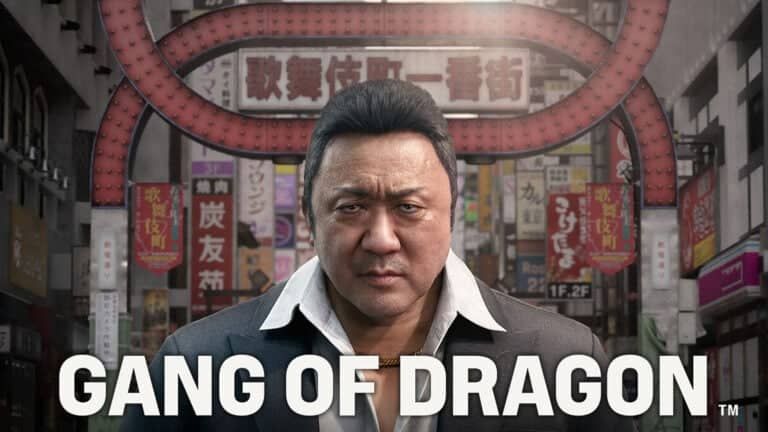
Nagoshi Studio shuts down after NetEase funding cuts, leaving Gang of Dragon without a reported path forward and exposing the risk behind NetEase’s overseas studio retreat.
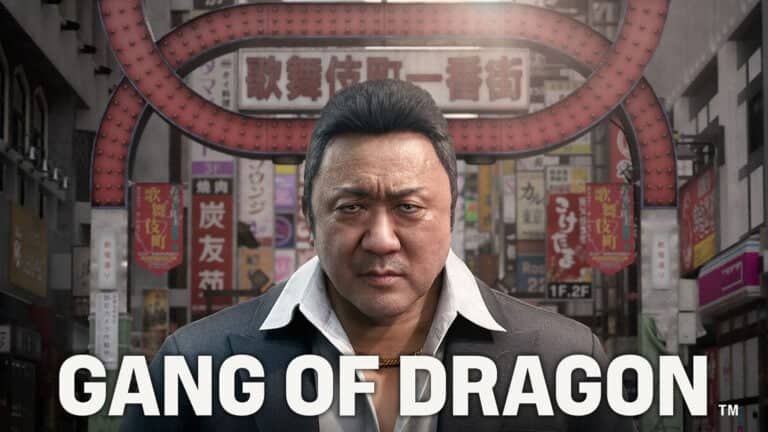
Image: gameranx.com
Nagoshi Studio’s closure turns a funding crisis into a final outcome
Nagoshi Studio has officially closed, ending the NetEase-backed venture founded by Yakuza creator Toshihiro Nagoshi and leaving its debut project, Gang of Dragon, with no reported route to release. The concrete confirmation comes from Japan’s Official Gazette, Kanpo, which listed the company among dissolutions. GamesIndustry.biz, citing the Kanpo notice, reports that the studio was officially dissolved by a shareholders’ resolution on October 31.
That formal notice matters because the story had been stuck for months in the gap between a public funding cut and the question of whether the studio could survive it. Bloomberg previously reported, and multiple outlets including VGC, GamesIndustry.biz, and Polygon repeated, that NetEase told employees in March it intended to stop funding Nagoshi Studio. At the time, the studio’s future depended on whether another sponsor would step in or whether the developer could continue independently.
The Gazette listing closes that window. VGC reports that Nagoshi Studio is now the latest casualty of NetEase’s international development pullback. GamesIndustry.biz adds that the developer had reportedly tried to find new sponsors without success. No source material provided for this story includes a separate public cancellation notice for Gang of Dragon from NetEase or Nagoshi Studio, so the clean distinction is this: the studio closure is confirmed by the Japanese public listing, while Gang of Dragon canceled is the practical industry reading of a project whose developer has dissolved after losing funding and failing to secure a new backer.
The reported cost overrun that broke the deal
The turning point was not creative disappointment, at least not based on the available reporting. The decisive figure in the sources is financial: Bloomberg reported that NetEase learned Gang of Dragon would need at least another ¥7 billion, or about $44.4 million, to reach completion. VGC and Polygon both cite that reported funding requirement, while GamesIndustry.biz says reports indicated the same estimate.
That number reframes the closure. Gang of Dragon had already been presented publicly, with GamesIndustry.biz reporting that it debuted at The Game Awards in December 2025 and VGC saying it was described as deep into development. A project can be deep into development and still be far from commercially safe if its remaining burn rate, production scope, talent commitments, technology pipeline, or marketing needs are larger than the funder expected.
From a strategy perspective, this is the kind of late-stage decision publishers hate but sometimes make when portfolio priorities change. The sunk cost is already gone. The question becomes whether the next $44 million has a convincing path to recovery. If NetEase was already reducing overseas exposure, a premium action game from a new studio, based on a new IP, with no established launch window or platform plan in the provided public material, would have had to clear a high bar internally.
Gang of Dragon’s reveal now looks like a promise the business could not keep
Gang of Dragon was positioned as a major statement from Nagoshi’s post-Sega career. VGC describes it as an action game starring South Korean-American actor Ma Dong-seok, known for Train to Busan, The Outlaws, and Marvel’s Eternals. Polygon characterized it as a Yakuza-style crime drama and said its cinematic trailer suggested a more realistic and violent take on gangster life in Tokyo’s Kabukicho district than the Yakuza games.
That comparison was unavoidable because of Nagoshi’s history. GamesIndustry.biz notes that Nagoshi joined Sega in 1989, spent years in the AM2 arcade division, later served as Sega’s chief creative officer until 2021, and continued as creative director and general director at Ryu Ga Gotoku Studio, the team behind Like a Dragon. Polygon adds that he worked on Daytona USA, Shenmue, and Super Monkey Ball before creating the Yakuza series.
The commercial problem is that a cinematic reveal does not solve ownership, funding, or asset-control questions. GamesIndustry.biz reports that NetEase told Nagoshi Studio it was free to continue on its own, but would need to bear the corresponding costs if it wanted to keep the assets or brand. That detail is crucial for anyone wondering whether another publisher could simply rescue Gang of Dragon. The sources do not say who now controls the IP, whether the assets are transferable, or whether the game could be restarted elsewhere under the same name. Without those answers, there is no reliable basis for expecting a revival.
There is also a timeline conflict around the studio’s origin
The broad picture is consistent across sources: Nagoshi left Sega’s long-running orbit, formed a new studio under NetEase, revealed Gang of Dragon, lost funding, and the company has now dissolved. One detail is less tidy. VGC says Nagoshi Studio was formed in 2021, while GamesIndustry.biz says Toshihiro Nagoshi founded Nagoshi Studio under NetEase Games in 2022. Polygon also describes the studio as founded in 2022 by Nagoshi and key members of Ryu Ga Gotoku Studio.
That discrepancy does not change the closure, which is backed by the Kanpo dissolution listing. It does affect how we read the development runway. If counted from 2021, Gang of Dragon had a longer incubation period before its 2025 reveal. If counted from the 2022 NetEase formation, the studio still had several years before showing its first title. Either way, the sources point to an expensive new IP that had progressed far enough to be revealed publicly but still required a large remaining investment.
For readers, the safer conclusion is not that Gang of Dragon was close to launch. The safer conclusion is that it was visible. Public visibility and production completion are different milestones, and the reported ¥7 billion still needed to finish the game is the key evidence separating the two.
NetEase’s retreat is now a pattern, not an isolated cut
Nagoshi Studio shuts down in the middle of a wider NetEase reset. VGC reports that the publisher has significantly scaled back its international game development operations after years of investment in studios around the world. The same report names T-Minus, FPC, and Bad Brain among closures, and says NetEase split from Vancouver-based Worlds Untold, founded with Mass Effect writer Mac Walters, as well as Seattle-based Jar of Sparks, founded by Xbox veteran Jerry Hook.
Polygon similarly describes NetEase as slimming down its gaming portfolio and divesting overseas investments since 2024, citing multiple studio closures, including the new MMO studio from World of Warcraft designer Greg Street. VGC also points to Ouka Studio, the Tokyo-based developer behind Square Enix’s Visions of Mana, as having closed in 2024.
Japan has not been outside that pressure. GamesIndustry.biz notes that Nagoshi Studio is not the only Japanese developer to end its partnership with NetEase. Grasshopper Manufacture, led by Goichi “Suda51” Suda, split from NetEase to become independent. In that case, Suda framed the move as a mutually discussed decision made with NetEase’s cooperation, saying the studio wanted to deliver titles in a wider variety of styles and that it continued to value the relationship.
That contrast is important. Grasshopper’s split, at least publicly, came with a path to independence. Nagoshi Studio’s path appears to have ended at the financing table. The pattern is a publisher reducing risk across an overseas portfolio, but the outcomes differ depending on project cost, ownership terms, studio leverage, and whether another funding source is available.
The strategic lesson is harsh for auteur-led studios
Nagoshi Studio had the kind of founder profile that usually gives a new developer attention, recruiting power, and early credibility. Nagoshi’s name connected Gang of Dragon to decades of Sega history and to the audience that follows the Yakuza and Like a Dragon lineage. In a healthier funding market, that might be enough to buy time for a costly debut.
The current publisher environment is less forgiving. Based on the reporting available here, NetEase did not simply cancel an unannounced experiment before anyone noticed. It cut funding after a public reveal, after the studio had built a market-facing identity, and after a star-led project had been pitched to players. That is a sign of portfolio discipline becoming more important than prestige.
For players, the practical guidance is simple. There is no confirmed release window, no confirmed platform list, no price, and no store availability for Gang of Dragon in the provided source material. Anyone seeing old trailers or announcement posts should treat them as historical material rather than evidence of an upcoming launch. Until NetEase, Nagoshi, or another rights holder announces a transfer, revival, or new project, Gang of Dragon has no reported active development home.
For the industry, the sharper question is how many overseas-backed studios can survive if their first games require another major round of internal approval late in production. NetEase’s funding cuts show the risk of building around a single patron: when the patron’s strategy changes, even a famous creator and a high-profile reveal may not be enough to keep the game alive.