
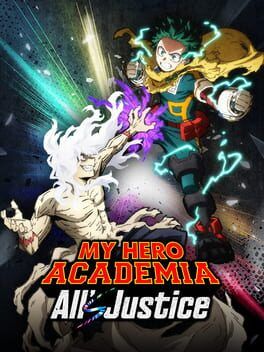

The opening cinematic and Final War framing in My Hero Academia: All’s Justice remix some of the manga and anime’s biggest moments into a playable, 3v3 arena showdown without losing their emotional punch.
Bandai Namco has talked up My Hero Academia: All’s Justice as “One Last Smash,” and you feel that mandate before you ever touch the controls. The opening cinematic is less a straightforward credits reel and more a thesis statement for how this game wants to translate the manga’s Final War arc into a three-on-three arena brawl. It is an argument that this story about legacies, sacrifices, and successors can live quite comfortably inside a dizzying tag‑team fighter.
From its first frames, the cinematic lays out a visual language that the rest of All’s Justice keeps returning to. Deku’s narration over a stark, almost monochrome collage of early-series moments is ripped directly from the anime’s habit of letting him frame his journey in hindsight. Here, though, the imagery is already tilting toward combat spectacle. Scenes of him reaching for All Might on that fateful day at Dagoba are cut together with present-day flashes of Final War Deku, cloak tattered, Danger Sense crackling like a thunderstorm around him. Instead of a quiet build, the camera whips from past to present so quickly that it feels like the character select carousel before a match, reinforcing that every version of these heroes is about to collide in a single arena.
The cinematic’s smartest trick is how it folds the sprawling Final War battlefields into readable, stage-like compositions. The manga plays the Final War as chaos: multiple fronts, simultaneous showdowns, and cutaways between heroes stretched to their limits. All’s Justice keeps the scale, but it constantly re-centers things into circular, three-character vignettes. You see Deku, Bakugo, and Todoroki step forward together as rubble arcs behind them like a half-formed arena wall. On the other side, Shigaraki, All For One, and Dabi emerge through a swirl of dust that conveniently frames them within a rough ring. The game is quietly teaching you that this carnage is going to be experienced in trios, no matter how large the war becomes.
Fans will immediately pick up on the way key panels and cuts from the Final War arc are re-staged. Bakugo’s most harrowing moment from the manga, usually framed in stillness and silence, is reimagined with a looping slow-pan around his body as his upgraded Gauntlets flare brighter than ever. The effect is less about gore or shock and more about explosive power. When the trailer then cuts to him landing beside Deku and All Might in his golden, “future hero” motif, it signals how All’s Justice is comfortable compressing the timeline so long as the emotional truth stays intact. This Bakugo is both the kid who almost lost everything and the pro-level bruiser you will tag in for clutch finishes.
All Might’s presence in the opening is another deliberate remix. Chronologically, his Final War role is complicated, and the manga leans heavily on imagery of a retired symbol of peace trying to stand one last time. The game’s cinematic nods to that by lingering for a moment on his slim, post-retirement silhouette framed against a ruined skyline. But it does not keep him there for long. Just as quickly, the camera crashes into a wide shot of a fully powered-up All Might, cape blazing, charging alongside current-era heroes. The move is pure arena-fighter fantasy, but the transition from frail to mighty doubles as a visual shorthand for “assist” behavior. In play, All Might is the comeback button. In the cinematic, he literally smashes through his own limitations to join the fray.
Shigaraki and All For One, meanwhile, are staged almost like raid bosses rather than traditional rivals. Their shots tend to loom over the faux arena, with the camera circling low to emphasize their reach and area denial. During one standout moment, Shigaraki’s Decay spreads across the ground in a circular pattern that looks suspiciously like the boundary of a danger zone. It is a nod to how his Quirk plays in the manga while quietly explaining how it will translate to an actual stage hazard once you start playing. The same applies to All For One, whose swirling, multi-Quirk aura is framed as a dome of overlapping hitboxes rather than a simple glow. Even without tutorial prompts, the cinematic is already telling you what kind of monster you are about to fight.
The choice to focus on the Final War arc gives All’s Justice a license to stack power-ups, evolutions, and late-series costumes right out of the gate. The opening cinematic capitalizes on this by parading Class 1‑A and the Pro Heroes in versions that would normally be separated by seasons of growth. Uraraka gets a brief shot in midair that fuses her tentative early heroism with the more composed, gravity-bending confidence she shows near the series’ conclusion. The camera frames her all alone against a drifting debris field, then smash cuts to her floating teammates around her like orbiting satellites. Visually, it reads as a tease of aerial team setups rather than simple fan service.
What keeps the whole thing from feeling like a hollow sizzle reel is the way it uses manga-like composition tricks to make even simple clashes feel like big moments. Impact frames appear as single-color flashes that mimic ink splashes, freezing silhouettes for just a heartbeat longer than a typical fighting game hit-spark. When Deku and Shigaraki rush each other, their collision is rendered almost exactly like a double-page spread, with the action line stretching diagonally across the screen before collapsing back into motion. You are looking at something you have seen in black-and-white panels, but the camera movement and particle effects convert that memory into what the game cares about most: striking, readable contact.
The Final War framing also lets All’s Justice lean heavily into the idea of inherited will, something that plays particularly well in a genre built on assists and tag mechanics. The cinematic makes a point of chaining shots across generations. Gran Torino’s scarf whips across the frame and, in the very next cut, is echoed by Deku’s own tattered cloak as he lunges forward. Endeavor’s flames cut to Todoroki’s ice, then to Dabi’s blue fire, creating a visual rhythm that links three branches of the same legacy in a handful of seconds. These transitions mirror how a well-timed assist call or character swap in an arena fighter can feel like passing a baton mid-combo.
There is an elegance in how the game uses its intro to reconcile two very different tones. The Final War arc in the manga is dense with grief, doubt, and finality, while a 3D tag fighter thrives on immediacy and spectacle. All’s Justice negotiates this conflict by letting quieter moments bleed into hype rather than trying to keep them apart. Shots of exhausted heroes catching their breath are framed from the same angles used later to showcase team entrances. You see Midoriya on his knees, then you see him in almost the same pose as he rises, framed by two allies at his back, the sky literally brightening behind them. The message is clear: this is a war that might end everything, but every low point is just a breath away from your next Plus Ultra.
In keeping with Bandai Namco’s other anime fighters, the OP track is doing as much heavy lifting as the imagery. The song builds from a nostalgic verse over flashbacks to a chorus that slams in right as the Final War rosters face each other on either side of the screen. The hook loops a vocal “go beyond” motif that syncs neatly with slow-motion clashes during the chorus. It feels engineered to live rent-free in your head while you queue up online matches, much like the best openings from the anime itself.
The result is a cinematic that functions less as an optional flourish and more as a primer for how to emotionally read the story mode that follows. When you drop into your first mission, you already have a mental map of who stands with whom, which rivalries matter, and how this Final War is being sliced into digestible, arena-sized chunks. All’s Justice might be a 3v3 fighter at heart, but its opening sequence shows a clear respect for the beats and themes of the manga’s conclusion. Rather than simply stapling the license to a familiar combat template, it uses the Final War framing to make even pre-match intros feel like the closing chapters of a long-running saga.
Viewed as a companion to the main review, the takeaway is that My Hero Academia: All’s Justice understands the assignment when it comes to turning late-series drama into explosive playable moments. The mechanics might be familiar to anyone who has thrown down in an anime arena fighter before, but this opening cinematic and its Final War focus give the game the kind of narrative weight and visual throughline that fans of Horikoshi’s finale are likely to appreciate every time they hit Start.