
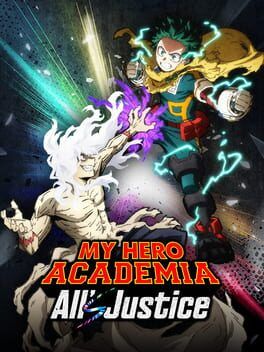

Bandai Namco and Byking return to UA with MY HERO ACADEMIA: All’s Justice, a 3v3 arena fighter that pushes into the anime’s Final War arc, expands the roster, and sets up a new era of online hero vs. villain showdowns.
MY HERO ACADEMIA: All’s Justice is lining up to be the series’ biggest videogame moment yet, pulling the anime’s climactic Final War arc into a new 3v3 arena fighter that chases both spectacle and depth. Developed once again by Byking and published by Bandai Namco, it is set to launch on February 5, 2026 for PlayStation 5, Xbox Series X|S, and PC.
For anime fans, this is the first game built specifically around the endgame clash between Heroes and Villains. For fighting and action-game players, it looks like a focused evolution of the My Hero arena formula, with faster team combat, a larger roster, and an early roadmap built around a full Season Pass.
Arena fighter first, action game always
Bandai Namco is positioning All’s Justice as a 3D arena fighting game rather than a full action RPG. The core loop is built on 3v3 team battles in wide, destructible stages, where you swap between characters mid-fight and weave Quirk-driven combos together.
Every character’s Quirk defines their kit and movement, which should feel familiar to anyone who played the earlier One’s Justice titles. The difference this time is a heavier emphasis on team mechanics. You build a trio, tag in partners for assist-like follow-ups, and chain Rising-powered strings that send opponents flying across the arena.
Rising is the game’s new power-up state. Triggering it temporarily boosts attack power, movement speed, and Quirk actions. In practice it works like a momentum swing or burst phase, letting you cash out meter on explosive damage or use the extra speed and movement to reset neutral and flip the pace of a match. For competitive-minded players it looks like the main lever for comebacks and clutch finishes.
Outside of the core versus play, All’s Justice layers in more structured, story-driven content. It is not an open-world or stats-heavy RPG, but Bandai Namco is clearly trying to give solo players more to chew on than a simple arcade ladder.
The biggest My Hero Academia roster yet
All’s Justice leans hard into being the definitive My Hero roster so far. Bandai Namco is already calling it the largest playable lineup the series has seen in a game, pulling from both sides of the conflict and across the anime’s full run.
Class 1-A returns as a complete squad, with Deku, Bakugo, Uraraka, Todoroki, and the rest of the class represented with move sets tuned around their late-series power levels. Pro Heroes like Mirko and Best Jeanist step in as heavy hitters and support specialists, while the villain side stacks icons like All For One, Shigaraki, Dabi, and more, including their final, full-powered forms.
Two of the most important faces of the Final War also headline the marketing. Deku in his Rising form and All For One in a Chaos variant are both playable and can be unlocked early through pre-purchase. Normally, these versions are gated behind in-game conditions, which hints at some kind of progression or challenge structure baked into the roster unlocks for players who come in after launch.
Between the base cast and the promised post-launch additions in the Season Pass, All’s Justice is clearly built as a platform that can keep layering in characters as the anime’s endgame plays out.
Final War arc story coverage
Where earlier games tried to track the anime season by season, All’s Justice skips ahead to the big finish. The main story mode is centered on the Final War arc, the last all-out clash between the Hero forces and the League of Villains.
The campaign is pitched as a cinematic retelling of that final conflict, with key battles framed through multiple perspectives. Promotional material highlights moments like Bakugo’s stand against All For One and Deku’s desperate struggle to stop and possibly redeem his destined enemy. For anime-only viewers, that sets expectations that the game is going to play deep into the story’s conclusion, so spoiler caution is in order if you are not caught up.
Beyond the central campaign, there are two major single-player frameworks that stretch the coverage well beyond the Final War itself. Team-Up Mission drops Deku and Class 1-A into a virtual training space. You assemble squads of classmates and run them through combat scenarios on original maps, fighting villains under simulation rules and checking off mission-style objectives. It functions as a side story that also doubles as a lab for experimenting with team compositions.
Finish enough of that mode and you unlock Archives Battle, which pivots from the future back through the show’s history. Archives Battle lets you replay iconic clashes from across the series in a more curated format, connecting the early days of UA and the League’s emergence to the war-torn finale showcased in the main story. For fans, it is a way to revisit the big rivalries with the benefit of the new combat system and late-game character kits.
Online play and early support plans
While Bandai Namco has not laid out a detailed netcode breakdown or ranked-play roadmap yet, the structure around All’s Justice makes its online focus obvious. It supports both single player and multiplayer across its platforms, and its entire combat design is tuned to fast, expressive 3v3 battles that naturally translate to competitive online play.
On the support side, the game is launching with three editions that outline the first wave of post-release content. The Deluxe Edition bundles in a Season Pass along with a bonus collectible card, and Bandai Namco has already dated the pass’s full delivery window. All Season Pass characters are planned to be available by February 6, 2027, roughly one year after release.
The Ultimate Edition goes a step further, layering on a seven-piece HUD banner set for cosmetic customization and a 20-costume pack that expands outfit choices across the cast. Bandai Namco notes that these items and the Season Pass content may be sold separately, which suggests a piecemeal DLC rollout with periodic costume drops and new fighters hitting the roster over that first year.
For competitive and casual online players alike, that means All’s Justice is being treated as an ongoing service-style fighter, even if it keeps the traditional premium price tag. Expect balance patches, character pass waves, and ongoing tweaks as Byking dials in the meta around Rising states, team compositions, and high-level Quirk tech.
A new high bar for licensed arena fighters
All’s Justice is aiming squarely at two overlapping audiences. If you follow My Hero Academia primarily for the story, this is positioned as the definitive playable version of its endgame, with enough flash and multiple viewpoints to stand alongside the anime’s climactic episodes.
If you are a fighting or action-game fan chasing strong systems first, it offers a 3v3 arena ruleset with clear emphasis on mobility, momentum and team synergy. The Rising mechanic promises a more deliberate resource game than earlier My Hero titles, while the expanded roster and costume support show Bandai Namco is serious about keeping it active.
With launch set for early 2026 and a full year of DLC already sketched out, MY HERO ACADEMIA: All’s Justice is shaping up as both a sendoff to the anime’s central saga and a potential new pillar in the arena-fighter space. Whether you are here to relive Deku and Bakugo’s last stand or to lab out the most oppressive villain trios you can assemble, this looks like the next big licensed tie-in to watch.