
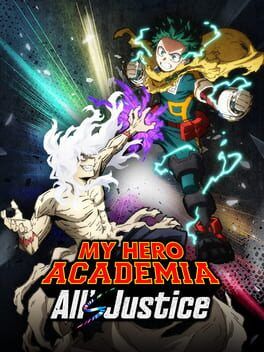
Bandai Namco's Switch 2 specs for My Hero Academia: All's Justice confirm 1080p in handheld and docked play, but a lower frame-rate target than PS5 and Xbox.
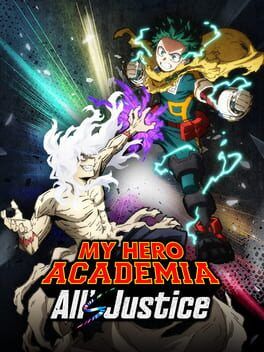
Image: IGDB
Store links: My Hero Academia: All's Justice on Steam, My Hero Academia All's Justice: Season Pass on Steam, My Hero Academia All's Justice: Lady Nagant Hero Costume on Steam
Switch 2 gets the same resolution, but not the same frame-rate target
Bandai Namco’s official comparison chart for My Hero Academia: All’s Justice now lists the Nintendo Switch 2 version at 1080p in both TV and handheld mode, with a frame rate of up to 30 FPS. Nintendo Everything and Nintendo Life both report those figures from Bandai Namco’s site, and both note the same contrast: PlayStation 5, PlayStation 5 Pro, Xbox Series X, and Xbox Series S are also listed at 1080p, but those versions target up to 60 FPS.
That makes the Switch 2 release technically unusual in a specific way. This is not a lower-resolution port trying to hide behind portability. According to the published specs, My Hero Academia All's Justice Switch 2 delivers the same 1080p output target as the other console versions. The cut is in temporal resolution, the number of frames the game can present per second.
For a 3D arena fighter built around 3v3 battles, quick movement, assists, cinematic attacks, and large Quirk effects, that tradeoff matters more than it would in a slower single-player game. At 60 FPS, a new frame arrives about every 16.7 milliseconds. At 30 FPS, that interval is about 33.3 milliseconds. Bandai Namco has not provided input-latency measurements, netcode details, or a breakdown of whether game logic differs by platform, so the frame-rate listing alone does not tell the whole competitive story. It does, however, set the expectation: Switch 2 players should prepare for a version that looks sharp at its target resolution, but updates half as often as the PlayStation and Xbox versions when those platforms reach their listed maximum.
Handheld play benefits most from the 1080p target
The strongest case for the Switch 2 version is handheld clarity. Nintendo Everything points out that 1080p matches the native resolution of the Switch 2 screen, so there is no higher handheld output target to ask for on the device itself. If Bandai Namco’s listing holds in regular play, character models, UI text, and stage effects should be presented at the panel’s full pixel count rather than being softened by a lower internal target in portable mode.
That matters for My Hero Academia: All’s Justice because Bandai Namco describes the game as a super-powered 3D arena fighter with characters appearing in their latest and most powerful forms, framed by a “Refined Battle System.” In arena fighters, readability is often the first casualty when the screen fills with projectiles, lock-on movement, cinematic supers, and three-character team interactions. A 1080p handheld target should help with health bars, cooldown information, spatial awareness, and recognizing which character is active during chaotic exchanges.
The practical caveat is the “up to” 30 FPS wording. Both Nintendo Everything and Nintendo Life use that phrasing from Bandai Namco’s comparison chart. “Up to” is a ceiling, not a guarantee of a locked frame rate. Until independent testing or review code shows frame pacing and worst-case performance, players should not assume every Story Mode climax or 3v3 scramble will remain perfectly even. For casual portable play, 1080p at up to 30 FPS may be an acceptable trade. For players drilling reactions, punishes, and movement timing, the unanswered question is stability, not the headline number alone.
Docked matches expose the frame-rate gap more clearly
Docked play is where All's Justice Switch 2 performance becomes easier to compare against the other console versions. Bandai Namco’s chart, as reported by Nintendo Everything, lists 1080p for Switch 2 in both modes and 1080p for PS5, PS5 Pro, Xbox Series X, and Xbox Series S. On a TV, then, Switch 2 is not being separated by output resolution in the published specs. It is separated by the 30 FPS maximum.
For local or online matches, that changes the feel players should expect. A 30 FPS arena fighter can still be playable, especially if animation timing, lock-on movement, and defensive options are tuned around that target. Many anime arena fighters lean harder on positioning, resource use, team composition, and matchup knowledge than on one-frame links. Still, twice the presentation rate on other consoles means smoother camera rotation, clearer animation transitions, and potentially easier visual confirmation when an opponent whiffs, vanishes, calls a partner, or starts a big commitment.
The key word is “potentially.” Bandai Namco has confirmed frame-rate targets, not input delay, rollback status, matchmaking behavior, or cross-platform play. None of the supplied source material confirms cross-play. None confirms whether Switch 2 players will be matched only with Switch 2 users or whether performance targets interact with online matchmaking. Until Bandai Namco states those details or players test the launch build, the safest read is simple: if docked competitive feel is your priority, the PS5 and Xbox versions have the stronger published frame-rate target. If your priority is playing on Switch 2 hardware, the resolution spec is respectable, but the motion target is lower.
The Switch 2 release arrives later, with platform-specific features
Nintendo Life reports that Bandai Namco announced the Switch 2 version after My Hero Academia: All’s Justice had already released earlier in 2026 on PS5, Xbox Series X|S, and Steam. ScreenRant gives the earlier launch window as February 2026 for PC, Xbox, and PlayStation. The Switch 2 version is scheduled for September 4, 2026, according to Nintendo Life and ScreenRant, which cite Bandai Namco’s announcement and press materials.
The later release is not presented as a bare port in the available coverage. Nintendo Life reports that the Switch 2 version includes online battle through GameShare, and ScreenRant describes that feature as letting players enjoy online battles with family and friends through GameShare via GameChat. Nintendo Life also says a new minigame mode featuring Class 1-A students is being added through a free update, with a Pac-Man collaboration included in that update.
Those extras change the buying decision, but they do not erase the performance split. Switch 2 is the version with the portable use case and Nintendo-specific social hooks. The other console versions, based on Bandai Namco’s listed specs, are the versions with the higher maximum frame rate. That is a clean platform identity: convenience and feature fit on one side, smoother output on the other.
Anime arena fighters can tolerate 30 FPS, but players should calibrate expectations
My Hero Academia: All’s Justice is described by Bandai Namco as a 3D arena fighter covering the series’ Final War, with Story Mode, Team Up Mission, Archives Battle Mode, and 3v3 battles. That structure matters when judging the My Hero Academia All's Justice frame rate target. This is not being sold as a traditional 2D tournament fighter where long-term competitive communities usually expect exact frame data, low latency, and 60 FPS presentation as table stakes. It is an anime arena fighter built to stage spectacular matchups from the source material.
A 30 FPS cap is therefore not automatically disqualifying for the audience most likely to play through the Final War story, clear missions, and run casual matches. Big supers, team attacks, and cinematic sequences can still land with impact at 30 FPS if frame pacing holds. In handheld mode, the 1080p image target may do more for overall comfort than a lower-resolution 60 FPS mode would have, especially for players focused on campaign content and character fantasy.
For improvement-minded players, the concern is different. Lower frame rate narrows the number of visual updates you get before making a decision. If you are trying to react to approach angles, punish unsafe specials, or confirm whether an assist covered recovery, fewer frames can make the game feel heavier. That does not mean the Switch 2 version cannot be learned. It means your timing and visual checks may not transfer cleanly if you later move to a 60 FPS version, and labbing on Switch 2 may build habits around a different presentation cadence.
Editions, bonuses, and the current information gaps
Nintendo Life reports that My Hero Academia: All’s Justice on Switch 2 will be available in standard, deluxe, and ultimate editions. The Deluxe Edition includes the season pass and five additional playable characters planned for post-launch release, while the Ultimate Edition also includes the season pass. The same report says a package version will use a Game-Key Card. Early purchases are listed as unlocking Izuku Midoriya Rising, All For One Chaos, and 30,000 hero coins, described as in-game currency for items and minigames.
The supplied source material does not provide Switch 2 pricing, file size, upgrade-path information for owners on other platforms, or a physical cartridge alternative to the reported Game-Key Card package. It also does not confirm whether the Switch 2 version includes every update already available on PS5, Xbox, and Steam at launch, apart from the free minigame update Nintendo Life describes.
There is also a naming wrinkle in the wider scraped material around the trailer. One third-party repost page labels the video “MY HERO ACADEMIA: All’s Justice 2,” but Bandai Namco-linked coverage, Nintendo Life’s game page, Nintendo Everything’s report, and ScreenRant’s article identify the Switch 2 release as My Hero Academia: All’s Justice. The publisher-facing name is the one to follow unless Bandai Namco announces otherwise.
Which version should players target?
If you want the cleanest published performance profile for matches, the current specs point away from Switch 2. Bandai Namco’s comparison chart, as reported by Nintendo Everything and Nintendo Life, gives PlayStation and Xbox the same 1080p resolution target with up to 60 FPS instead of up to 30 FPS. For players who care about smoother camera movement, faster visual feedback, and consistency when learning matchups, that is the safer technical bet based on confirmed information.
If you want My Hero Academia All's Justice resolution parity in handheld mode, Switch 2 has a real argument. A 1080p portable target means the game is listed to use the handheld screen fully, and the Switch 2 version has Nintendo-specific features such as GameShare-related online battle support reported by Nintendo Life and ScreenRant. For story play, missions, Archives Battle, and casual 3v3 sessions, portability may outweigh the lower frame-rate ceiling.
The best advice is to wait for launch testing if your purchase depends on performance. The confirmed numbers answer the headline question, but they leave the fighting-game questions open: frame pacing, input delay, online stability, and how often “up to 30 FPS” actually reaches its ceiling. Bandai Namco Switch 2 fighting game support is giving My Hero Academia fans a portable version with full 1080p output on paper. Whether that version feels sharp enough in real matches will depend on the parts of performance the comparison chart does not measure.