
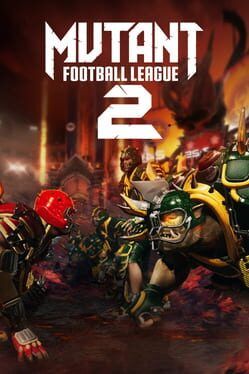

Breaking down Mutant Football League 2’s full 1.0 launch as a serious competitive option: what’s new from Game Preview, how its violent chaos hides real strategic depth, and the best tips for new players on Xbox, PlayStation, and PC.
Mutant Football League 2 has finally smashed out of Game Preview and into a full 1.0 release on Xbox Series X|S, PlayStation 5, and PC. For a series built on exploding refs and sharks in the endzone, it is surprising how much the conversation around launch has shifted toward one core question: can this blood-soaked gridiron actually support serious competitive play?
The answer is yes, and 1.0 is where it all really clicks.
From cult chaos to structured competition
The original Mutant Football League was a cult favorite that lived on couch rivalries and goofy highlight clips. It was fun, but long-term play often turned into a race to trigger the nastiest Dirty Tricks rather than building a real gameplan.
Mutant Football League 2 changes that equation. Digital Dreams rebuilt the systems with an esports style mindset, even if there is no official league structure yet. Under the flying limbs and buzzsaws sits a much more disciplined game of football.
Matches are 8 on 8 instead of the traditional 11, which instantly changes how you think about spacing, route combinations, and run fits. Fewer bodies means mismatches stand out and individual player abilities matter more. It is closer to arena football mixed with old school arcade sports, yet the rules framework, clock management, and down-and-distance thinking feel familiar to anyone who has lived inside Madden playbooks.
The real competitive step forward comes from the way risk is now baked into everything. Do you burn your deadliest Dirty Trick early to swing momentum, or hold it for a clutch third down? Do you chase the bounty on a star player and risk overcommitting bodies or play the sticks and force a punt? These decisions are where tight matches are won.
New teams, bigger rosters, sharper playbooks
Mutant Football League 2’s 1.0 launch is a clear upgrade over both the original game and the earlier Game Preview builds. There are more than 36 teams on the roster now, covering the usual spread of monster archetypes and thinly veiled NFL parodies like the Killadelphia Evils and Orcs of Hazards.
The expanded lineup matters competitively because each squad has more strongly defined strengths and weaknesses than before. Some teams lean into armored BruiserBots and power running, others are built around speed mutant receivers and aggressive blitz packages. Dynasty Supreme magnifies those differences over multiple seasons as you develop players and tailor rosters around a specific identity.
Playbooks have been a quiet but important focus. There are deeper route trees, more situational calls, and clearer separation between safe, medium, and high risk options. Shotgun spread sets give you space to read the field, while heavy formations bring extra blockers to survive both blitzes and lethal field hazards.
Compared with the first game, defensive AI is better at recognizing basic concepts like screens and draws, and it bites less often on the same trick repeated over and over. That forces human players to vary calls and read coverages rather than spamming a single broken play. In tense online games you feel the difference immediately.
Dirty Tricks as a metagame, not a gimmick
Violence is still the headline act in Mutant Football League 2, but competitive players will quickly realize that Dirty Tricks are not just for laughs. They function like cooldown abilities in a hero shooter, shaping tempo and forcing opponents to play around possible spikes of power.
Kill‑focused Tricks help you hunt specific stars, especially when a daily bounty paints a target on a key opposing player. Others disrupt timing, reverse controls, or flat out cheat the rules. The 1.0 balance tuning does a better job of keeping any single Trick from deciding the whole match on its own. Counterplay exists if you anticipate what is coming and build a gameplan around it.
In serious matches, teams often hold their strongest Tricks for red zone stands, two minute drills, or pivotal third and long situations. Managing this layer becomes its own mind game. You are not only calling plays, you are tracking the opponent’s likely Tricks and trying to bait them into wasting one on a low leverage snap.
Violence vs sim football: the “anti‑Madden” that still plays real ball
Digital Dreams calls Mutant Football League 2 the anti Madden, and it fits. Player models are exaggerated, stadiums spit out buzzsaws and giant worms, and you can literally chainsaw a ballcarrier in half.
Yet beneath the gore sits a framework that will feel oddly comfortable to sim fans. Down and distance, route concepts, clock management, and field position all matter. You still have to know when to milk the clock, when to hurry up, and when it is smarter to take a field goal instead of chasing a bloodthirsty highlight.
Compared with Madden or other sim style titles, Mutant Football League 2 trades fine grained authenticity for a tighter, more readable field. There are fewer players, fewer formations, and less pre snap motion, but hazards and Dirty Tricks inject complexity in different ways. Where Madden asks you to master hot routes and coverage shells, Mutant Football League 2 asks you to layer standard football logic with battlefield awareness and resource management.
The result is a competitive space where good fundamentals transfer, but you cannot simply import sim habits and expect to win. A smart clock‑killing drive means nothing if you forget that a lava geyser is about to erupt under your quarterback.
Why 1.0 is a better home for competitive grinders
Game Preview laid the groundwork for Mutant Football League 2’s competitive potential, but it was rough around the edges. Key modes were missing or incomplete and the balance between offense, defense, and extreme violence could swing wildly from patch to patch.
The full release tightens that up. Dynasty Supreme now functions as a true franchise mode where you can build a team over multiple seasons, chase Mayhem Bowl glory, and develop a meta defining play style. The Doom Field Designer lets you craft your own arenas built around specific hazard patterns, which competitive communities can use to standardize map pools or create “league legal” layouts.
Player build variety is also in a better spot at 1.0. Mutations, armor sets, and weapon upgrades provide a sense of progression, but they do not completely erase skill gaps. High level players still win through reads, audibles, and smart positioning.
Most importantly, online performance has improved versus early builds. Matches are still subject to the usual peer to peer quirks, but the experience feels closer to a game built to support repeat online sessions instead of something you casually drop into once a month.
Competitive concepts: what actually wins games
For players coming from esports heavy titles like Rocket League or Madden’s competitive modes, Mutant Football League 2 has a few core pillars that separate casual chaos from serious play.
Possession is still king. Bodies will fly and players will die, but consistently finishing drives matters more than a single explosive hit. Turnovers are brutal on a smaller field, and losing a star to a bounty kill hurts more if you are already chasing the scoreline.
Hazard control is the other defining layer. Buzzsaws, fire geysers, landmines, and roaming worms are not just visual flair. They are zones of denial, ambush points, and sometimes free blockers if you run smart routes that push defenders into danger. Most high tier drives look like a dance between first down markers and executing a path through the arena’s deadliest segments.
Then there is Trick tempo. Dropping a Dirty Trick the moment you get the ball is rarely optimal. Top players use them like momentum shifters, saving them for when the opponent is on tilt or when a single stop will decide the match. Learning when to accept a normal three and out versus gambling on a lethal Trick defines your style.
Tips for newcomers on Xbox, PlayStation, and PC
With Game Preview over and cross platform communities spinning up new leagues, a lot of fresh players are hitting the field for the first time. Here are practical tips that will help you survive your first season and start thinking like a competitive coach.
Learn one team inside out before hopping around. Pick a squad whose theme matches your preferred style, whether that is smashmouth running with hulking BruiserBots or pass happy chaos with speedy mutants. Stick with them for a full Season run so you can understand their strengths, weak spots, and preferred formations.
Start in Training Camp and exhibition games before diving fully online. Use these matches to experiment with every formation in your playbook and find three or four core plays you can call under pressure. Focus on understanding how long passes take to develop and how your quarterback moves in the pocket when hazards are active.
Keep the camera wide and your eyes on the field, not just the ball. On console especially it is easy to lock in on your receiver and forget the buzzsaw that is about to activate near the hash marks. Learn the timing and audio cues of each arena hazard so you can anticipate rather than react.
Treat Dirty Tricks like limited resources, not party favors. Early on, save them for third and long, red zone defense, or crucial two minute drills. If you blow your best Tricks early in the half just to style on an AI team, you will not have them when a human opponent needs to be shut down.
On defense, prioritize staying alive over diving for every big hit. A failed kill attempt that takes your linebacker out of the play is effectively a blown assignment. Use gang tackles and angle pursuit to funnel opponents into hazards instead of solo yolo hits that leave you out of position.
Pay attention to stamina and wear on key players during longer games or Dynasty Supreme runs. Running your star halfback into the teeth of every play may look heroic, but burned stamina and increased injury risk will catch up to you in later drives. Rotate backups when you can afford it, especially if you are already up on the scoreboard.
Finally, spend time in the Doom Field Designer even if you are not interested in pure creation. Building your own arena teaches you how designers think about hazard placement, which in turn makes it easier to read and exploit official stadium layouts in competitive play.
The path forward for MFL2 as a competitive game
Mutant Football League 2 is unlikely to dethrone traditional sims in the formal esports space, but its 1.0 launch plants a clear flag for organized competitive communities. The mix of understandable football structure, accessible controls, and wild mutant flavor makes it an ideal candidate for local leagues, online ladders, and seasonal events.
If you bounce off the clinical feel of modern football sims but still crave the rush of a close two minute drill, Mutant Football League 2 at 1.0 is worth taking seriously. Under the gore and one liners sits a game that rewards smart reads, disciplined playcalling, and a coach who is always ready to weaponize the next buzzsaw.