
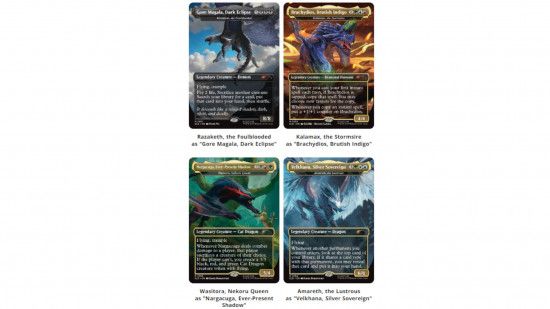

Wizards delayed the Magic: The Gathering Monster Hunter Secret Lair for a full rework, but the crossover remains undated as alleged leaks complicate the wait.
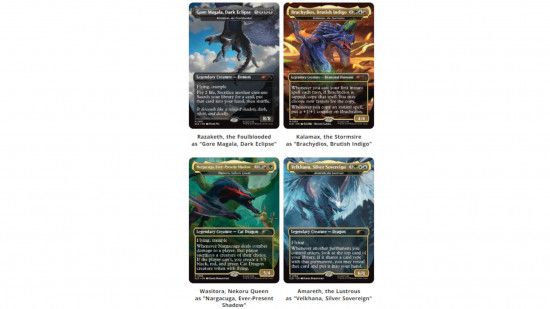
Image: wargamer.com
The crossover is still in limbo after Wizards pulled it back
The latest concrete development around the MTG Monster Hunter Secret Lair is not a new sale date, card gallery, or price. It is the absence of all three. IGN reported on September 18, 2026 that it had reached out to Wizards of the Coast for an update on the postponed Secret Lair x Monster Hunter Superdrop after months of public quiet. The product had previously been delayed when Wizards said the revealed drop “fell short of expectations” and that it would “postpone this release and rework this Superdrop entirely.”
That leaves Monster Hunter fans and Magic collectors in a strange holding pattern. The crossover is still documented as an upcoming release by Magic: The Gathering Wiki, which lists the Monster Hunter Superdrop as a 2026 Secret Lair product with its set size still TBA. The same listing says it was originally planned to go on sale through the Wizards of the Coast Secret Lair webshop on December 1, 2025, before being moved to 2026 because the product would be revamped.
For a normal Secret Lair delay, that might be enough: wait for the new date, decide on the art, buy or pass. This one is different because Wizards did not merely shift timing. It publicly acknowledged a quality and expectation problem, said Capcom was on board for another attempt, then left the market without the key details collectors use to judge a limited product: contents, treatment, print model, price, and ordering window.
Wizards’ retreat changed the story from crossover hype to product trust
The original reveal landed in one of Magic’s busiest product lanes. IGN notes that Secret Lair drops have been running for a long time and that 2026 has effectively brought a cadence of at least one per week. In that environment, a licensed crossover has to clear two bars at once. It has to feel faithful to the outside franchise, and it has to justify its place in Magic’s collector economy.
According to IGN’s report, the initial Monster Hunter reveal missed that mark for many players. The outlet described the cards as uninspired reprints, including cards that could otherwise be found for a few cents, and said some had typos. Wizards’ own response, quoted by IGN from the company’s blog post, was unusually direct: “We heard loud and clear that you were disappointed, and we believe we can do better.”
That wording matters because it narrows what the rework is supposed to solve. This was not framed as a production delay, a licensing hiccup, or a distribution issue. Wizards identified the problem as player disappointment with the revealed product. For Magic The Gathering Monster Hunter collectors, the rework therefore becomes a test of whether Wizards treats the second version as a cosmetic correction or a structural rebuild of the drop.
The first card list showed the shape of the idea, and the weakness
Before the rework, IGN listed several cards from the original version of the Superdrop. The Hunt included Blind Obedience as Malzeno from Monster Hunter Rise: Sunbreak, Snap as Kushala Daora from Monster Hunter 2, Village Rites featuring Magnamalo and Tobi-Kadachi from Monster Hunter Rise, Mizzium Mortars as Yian Garuga, and Tooth and Nail featuring Azure Rathalos and Seregios from Monster Hunter 4.
The Hunters side, as reported by IGN, included Grand Abolisher with Tigrex armor and Bone Scythes, Archaeomancer with Velkhana armor and a Slinger, and Grim Haruspex with Nargacuga armor and a Hidden Eye Light Bowgun. Even from that partial view, the concept is easy to understand: Magic cards reskinned around signature monsters, armor sets, and weapons from across Capcom’s series.
The strategic problem is that concept alone does not create collector confidence. Secret Lair buyers often evaluate a drop through several overlapping lenses: art appeal, franchise fit, commander playability, scarcity, bonus-card potential, and the secondary-market value of the base cards. IGN’s criticism that some reprints were low-value cards points to one of the sharpest tensions in Secret Lair design. If the crossover feels like premium packaging around weak cardboard, the most dedicated franchise fans may still balk. If Wizards upgrades too aggressively into expensive staples, Magic players may fight a scarcity problem while Monster Hunter fans compete with finance-minded buyers.
The alleged leaks add noise, not certainty
Draftsim reported on August 24, 2026 that recent leaks posted to Reddit by a WhatNot streamer allegedly showed basic lands from one or more Secret Lairs alongside cards from the canceled Monster Hunter drops. Draftsim said the material included a previously undisclosed bonus card for The Monsters II, described as a reskin of Armored Skyhunter.
That is useful context, but it should not be treated as an official MTG Secret Lair update. Draftsim attributed the material to a leaker who claimed the cards came from “a Magic collection” acquired months earlier. The outlet also reported that, based on a subsequent stream, the cards appeared to have passed the T test, giving them “a high likelihood of being real.” Even so, this remains leak reporting, not confirmation from Wizards of the Coast or Capcom.
The alleged basic lands are even less settled. Draftsim said the lands had not been previously shown and that it was unclear where they came from. The outlet noted artist attributions to Max Naylor and Jack Teagle and suggested they may belong to undisclosed or possibly canceled Secret Lairs. That uncertainty is important for collectors watching the Monster Hunter Secret Lair because leaked physical cards, if genuine, may represent an abandoned version rather than the final reworked product. A canceled card can be fascinating, but it is a poor basis for buying decisions before Wizards shows the rebuilt drop.
The real question is whether the rework fixes value, flavor, or availability
Wizards has confirmed only the broad direction: the Monster Hunter Superdrop was postponed and is being reworked. Magic: The Gathering Wiki lists the release date as 2026 and the size as TBA, while IGN says Wizards promised more information in 2026 and that Capcom was on board for another swing. Everything beyond that, including final contents, pricing, bonus cards, exact availability, and the order model, remains unannounced in the provided source material.
From a collector’s standpoint, the key unknown is what “rework” means in practice. Wizards could keep the same overall structure and swap card choices. It could commission new treatments, correct errors, add higher-demand reprints, adjust bonus cards, or change how the drop is sold. None of those outcomes is confirmed. The market will read each one differently.
Availability may be the most consequential lever. IGN’s source text points to a broader Secret Lair complaint: Wizards can print to demand when it chooses, but limited purchasing mechanisms can make players feel that scalpers and scammers benefit most. If the rebuilt Magic The Gathering Monster Hunter drop returns as a narrow limited window with high fan demand, the crossover risks repeating Secret Lair’s familiar access problem. If Wizards uses a more forgiving sales model, it may reduce the resale frenzy but also change the calculus for collectors who chase scarcity.
How Monster Hunter fans and Magic collectors should approach the wait
The practical advice is simple: do not treat the old reveal or the alleged leak as a final shopping list. The original December 1, 2025 sale plan has been superseded, according to Magic: The Gathering Wiki, and Wizards said it would rework the Superdrop entirely. The 2026 release window remains the only broad timing signal in the provided sources, and even that lacks a specific date.
For Monster Hunter fans who mainly want the crossover art, the safest move is to wait for Wizards’ official relaunch before committing money to any preorder, proxy listing, or speculative resale. For Magic collectors, the smarter question is not whether Monster Hunter is a strong license. It clearly has enough fan overlap to create demand. The question is whether the rebuilt drop offers enough mechanical relevance, art quality, print clarity, and purchase access to justify buying at launch.
The MTG Monster Hunter Secret Lair now carries a burden most Secret Lairs do not. It has to sell the fantasy of Capcom’s hunt inside Magic’s rules language, while also proving that Wizards listened after publicly admitting the first version fell short. Until Wizards publishes the revised card list, price, sale window, and final product structure, the most accurate update is that the hunt has not resumed yet.