
Early MTG Marvel Super Heroes deckbuilding is splitting between EDHREC popularity, precon upgrade paths, and high-risk brews. Here are the commanders to watch before choosing a lead.
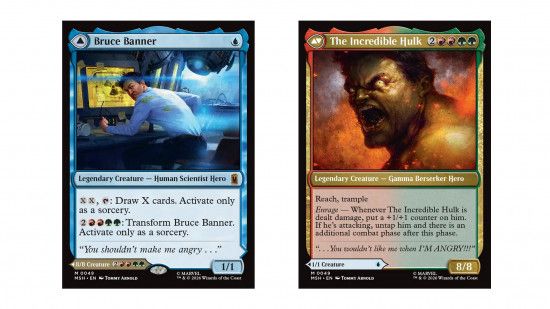
Image: wargamer.com
Marvel’s Commander flood is already forcing a harder deckbuilding choice
The strongest confirmed development around Magic: The Gathering | Marvel Super Heroes is scale. Wizards of the Coast says it is releasing four ready-to-play Commander decks for the collaboration, and Wargamer reports that the base set alone contains 128 legendary creatures before counting precons and Jumpstart cards. TCGplayer describes the release as a massive set with one of the highest legendary creature counts it has seen in a single set.
That volume changes the early conversation around Magic The Gathering Marvel commanders. Players are not choosing between a handful of obvious face cards. They are sorting through precon leaders, backup legends, base-set commanders, villains, tribal engines, combo-adjacent threats, and fan-favorite characters that may be better as casual table statements than durable deck anchors.
Wizards has confirmed the four Commander products as Avengers Assemble, Wakanda Forever, The Fantastic Four, and Doom Prevails. Its decklist article lists Avengers Assemble as red-white-blue, Wakanda Forever as green-white, and The Fantastic Four as red-green-white-blue. Wizards also says Avengers Assemble, Wakanda Forever, and Doom Prevails each include a traditional foil face commander with borderless art, 99 non-foil cards, and 29 new-to-Magic cards. The Fantastic Four differs by including four traditional foil face commanders with borderless art, 96 non-foil cards, and 26 new-to-Magic cards.
The tension for players is clear: the officially supported precon path gives you a complete 100-card starting point, while the broader Marvel Super Heroes card pool is already pushing brewers toward commanders that may require heavier singles investment, sharper mana bases, or table-specific tolerance for explosive strategies.
The early popularity signal starts with EDHREC, but it is not the whole map
Polygon’s ranking is the clearest sourced popularity signal in the provided material because it says it used EDHREC data to identify the most popular commanders from Marvel Super Heroes at the time of publication. That distinction matters. EDHREC reflects submitted deckbuilding interest, not tournament results, long-term power level, or the full experience of piloting a deck through real Commander nights.
Among Polygon’s early EDHREC-backed names, Crystal, Inhuman Princess stands out because she asks players to build around multicolored noncreature spells while also functioning as a four-color mana source. Polygon describes her as a three-mana 2/3 flyer that deals damage tied to the number of colors in a noncreature spell’s mana value when you play it, and notes that cards such as Artist’s Talent, Chandra’s Incinerator, and Hawkeye, Young Avenger can push the noncombat damage plan further. The appeal is structural: Crystal gives a deck both a payoff and access to four colors, which is exactly the kind of commander that attracts early deckbuilders looking for flexibility.
T’Challa, the Black Panther is another Polygon-listed commander with a clean precon upgrade story. Polygon identifies him as the Selesnya commander for the Wakanda Forever precon and describes his attack trigger as creating tapped Vibranium tokens, indestructible artifact tokens that tap for colorless mana usable only on artifact spells. Polygon also says he grows when you cast artifact spells with mana value four or greater, with examples in the deck including Panther Habit, Vibranium Strike Gauntlets, Panther Robot, and Shuri’s Fabricator. That makes him one of the safer early Marvel Magic The Gathering decks for players who want a recognizable plan: attack, accumulate artifacts, convert those artifacts into mana, then scale into larger threats.
Ultron, Artificial Malevolence sits on the other side of that spectrum. Polygon describes Ultron as a three-cost colorless artifact creature that can copy nontoken artifacts as they enter for two colorless mana, and can turn noncreature artifacts into 2/2 creatures. That is a huge brewer’s invitation, but it is also the kind of commander that can accidentally become a rules and board-state management project. If you are choosing among the best Marvel commanders MTG players are discussing early, Ultron is the one to approach with a clear table plan and a willingness to track copy effects carefully.
Squirrel Girl and Hulk show the split between engine decks and ramp decks
TheGamer’s list is not presented as EDHREC data. It is an editorial guide to what the outlet calls exciting, fun, or powerful commanders, and that makes it useful for a different reason: it captures where experienced deckbuilders expect the brewing pressure to go next.
The Unbeatable Squirrel Girl is TheGamer’s loudest example of a commander that could revive an existing archetype. The outlet describes her as a four-mana mono-green commander that creates a 1/1 Squirrel token when she enters or attacks, and has a mana ability that creates X 1/1 Squirrel tokens where X is the number of Squirrels you control. TheGamer emphasizes that the ability has no stated restriction on how often it can be activated, so the ceiling depends heavily on available mana. It also points to Chatterfang, Squirrel General as a natural pairing.
That is the profile of a commander that may look cute at first glance and become a math problem by turn cycle three or four. If your local Commander group already keeps an eye on token snowball decks, Squirrel Girl belongs in the “ask the table first” category. If your group enjoys board development, creature synergies, and big turns that can still be answered by wipes, she may be one of the cleanest mono-green entry points in MTG Marvel Super Heroes.
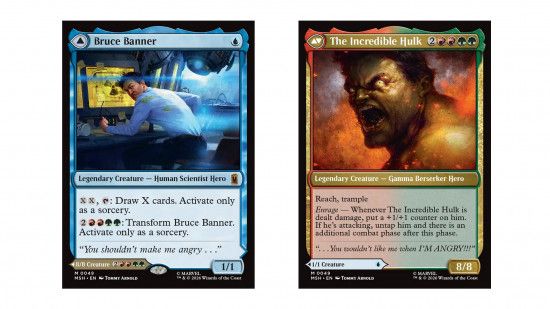
Bruce Banner / The Incredible Hulk is a different kind of early favorite. TheGamer says the card needs heavy ramp in the early turns and benefits from building around other Hulk and Gamma creatures, plus protection spells and equipment that can make key creatures indestructible. It also notes an important rule detail for Marvel’s transforming cards: players may select which side to be their commander and can transform those cards while they are on the battlefield.
That rule detail should affect buying and brewing decisions. Bruce Banner / The Incredible Hulk is appealing because it gives players a character fantasy and a mechanical pivot in the command zone, but TheGamer’s own framing points to a deck that can stumble if it fails to ramp or protect its key threats. A Hulk deck may feel dominant once it reaches its mana threshold, but it also asks for a larger support package than a commander that generates value immediately on attack or entry.
Wargamer’s picks point to the commanders most likely to change table politics
Wargamer’s ranking highlights another early pattern: several Marvel Super Heroes commanders appear designed to provoke strong reactions at casual tables. That does not make them bad choices. It means deckbuilders should understand the social cost before sleeving them up.
Fin Fang Foom is the obvious warning sign. Wargamer calls it a land destruction commander and says it can destroy lands and Sol Rings while growing larger. Land destruction is one of Commander’s most pod-dependent strategies. Some groups accept it as a valid pressure tool. Others treat it as a fast route to a miserable game. If your goal is to build one Marvel commander that can travel between stores, friend groups, and precon tables, Fin Fang Foom is probably the riskiest early pick mentioned in the sources.
M.O.D.O.K. is Wargamer’s life-total stress test. The outlet describes the commander as taking the “life is a resource” philosophy seriously and points toward a self-discard direction, while warning about the danger of paying too much life. Wargamer also notes possible interaction with Sheoldred and mentions the card’s ability to kill 1/1 tokens and turn Maha, Its Feathers Night into a repeatable board wipe. That is a very specific kind of appeal: high agency, high danger, and a real chance that you become the player everyone attacks before your engine stabilizes.
The Astonishing Ant-Man looks more flexible. Wargamer says the Simic commander benefits from drawing cards, can become a large Voltron threat, and can convert +1/+1 counters into creature tokens. The important detail in Wargamer’s description is choice: you can decide how many counters to remove and how many tokens to make. That makes Ant-Man less all-in than many tall commander strategies. For players worried about removal, that pressure-release valve gives the deck a second battlefield plan.
Scarlet Witch, Chaotic Avenger and Kang Prime occupy the cheat-big-spells lane. Wargamer says Scarlet Witch can cheat mana costs by manipulating the top of the library, using Brainstorm into a card such as Omniscience as its example. Kang Prime is described as a Suspend commander that can cheat large threats into play, with Wargamer saying blue library manipulation helps but is less vital because the hit is guaranteed. Both commanders will attract players who enjoy high-ceiling turns, but both also advertise their threat level early. In many pods, a commander that promises free or discounted haymakers becomes the archenemy before the first payoff resolves.
Ares, God of War is the most direct of Wargamer’s highlighted builds. The outlet describes a Rakdos aggression plan involving creatures dying, sacrifice effects, Fling lines, and recursion, with cards like Anger and Village Rites called out as useful. Wargamer also frames the deck as one where you may know within the first four turns whether you are killing a player or falling behind. That is valuable buyer guidance: Ares is for players who want short clocks and decisive games, not for players who prefer slow inevitability.
Precon commanders are safer, but the singles market will reward clearer plans
Wizards’ product structure gives precon buyers a useful baseline. Each Magic: The Gathering | Marvel Super Heroes Commander deck is sold as a ready-to-play 100-card deck, and each includes tokens, a reference card, and a deck box. Wizards is also selling Collector’s Edition Commander decks with surge foil treatments, including surge foil face commanders for Avengers Assemble, Wakanda Forever, and Doom Prevails, and four surge foil face commanders for The Fantastic Four.
The precon route is the practical answer for players who want to play Marvel Super Heroes quickly and upgrade later. T’Challa benefits from that context because Polygon ties his artifact plan directly to named cards already found in Wakanda Forever. Crystal has similar appeal for players drawn to The Fantastic Four’s four-color structure, although four-color mana is always a deckbuilding tax even when the commander helps produce mana.
The singles route is where the sharper strategic decisions begin. Squirrel Girl wants mana density and token multipliers. Hulk wants ramp, protection, equipment, and the right creature mix. Ultron wants artifacts worth copying and a pilot comfortable with artifact-creature board states. Scarlet Witch and Kang Prime want top-deck control and expensive payoffs. Ares wants death triggers and haste. Ant-Man wants draw engines and +1/+1 counter support.
That matters for budget as much as power. The provided sources do not give prices, so no responsible claim can be made about which commander will be cheapest to build. The strategic point is still visible from the card descriptions: commanders with narrow support packages can become expensive if the best enablers sit outside the precon, while commanders that upgrade naturally from an official deck may be easier to tune over time. Players should wait for local availability and actual singles pricing before treating any early “best Marvel commanders MTG” list as a shopping list.
The X-Men question hangs over the set, but players should build from confirmed cards
There is also a future-facing wrinkle to Marvel Super Heroes. GameLoop’s provided source list includes an interview headline stating that Magic: The Gathering’s head designer discussed the possibility of an X-Men set after major Marvel collaborations. The available source text only says the partnership’s future may include Marvel’s famous mutant team. It does not confirm an X-Men set, a release date, products, mechanics, or commanders.
That uncertainty matters because some players may be tempted to delay their Marvel Magic The Gathering decks until more mutant-focused support appears. Based on the provided material, that would be speculation. Polygon says Marvel Super Heroes already includes a few X-Men alongside Avengers, Fantastic Four, and villains such as Doctor Doom and Ultron, but the sources do not establish a dedicated X-Men Commander product or any upgrade path tied to future releases.
The safer strategy is to choose a commander whose core plan already works with existing Magic cards. Crystal’s multicolored noncreature shell, T’Challa’s artifact ramp, Squirrel Girl’s token scaling, Ant-Man’s counters, Ares’s sacrifice aggression, and Ultron’s artifact copying all point toward established deckbuilding lanes. Those decks can absorb future Marvel cards if they arrive, but they are not dependent on an unannounced product.
How to choose your Marvel commander without getting trapped by early hype
The best Marvel commander for you is less about raw ranking and more about risk profile. EDHREC-backed popularity, as cited by Polygon, shows where players are already submitting deck ideas. Editorial picks from TheGamer and Wargamer show which commanders writers expect to be powerful, entertaining, or provocative. Neither category guarantees that a deck will fit your table.
If you want the smoothest first build, start with a precon commander whose support is already visible in Wizards’ official product and in the source descriptions. T’Challa is the cleanest example from the available material because his Wakanda Forever artifact plan is directly tied to named cards Polygon identifies inside the deck. Crystal is appealing if you want four colors and spell-based damage, but she asks more from your mana and spell mix.
If you want the strongest brewing ceiling, Squirrel Girl, Ultron, Scarlet Witch, Kang Prime, and Bruce Banner / The Incredible Hulk are the names to study first. TheGamer’s Squirrel Girl description points to a mana-driven token engine. Polygon’s Ultron description points to artifact-copy scaling. Wargamer’s Scarlet Witch and Kang Prime descriptions point to cheated mana costs and top-of-library setup. TheGamer’s Hulk comments point to a ramp-and-protection shell that rewards getting ahead early.
If you care about repeatable social play, be careful with Fin Fang Foom, M.O.D.O.K., and any list built to make the table feel locked out. Wargamer’s descriptions make clear that these commanders can pressure lands, life totals, tokens, and board states in ways that may be fun for the pilot and exhausting for everyone else.
For now, MTG Marvel Super Heroes is shaping Commander conversations because it offers too many plausible leads rather than one solved chase commander. The smart move is to pick the play pattern before the character. Choose whether you want artifacts, tokens, ramp, sacrifice, counters, or spell cheating, then decide which Marvel face best supports that plan.