
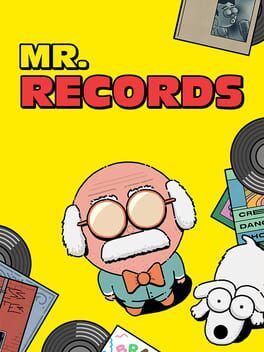

The first public Mr. Records demo is live on Steam, pairing beat-timed autorunner stages with cosy record shop management ahead of Steam Next Fest.

Image: IGDB
Store links: Mr. Records on Steam
The demo is live, and its pitch is unusually easy to hear
Wired Productions and developer Glee-Cheese have launched the first public Mr. Records demo on Steam ahead of Steam Next Fest in October, giving PC players an early look at a rhythm action shopkeeper sim built around an elderly record-store owner named George. The demo went live on September 22, 2026, according to the publisher’s press release, and is currently described by Wired as exclusive to Steam.
That timing matters because Steam Next Fest is a brutal discovery window for small games. Hundreds of demos arrive with bright capsules, short trailers, and one-sentence hooks competing for the same few evenings of player attention. Mr. Records has an immediate advantage there: its hook is clear without being familiar. By day, George runs a tiny record shop and helps customers find the right album. By night, the records pull him into beat-synced fantasy stages where movement, obstacles, and imagery follow the music.
The result is an indie music game with a premise that reads cleanly at a glance, then gets stranger in the details. This is not a lane where Glee-Cheese is arriving cold, either. Rock Paper Shotgun describes the studio as music game specialists, and its hands-on demo write-up suggests the rhythm side already has the essential physical tug: the involuntary head-nod and foot-tap rhythm games need before their systems can fully land.
George sells records by day and rides them by night
The demo introduces George at the start of a late-life reinvention. Wired Productions’ announcement frames him as an old dreamer who finally opens the record shop he always wanted, with each album becoming a playable journey through his imagination. In shop scenes, players learn about records, meet customers, and recommend music. In the rhythm stages, George runs, jumps, slides, dodges, and chains actions in time with original tracks.
That double structure is the important part. A lot of Steam Next Fest demos can blur together because they are built around a single mechanic, then hope style does the rest. Mr. Records is selling a more specific fantasy: knowing music well enough to match it to a person, then stepping inside the song to understand why it matters. The shop side gives context to the tracks. The rhythm side gives the shop inventory a physical shape.
Rock Paper Shotgun’s demo impressions describe George listening privately to a new song before putting it on sale, then using what he learned the next morning when customers ask for help finding particular records. That loop gives the record shop premise a useful bit of friction. The albums are not merely collectibles in a menu. They are stock, memory, challenge, and recommendation fodder all at once.
The rhythm action keeps the inputs readable but demands attention
Based on Rock Paper Shotgun’s hands-on account, the rhythm stages are 2D button-tapping sequences that keep their inputs simpler than games such as Hi-Fi Rush or Metal: Hellsinger, while still punishing lapses in timing. The outlet notes that jumps, slides, throws, and kicks are mixed quickly enough that a moment of lost concentration can throw off the beat.
That is a smart place for a demo to start. Rhythm games live or die on trust. Players need to believe the track, animation, input window, and obstacle language are all speaking the same tempo. If any part feels mushy, the whole thing starts to feel like memorization wearing headphones. The early report from Rock Paper Shotgun is encouraging because it points to the correct kind of difficulty: readable actions, fast musical pattern changes, and failure that comes from losing the groove rather than guessing the designer’s intent.
Wired’s feature list says the full game is planned to include more than 40 handcrafted levels, plus rhythm battles, surreal minigames, chase sequences, visual disruptions, environmental changes, and side activities with George’s dog, Buzz. Those are publisher-described features, not a guarantee of how balanced the final game will feel, but they show the intended range. The demo’s job is to prove the foundation before the full setlist starts throwing curveballs.
The music store setting gives the soundtrack a reason to exist
Mr. Records stands out because its soundtrack is tied directly to its fiction. Wired says every record becomes a rhythm journey through surreal dream worlds shaped by George’s imagination, memories, emotions, and moments from his life. The publisher also says the full game will span styles including funk, progressive rock, hip-hop, electro, world music, and ’80s pop, with the music composed by the developers themselves.
Rock Paper Shotgun’s demo coverage lines up with that emphasis on variety, citing original tracks across psychedelic pop, classic rock, and R&B-inspired rap. The outlet also notes that songs are composed and recorded in-house, which is a meaningful production choice for this kind of game. Licensed music can bring instant recognition, but original music lets level design, lyrics, visual transitions, and obstacle placement be written around the same pulse from the start.
That integration is where the music shop premise earns its space. The shop could have been a cosy management wrapper around a rhythm game. Instead, the record store gives players a reason to care about genre shifts. A customer request can point toward a mood. A new album can become a new mechanical vocabulary. A shelf can become a setlist.
Its dream worlds lean into handmade weirdness
The strongest visual detail in the available demo impressions is how directly each song appears to influence its stage. Rock Paper Shotgun describes George’s daydreams as colourful side-scrolling sequences, comparing their energy to Yellow Submarine by way of Thank Goodness You’re Here. The outlet says a breezy pop song may send George through pastel flowers, while a fuzzy electronic track can move into purple, pulsing scenery.
More importantly for players, the scenery is not only decoration. Rock Paper Shotgun reports that transitions between sections of a song can bring visual or mechanical shifts, including moments where George’s movement orientation flips sideways or upside down. That sounds disorienting by design, and it also sounds like the kind of trick a rhythm game has to use carefully. If the visual gag overwhelms the beat, the player blames the game. If the shift lands on the music, it becomes choreography.
This is the craft question to watch when trying the Mr Records demo during Steam Next Fest: does the game surprise you while keeping time, or does it distract you from the time? The early hands-on account suggests Glee-Cheese is aiming for the former, with stages engineered around the flow of individual tracks rather than a reusable obstacle template.
Platforms are expanding, but the demo path is Steam first
The practical details are straightforward, with one caveat around release timing. Wired Productions says the first public demo is available now on Steam, ahead of Steam Next Fest in October. The publisher also confirmed that Mr. Records is coming to PlayStation 5 and Xbox Series X|S, adding those platforms to the previously announced PC and Nintendo Switch 2 versions.
For now, that does not mean console players have a demo. Wired’s announcement describes the demo as exclusive to Steam, and the linked demo page is separate from the main Mr Records Steam listing. If you want to sample the rhythm action shopkeeper sim now, Steam is the confirmed route.
A full release date and price remain less settled in the provided material. Wired’s press release does not announce a release date, and Techtroduce reports that no full-game release date has been announced. DayOne reports an early 2027 release window, but that is not present in the publisher text supplied for this story. Until Wired or Glee-Cheese states a date publicly in the material players can verify, the safest reading is that the demo is available now, the full game has confirmed platforms, and the final launch timing is still awaiting a firmer publisher announcement.
A Next Fest demo worth using as a filter
The best way to approach the Mr Records demo is as a rhythm feel test first and a shop sim test second. The announced full game is promising customer stories, riddles, unlockable stock, memories, notes, photographs, and George’s bedroom hub above the shop, but the demo’s most immediate question is whether the music and input timing click for you. If the beat stages feel good, the surrounding shop structure has room to become charming connective tissue. If they do not, the premise can only carry so much weight.
That is why this demo is useful before Steam Next Fest gets noisy. Mr. Records has an unusually warm elevator pitch, but it is also asking players to buy into a specific blend: cosy management pacing, narrative memory work, original songs, and rhythm-platforming precision. Those audiences overlap, yet they do not always want the same thing from a game night.
For players scanning Next Fest for something with a distinct identity, Mr. Records is an easy demo to prioritize. It has a readable hook, a protagonist outside the usual indie coming-of-age mold, and a musical structure that can justify big shifts in genre and stage design. The open question is how confidently the shopkeeping and storytelling match the rhythm stages over a full game. For now, Steam players can find out whether George’s first records have the groove.