
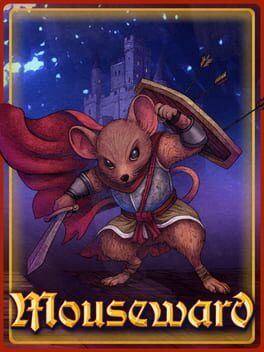

Mouseward is gaining attention after PAX West 2026 because its N64-inspired look is tied to Soulslike combat, collectathon exploration, and a late 2027 multi-platform plan.
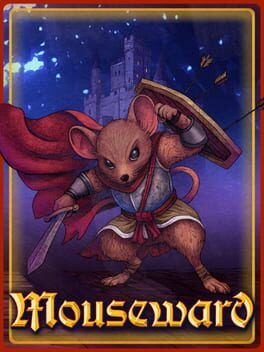
Image: IGDB
Store links: Mouseward on Steam
Mouseward now has a publisher, platforms, and a late 2027 window
The clearest development around Mouseward is no longer the catchy comparison. Indie publisher Mad Mushroom announced in an October 14, 2026 Games Press release that Finite Reflection Studios’ Mouseward is part of its 2027 slate, with a planned late 2027 launch on Steam, Xbox, PlayStation, and Nintendo Switch. The publisher also said a Steam demo is currently available.
That gives the PAX West 2026 Mouseward conversation a sharper edge. SUPERJUMP’s hands-on piece framed it as “Dark Souls for the N64,” a phrase that has obvious search-friendly power, but the real question is whether the game’s identity can survive past that first-click description. Based on the reported demo impressions and the publisher’s own description, Mouseward is being positioned as a retro Soulslike with a specific design thesis: deliberate stamina-based combat, compact fantasy adventure structure, and N64-style collectathon progression inside an interconnected woodland kingdom.
The Dark Souls for N64 comparison is sticking because it is unusually literal
The comparison works because both halves are visible in the available reporting. SUPERJUMP described Mouseward as a hybrid of Soulslike and collectathon, with the lock-on, dodging, blocking, and parrying associated with the genre. Mad Mushroom’s announcement uses similar language, calling out parries, dodges, spellcasting, a diverse bestiary of corrupted foes, and “deliberate, stamina-based combat.” ScreenRant likewise pointed to dodge rolls, parry mechanics, a dark world, and action RPG systems as the pieces driving the Dark Souls association.
The N64 half is not being used as a loose synonym for “old-looking.” SUPERJUMP specifically praised Mouseward’s blocky, low-resolution, stretched-texture presentation, including character polygons, skyboxes, and the broader visual construction. That matters because many modern-retro games lean toward PlayStation-era grit or 16-bit pixel art. SUPERJUMP’s PAX impression argues that Mouseward is reaching for a rarer target: the soft-edged, chunky, slightly dreamlike 3D of Nintendo 64 fantasy games.
That specificity is why “Dark Souls for N64” is gaining traction. It compresses the pitch, but it also matches the reported inputs: Soulslike combat readability and punishment, filtered through the shapes, colors, and adventure cadence of late-1990s console design.
Its collectathon side sounds functional, not decorative
Mouseward’s best case is that the retro inspiration affects how the world works, rather than stopping at art direction. SUPERJUMP reported that weapons discovered in the demo could be used for traversal and puzzle-solving in a way the outlet compared to Ocarina of Time. The bow, for example, was described as both a ranged combat tool and an environmental tool that can sever ropes to drop ladders and suspended bridges.
Mad Mushroom’s announcement supports that reading of the game. The publisher says players will collect scattered star fragments to unlock abilities, recipes, and routes, while exploring hidden paths, environmental puzzles, and cryptic clues. It also describes Mouseward as blending Soulslike combat and intricate level design with “the charm and progression systems of a classic Nintendo 64 collectathon.”
That is the stronger version of the pitch. A low-poly mouse knight can sell a screenshot, but an item that changes both combat range and level access is a design commitment. SUPERJUMP also reported that levels respond to exploration through shortcuts, hidden areas, and hidden bosses. If that structure holds across the full game, Mouseward’s retro identity would be mechanical as much as visual.
The PAX demo reports emphasize feel, which is where many indie Soulslikes stumble
The most encouraging detail from SUPERJUMP’s PAX West 2026 hands-on is not the nostalgia read. It is the claim that Mouseward feels good to play. The outlet wrote that movement felt fluid and responsive, hitboxes felt fair, and enemy movements were difficult enough to avoid instant mastery while remaining understandable. For an indie Soulslike, that is a crucial distinction, since weight, recovery timing, collision, and enemy telegraphing can make or break the genre long before build variety enters the conversation.
SUPERJUMP also described the combat and armor systems as simple, but satisfying. The outlet contrasted that simplicity with build-heavy games like Elden Ring, arguing that Mouseward’s demo left room for atmosphere and controls to carry the experience. That is a useful signal, though it should be read as a demo impression rather than a verdict on the finished game.
There are still open questions the sources do not answer. We do not yet have confirmation about late-game encounter variety, boss count, exact difficulty tuning, performance targets, PC requirements, price, or whether the console versions will arrive simultaneously with Steam. The Steam demo, confirmed by Mad Mushroom’s announcement, is currently the practical way to test whether the movement and combat claims land for you.
The woodland fantasy gives the grimness a distinct silhouette
Mouseward’s setting also helps explain why the comparison is spreading beyond Souls fans. Mad Mushroom’s synopsis says a calamitous starfall has shattered a woodland kingdom, with players taking up a sword as a reawakened Mouse Knight to protect the realm from a threat “born of the heavens.” The publisher describes corrupted foes, weapons, armor sets, arcane abilities, recipes, hidden routes, and environmental puzzles across that world.
The Redwall influence appears in the coverage, although the sources present it with a small textual wrinkle. SUPERJUMP reported that the lead developer said the game’s aesthetic was heavily inspired by a Brian Jacques children’s fantasy novel, but the provided SUPERJUMP text renders the title as “Redfall.” ScreenRant identifies Mouseward’s inspiration as Redwall. In both accounts, the useful takeaway is the same: anthropomorphic animal characters, medieval fantasy presentation, and a tone that mixes warmth with danger.
ScreenRant also reads Mouseward through a Wind Waker lens, citing its cutesy character designs, cartoonish appearance, collectible structure, and the image of a small hero dwarfed by large environments and enemies. That is a different comparison from “Dark Souls for N64,” but it points toward the same tension: Mouseward is using softness and scale to make its grim fantasy feel approachable without stripping away danger.
The smart move is cautious excitement, with the demo as the proof point
Mouseward currently looks like a stronger pitch than a nostalgia postcard because the reported details line up across art, combat, and world interaction. SUPERJUMP’s hands-on says the N64 aesthetic is convincing and the combat feels responsive. Mad Mushroom’s announcement confirms the broader structure: a late 2027 multi-platform launch, a Steam demo, Soulslike stamina combat, collectathon progression, hidden paths, star fragments, and environmental puzzles. ScreenRant’s coverage adds that the game’s appeal is also legible to Zelda and Wind Waker fans, not only Soulslike players.
The limits are equally important. A demo can show control feel, tone, and early level design, but it cannot prove that a full late-2027 game will sustain enemy variety, boss design, progression pacing, or technical stability across Steam, Xbox, PlayStation, and Nintendo Switch. The publisher has announced the platforms and window, but the source material does not include a price, exact release date, Switch performance target, Steam Deck status, or console feature details.
For now, Mouseward is one of the cleaner indie Soulslike prospects to watch because its influences appear to be doing design work. If you are drawn in by the phrase Dark Souls for N64, the Steam demo is the sensible next stop. If you are waiting on console, the confirmed news is promising but incomplete: Mouseward is planned for late 2027 across all major platforms, and the hard details still need to arrive.