
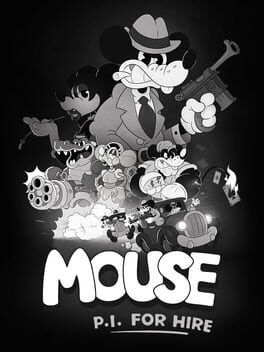

A focused look at Mouse: P.I. for Hire’s Switch 2 performance and resolution targets, how its Performance and Quality modes could change the feel of the shooting, and why its rubber‑hose art direction might make it one of the platform’s most distinctive indie FPS launches.
Mouse: P.I. for Hire is arriving on Switch 2 with a rare level of transparency about performance. Fumi Games and PlaySide are spelling out exactly what the hybrid will target, and those numbers tell a clearer story than any broad “launch window” hype. This is a noir detective FPS that wants to feel responsive first, stylish always, and surprisingly sharp on Nintendo’s new hardware.
In handheld, Switch 2’s Performance mode aims for 900p at 60 frames per second, while Quality bumps the image to 1260p at 30. Docked, those numbers climb to 1080p at 60 for Performance and 1440p at 40 for Quality. For a stylized, indie shooter shipping on day one of a new platform, that is an ambitious layout. It positions Mouse: P.I. for Hire less as a brute-force tech flex and more as a deliberate showcase of how Switch 2 can serve both fluid gunplay and crisp presentation without sacrificing the game’s identity.
The most important number here is 60. Mouse is built as a fast, snappy FPS with strafing, quick peeks and “guns-blazing” jazz-backed set pieces. On a controller, that kind of design lives or dies on frame time consistency. A 900p / 60 target in handheld and 1080p / 60 docked suggests the developers are prioritizing input feel above everything else. If they can keep drops minimal, Switch 2 players will get a shooter that responds more like a high-end PC port than the compromised handheld conversions that defined much of the original Switch era.
The Quality modes tell a slightly different story. A 1260p / 30 split in handheld is clearly meant for slower sessions, when you are docked in front of the screen or playing in bed and less focused on twitch precision. Docked Quality, at 1440p and 40 fps, is the most interesting configuration in the lineup. Forty frames per second may not sound glamorous on paper, but if Switch 2 outputs at a 120 Hz-compatible refresh and Mouse uses a proper frame pacing solution, you end up with a middle ground that feels noticeably smoother than 30 while delivering a substantially cleaner image than Performance mode.
That 40 fps experiment also says something about intent. It suggests Fumi Games is thinking about Switch 2 as more than a 30 vs 60 binary. Instead of relying on a single “cinematic” cap, they are searching for a point where their noir city, neon reflections and smoky interiors can breathe without turning the trigger pulls into mud. If executed well, it could set a precedent for other indie shooters on the platform: you do not need brute-force 4K to show off, you just need smart targets that respect both the art and the action.
Where Mouse: P.I. for Hire really leans on the hardware is its art direction. The rubber hose animation, thick outlines and 1930s cartoon exaggeration create a visual profile that is far more forgiving on resolution than the typical indie “realistic” FPS. Harsh aliasing on high-contrast geometry or fine foliage can destroy the illusion in a gritty shooter, even at higher resolutions. In Mouse, the shapes are bold, the color blocking is clear, and the linework is intentionally imperfect. At 900p in handheld, those frames are likely to look more like authentic animation cels than a compromised downgrade.
That same style also helps quality mode shine. Jumping from 1080p to 1440p in docked play gives the inked outlines, signage, and vintage typography extra crispness. The more pixel real estate you feed a deliberately flat, graphic look, the more it can lean into its poster-like composition. Instead of chasing ray-traced reflections or subsurface scattering, Switch 2 is being asked to do something it is genuinely good at: push clean, saturated shapes at high enough resolution that the artistry is the first thing you notice.
In a crowded indie FPS space, that matters. Many small-team shooters compete on feature checklists or retro sensibilities, but they still end up looking similar once you get past color grading differences. Mouse sets itself apart before you even fire a shot. The noir city is crowded with anthropomorphic silhouettes and exaggerated props, and the animation style invites a slightly more elastic sense of motion. At 60 fps, that elasticity turns into a snappy, musical flow to the gunplay. The jazz soundtrack and bouncing, stretchy character poses should feel more like an interactive cartoon short than a traditional corridor shooter.
Performance and Quality modes will ultimately change how that cartoon violence lands in your hands. Opting for Performance will be the obvious choice for players who want the tightest hip-fire and fastest camera sweeps. Every dodge, reload, and quick-scope will track more faithfully, and the rubber hose animation will carry that sense of rhythm without blur or judder. Quality mode, particularly docked at 1440p / 40, is poised for those who want to soak in the atmosphere, hunt for visual gags in the background, and appreciate the meticulous line art while still getting a smoother feel than legacy 30 fps caps.
None of this automatically makes Mouse: P.I. for Hire the definitive technical showpiece of Switch 2, and it does not need to be. What it does show is an early understanding of the platform’s strengths. Instead of brute-forcing cinematic spectacle, it leverages Switch 2 to lift an already distinctive art style, while offering performance settings that respect the needs of a first-person shooter. If the final build hits its targets consistently, this jazz-fueled detective romp could quietly become one of the most telling early examples of how Switch 2 can empower indie FPS games to look sharp, feel great and still stand apart from the crowd.