
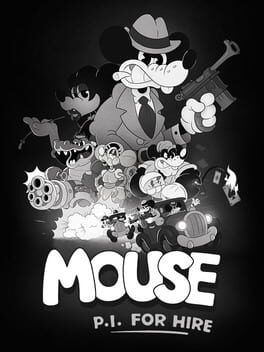

How the new Robo‑Betty boss trailer sells MOUSE: P.I. For Hire’s 1930s cartoon noir aesthetic, weapon feel, and encounter design, and where it fits among today’s retro shooters ahead of its March 19 launch.
MOUSE: P.I. For Hire has always looked like a clever pitch on paper: take a boomer‑shooter foundation, filter it through 1930s rubber‑hose cartoons and noir crime stories, and commit to hand‑drawn animation for everything from muzzle flashes to death splats. With the new Robo‑Betty boss‑fight trailer, that pitch finally snaps into focus. This is the first time the game’s combat, visual style, and encounter design have all been showcased in one self‑contained set piece, and it makes a strong case for MOUSE as one of the more distinctive retro shooters launching this year.
A 1930s cartoon nightmare brought to life
The Robo‑Betty trailer doubles down on what earlier footage only hinted at. The entire fight plays out in stark black and white, but it never feels flat. Thick outlines give every character and prop that classic rubber‑hose silhouette, while backgrounds lean harder into noir, full of heavy shadows, looming machinery, and clouds of smoke that smear across the screen like ink in water.
Robo‑Betty herself is where the aesthetic really lands. She looks like a spliced artifact from two different reels: part glamorous cartoon singer, part ironclad sci‑fi experiment. Her face animates with exaggerated, looping expressions straight out of early theatrical shorts, yet her arms unfold into clanking weapon rigs, and her body is bolted into a towering lab contraption. The clash between cutesy curves and jagged metal fits the wider Mouseburg tone, where Prohibition‑era jazz clubs and mad‑science labs sit on the same street.
Crucially, the animation style is not just a filter on standard FPS combat. Every movement is hand‑drawn frame by frame, so Robo‑Betty’s attacks read almost like boss patterns in a classic cartoon short, full of smears, squash and stretch, and elongated anticipation frames. Her huge wind‑ups sell impact before bullets even start flying, and her transformations between phases look like old multi‑plane camera tricks brought into first person.
The environment reinforces the vibe. The secret laboratory is cluttered but cleanly readable, with pipes, gauges, and Tesla coils all rendered with the same thick ink lines as the characters. Sparks and energy arcs pop bright white against deep blacks, and static overlays plus film grain round out the illusion that you are playing through a battered reel discovered in a studio vault.
Cartoon guns with real weight
Retro shooter fans tend to be picky about weapon feedback; the best boomer shooters turn every shot into a tiny dopamine hit. The Robo‑Betty trailer suggests that MOUSE understands this, even as it leans into slapstick firearms.
Jack Pepper’s arsenal in the footage ranges from chunky pistols and tommy guns to more experimental cartoon contraptions. Muzzle flashes bloom like stylized ink bursts, shells pop out with exaggerated arcs, and reloads snap through bold, clear poses instead of realistic finger gymnastics. Yet underneath the visual flair, the guns sound tight and punchy, with sharp reports and bassy echoes that keep the fight grounded.
One of the more interesting touches is how some weapons appear to exaggerate recoil through animation rather than through heavy camera kick. The gun sprites warp and squash, barrels bend slightly with each shot, and Jack’s hands bounce in rhythm with the jazz in the background. It is expressive rather than purely physical, closer to how a cartoon character would handle a machine gun than how a tactical FPS would stage it, but the clarity of hit reactions keeps it feeling lethal.
Enemy feedback plays a big role in that perception. Robo‑Betty’s armor plating chips away in visible chunks; sparks fly as bullets land, and her limbs deform under sustained fire before snapping back into shape. When she shifts stance or reels from damage, the smears and jittery outlines sell that you have just interrupted a big mechanical threat, not just pushed a health bar down a notch.
Power‑ups and special attacks lean into the cartoon logic even harder. In earlier footage, we have seen spinach‑style buffs and oversized gadgets, and the Robo‑Betty fight continues that theme with explosive shots and screen‑filling blasts that feel like someone tore a gag straight from a black‑and‑white short and wired it into an arena shooter.
A three‑phase boss that plays like a set piece
The trailer presents Robo‑Betty as a full multi‑phase encounter rather than a simple bullet sponge. Each phase shifts both her threat profile and Jack’s priorities, and each uses the environment differently.
The opening phase is about survival and pattern recognition. Robo‑Betty is locked into the central rig, sending out wide sweeping beams, arcing projectiles, and mechanical minions. The lab is a circular space, and movement seems to be about strafing around clutter while keeping an eye on telltale wind‑up poses. It feels closer to a classic arena shooter boss than to the more grounded firefights of many modern retro FPS games.
Midway through, the fight escalates and the stage begins to break apart. Platforms collapse, sparks cascade from the ceiling, and Robo‑Betty’s rig reconfigures, extending limbs and shifting her main weak points. The second phase looks more vertical, with hazards forcing you to juggle platforming, crowd control against added enemies, and precise shots at exposed machinery.
The final phase is the most chaotic and sells that “manic boss battle” label the publisher has been leaning on in press releases. Robo‑Betty seems to fully detach, stomping around the arena and unleashing overlapping attacks that leave very little safe ground. Visual telegraphs keep it readable, but this is where the hand‑drawn style could have become noisy. Instead, the animators lean on bold silhouettes and negative space: when a giant arm sweeps across the screen, everything else is momentarily simplified, so you know exactly what will kill you.
Taken together, the fight feels like something carefully scripted yet still skill‑testing. It is not trying to be a sandbox encounter; it is closer to a playable cartoon sequence, with phase transitions that feel like scene changes and attack patterns that could easily be storyboard panels.
Style and readability: walking the line
One potential concern with any highly stylized shooter is whether the visuals get in the way of clarity. The Robo‑Betty trailer is reassuring here. Enemy projectiles are bold and bright against the background, often outlined or animated with distinct cycles so you can track them even when the screen fills with smoke and sparks.
Robo‑Betty herself is designed with a strong, central silhouette that remains readable even when she is half‑obscured by machinery or effects. Her key attacks each have clear, unique tells: a specific arm curl, a head tilt, a surge of sparks from a particular coil. It is easy to imagine players internalizing these sequences the way you would memorize a boss pattern in a 2D action game.
On the player side, damage and low health states are communicated through thick, vignetted borders, distortion on the film‑like overlay, and punchy hit sounds. There is some screen shake, but it appears controlled rather than constant, which is important in a game where the whole art style invites motion and warping.
If there is a tradeoff, it may be in sheer visual busyness. With hand‑drawn effects layered over busy environmental detail, some players might need time to acclimate to tracking small enemies during peak chaos. The trailer suggests that Fumi Games is aware of that, though, and has tuned the boldness of outlines and effect brightness to keep information legible.
Where MOUSE fits in the retro shooter revival
The Robo‑Betty trailer lands at an interesting moment for boomer shooters. The genre has already spun out into multiple visual directions, from the grungy low‑poly of Dusk and Cultic to the heavy metal comic stylings of Prodeus and the painterly horror of Forgive Me Father. MOUSE is staking out a corner of its own with this cartoon noir riff, and Robo‑Betty is a proof‑of‑concept of how far it is willing to take it.
Compared to its peers, MOUSE is less interested in recreating a specific hardware era and more focused on channeling the energy of an old medium. Where some retro shooters aim to look like a missing shareware episode from 1997, MOUSE wants to feel like you are playing through a banned studio short, complete with jittery cels, dust on the frame, and music that could have come straight from a smoky club.
At the same time, its encounter design looks closer to the modern boomer‑shooter playbook. Fast strafing, projectile dodging, and aggressive resource use all show up in the Robo‑Betty fight, echoing games like Ion Fury or Turbo Overkill more than classic corridor crawlers. The key is that those systems are dressed in a style no one else is using.
If the rest of the campaign can match the creativity and clarity of this boss encounter, MOUSE could end up sitting alongside the likes of Cultic and Forgive Me Father as a standout in the current wave of throwback shooters, not just a novelty with a strong trailer.
March 19 is coming fast
With its March 19 launch on PC and current consoles, MOUSE: P.I. For Hire is almost ready to see if this experiment works across a full game. The Robo‑Betty boss fight trailer does what a late‑cycle showcase needs to: it proves that the look is more than a gimmick, that the guns seem satisfying, and that Fumi Games is thinking about multi‑phase encounters as more than just bigger health pools.
For players already sold on its black‑and‑white noir hook, this new footage is a reassuring signal that the combat foundation is solid. For those still on the fence, it is the first slice of gameplay that feels like a fully staged set piece rather than a mood reel. If MOUSE can keep this level of personality and encounter craft across Mouseburg’s other villains, March 19 may end up delivering one of the most memorable retro shooters of the year.