
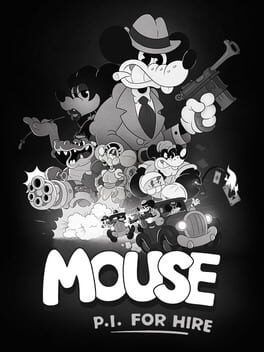
Hands-on previews suggest MOUSE: P.I. For Hire is more than a rubber-hose gimmick, blending 1930s cartoon noir presentation with surprisingly nimble retro FPS gunplay, caseboard investigations, and briskly paced levels.
MOUSE: P.I. For Hire is the sort of game that looks like a pitch meeting joke. “What if Doom was an old black-and-white Mickey Mouse cartoon?” Yet every recent hands-on report points to the same conclusion: under the rubber hoses and saxophones is a surprisingly sharp retro FPS that belongs in the conversation with the current boomer shooter wave, not on the novelty shelf.
More than Cuphead‑meets‑Doom
Previews from Eurogamer, Console Creatures and MonsterVine all start at the same place: the presentation is instantly striking. Jack Pepper’s world is a grimy rodent city rendered in pure black and white, with hand-drawn, frame‑by‑frame animation that channels Fleischer Studios and early Mickey shorts, then drops a hardboiled detective story on top.
Film grain, audio crackle and flickering title cards push the illusion of a lost reel, while the soundtrack leans on brassy big-band jazz that swings even when the story slides into murder, experiments gone wrong and seedy alleyway deals. What matters is that the style is not just cosmetic. Enemy silhouettes are clean and readable despite the monochrome palette, muzzle flashes and ink splatters pop off the background, and your weapons stretch and snap like elastic props in an old cartoon.
Reviewers do note that some modern, meme-y one-liners and pun-heavy weapon names occasionally clash with the otherwise meticulous noir mood. When the game sticks to sardonic voiceover, rat-gang slang and grim punchlines under the slapstick, it sells the “cartoon noir” concept much better.
Shooter mechanics with real bite
The biggest surprise running through every preview is how much MOUSE feels like a proper boomer shooter rather than a slow novelty piece. It is quick on its feet. Jack moves with a full modern-retro toolkit: sprinting, sliding, a snappy side dodge, a double jump and a satisfying kick and punch for when enemies get too close. Eurogamer describes firefights that demand constant motion, more in line with something like Prodeus or Ion Fury than a throwback to sluggish 90s pacing.
The arsenal starts familiar. You have a trusty pistol, a chattering tommy gun-style SMG, a booming shotgun, throwable dynamite and melee options. The twist comes with the cartoon logic layered on top. Weapons bob and bend with each shot, reloads are theatrical and enemies literally deform as they are riddled with bullets.
The standout toy in most previews is the Ink gun. Instead of simply chunking down a health bar, it drains the “ink” out of foes. Color bleeds away from their outlines, leaving rubbery skeletons that stagger a few beats before collapsing into piles of bones. It is mechanically just another damage dealer, but visually it is the sort of feedback that makes pulling the trigger addictive, in the same way that Doom’s glory kills or Dusk’s chunky headshots become part of the game’s rhythm.
Several hands-on sessions culminate in an extended fight with Robo‑Betty, a robotic version of a missing woman Jack is tracking. The boss evolves across encounters, layering new bullet patterns and area attacks that force you to use every bit of Jack’s movement kit. Rather than a static sponge, she turns the otherwise corridor-heavy environments into arenas where dash timing and jump arcs matter, suggesting Fumi Games understands how to build setpiece shootouts, not just stylish fodder rooms.
Level pacing and structure
Where a lot of retro FPS throwbacks lean on long, maze-like levels, MOUSE seems to favor brisk, focused missions that are stitched together by a broader noir structure.
The slices shown to press follow Jack on a missing person case. You poke around a lab, sift through clues, then crash straight into firefights with killer robot mice and security contraptions. Once that explodes into the Robo‑Betty showdown, you pull back to a seedy city hub that hints at the game’s larger framework.
Eurogamer describes that hub as a sidestreet in Mouseburg with distinct stops. There is a mechanic who upgrades weapons based on schematics you recover, a reporter who pumps Jack for leads between jobs and a pinboard where you can assemble clues. One preview compares the caseboard system loosely to Alan Wake 2’s evidence room, only much simpler, with Jack dragging threads between suspects, places and objects to unlock the next lead.
Between missions you even get to drive around the city from a top‑down perspective, weaving the car through traffic as radios crackle with jazz. These interludes are short but important. They break up the pace, sell the fantasy of being a gumshoe in a living cartoon city and stop the game from becoming a flat sequence of shooting galleries.
Early missions seem tightly paced: talky intros that establish the client and setup, bursts of exploration, then escalating combat that ends in a big encounter. That mix of quiet and loud is where MOUSE quietly steps away from many of its retro peers. It is not trying to be a non‑stop arena rush like Devil Daggers or a pure key‑hunt like classic Doom. It wants to be an FPS campaign with a story spine, character beats and a clear case-of-the-week structure.
How it stacks up to the retro FPS wave
The last few years have been generous to fans of old school shooters, from Dusk and Amid Evil to Ion Fury, Cultic and Turbo Overkill. Within that crowd, MOUSE immediately stands out visually, but the previews suggest it earns its place mechanically as well.
In terms of feel, writers consistently describe it as fast and twitchy, closer to the modernized retro of Prodeus or Turbo Overkill than strict 90s authenticity. Movement tech, frequent dodging and aggressive enemy patterns all point to encounters tuned around staying mobile, not inching around corners.
Where it differs is in structure and tone. Rather than pure level-by-level carnage, MOUSE is framing itself as a story-driven noir campaign, with investigations holding the action together. Caseboards, hub downtime, character interactions and car segments bring it nearer to something like a stripped-down BioShock or a leaner, shooter-heavy Alan Wake 2 than a traditional map selection screen. You still get secret-laden levels and weapon upgrades, but they are framed as chapters in Jack’s latest job.
Most importantly, none of the previews describe a scenario where the shooting feels like an afterthought to the art. On the contrary, multiple outlets went in expecting “Cuphead meets Doom” as a poster concept and walked away talking about recoil timing, enemy waves and how Robo‑Betty’s fight demanded genuine attention.
Concerns at this stage are mostly about tone consistency and long-term variety. Will the puns and modern gags undercut the noir edge too often? Can the campaign keep inventing new cartoon horrors and encounter setups for its mechanics, or will the initial novelty of skeletonizing ink kills and slapstick reloads wear thin? Those are issues only a full playthrough can settle.
Verdict from the previews: gimmick or contender?
Taken together, current hands-on impressions paint MOUSE: P.I. For Hire as much more than a stylish gimmick. The rubber-hose cartoon noir aesthetic is exceptional, but beneath it is a legitimately spry retro FPS with a strong sense of pace, satisfying mobility and an arsenal that leans into its visual identity without sacrificing feedback.
If the full game can sustain the mix of snappy gunplay, quickfire cases and hub-driven progression without drowning in its own jokes, MOUSE looks ready to stand shoulder-to-shoulder with the modern boomer shooter class rather than as the quirky outlier at the end of the shelf.