

Mouse: P.I. For Hire has rocketed past 730,000 copies sold, recouping its costs in a month. Here is how its 1930s cartoon aesthetic became a marketing weapon and what its breakout means for the next wave of indie FPS developers.
Mouse: P.I. For Hire did not just launch well. It launched like a shot out of one of its own tommy guns.
Publisher PlaySide has confirmed that Fumi Games’ noir shooter has sold roughly 730,000 copies across PC and consoles since its April 16 release. That figure is spread almost evenly between platforms, with console versions accounting for about half of total sales. Within just a few weeks the game fully recouped its development, publishing and marketing costs, flipping future revenue straight into profit and even prompting PlaySide to raise its financial forecasts for the year.
For a scrappy boomer shooter starring a black and white cartoon mouse, this is more than a feel good story. It is a case study in how a clear visual identity and smart positioning can push an indie FPS from niche curiosity to mainstream breakout.
730,000 copies and a fast break even
Across investor notes and press coverage, the headline number is consistent. Mouse: P.I. For Hire has shifted about 730,000 units worldwide in under a month. PlaySide reports gross platform sales in the tens of millions of dollars, enough to pay back the publisher’s upfront investment and marketing spend already.
The speed of that recoup is what has caught industry attention. Many indie shooters live or die by Steam’s first week and then rely on heavy discounting later in their life cycle. Mouse: P.I. For Hire instead arrived with a long runway of interest built through demos, showcases and previews, then converted that awareness into full price sales on day one across PC, PlayStation 5, Xbox Series X|S and Nintendo Switch 2.
Equally notable is the sales split. Around 50 percent of copies sold are on consoles. For a genre that historically finds its audience on PC first, that suggests the game did not just please boomer shooter enthusiasts. It resonated with a broader crowd scrolling through console storefronts, grabbing attention alongside bigger budget releases.
Strong user reception helped maintain that momentum. On Steam the game has settled into a Very Positive rating, reinforcing word of mouth at the exact moment storefront visibility was highest. That positive loop of curious clicks turning into fans is the dream scenario for any indie publisher, and Mouse: P.I. For Hire is executing it in real time.
How rubber hose cartoons became a marketing hook
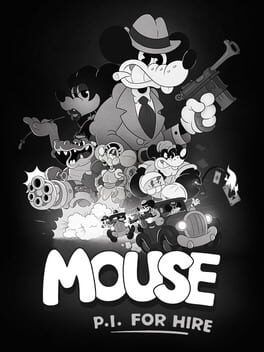
The simplest explanation for why Mouse: P.I. For Hire cuts through the noise is that you can recognize it from a single screenshot. Fumi Games did not just opt for a stylized presentation. They committed to a full 1930s rubber hose cartoon look, complete with film grain, jittery animation and expressive character silhouettes.
That decision paid off at every step of the marketing funnel. In trailers, the contrast between black and white character art and sharp, readable environments gives action scenes a clarity that is easy to compress into clips for social media. On storefronts, the key art of trench coat clad mouse detective Jack Pepper, tommy gun in hand under a looming city skyline, instantly communicates both genre and tone. Even alongside modern photoreal heavy hitters, the stark monochrome palette stands out.
This art direction also turned previews and reviews into shareable content. Critics and creators consistently highlighted the visuals first, often describing the game as playing through a vintage cartoon. That kind of descriptive hook is invaluable when you need players to remember your title weeks or months after they first see it in a showcase lineup.
Underneath the style is a carefully chosen theme. Noir detective fiction mixes naturally with the slower, methodical pacing of classic shooters, but Mouse: P.I. For Hire avoids the drabness often associated with noir by leaning into jazz, slapstick and exaggerated animation. The result is a tone that feels both familiar and fresh, inviting players who might otherwise ignore a retro FPS to give it a look.
Converting wishlists into real sales
PlaySide has specifically called out wishlist conversion as a major driver of Mouse: P.I. For Hire’s performance. That suggests the marketing did not just accumulate awareness, it built anticipation.
Early festival demos and a prominent Steam Next Fest presence gave players hands on time with the gunplay well before launch. Positive reactions there helped build a sizeable wishlist base that functioned almost like preorders. When launch day arrived and notifications hit inboxes, a large portion of those interested players followed through.
Console storefronts then amplified that effect. With half of total units sold on consoles, discovery features such as featured rows and new release highlights clearly boosted visibility. In those environments, the rubber hose aesthetic once again did heavy lifting, making the key art impossible to miss during a casual browse.
The lesson for other indie FPS teams is not just to chase wishlists, but to design trailers, demos and art around that long runway. Mouse: P.I. For Hire is not simply “a good game that sold well.” It is a project where the visual hook, the playable demo, and the launch window all worked together toward a single moment.
What this means for indie FPS developers
Mouse: P.I. For Hire’s trajectory has clear implications for smaller studios working in the shooter space.
First, it reinforces the value of a strong, cohesive visual identity. The game does not hang its marketing on a single gimmick or feature bullet. Instead it offers an instantly understandable fantasy. Be a hard boiled cartoon detective blasting mobsters in a black and white city. That clarity makes every asset, from capsule art to GIFs, work harder.
Second, it proves that retro sensibilities can reach beyond nostalgia. The “boomer shooter” label covers a wide spread of projects, and many of them lean on references to 90s PC classics. Mouse: P.I. For Hire reaches further back in time but wraps those influences in a modern control scheme and level structure. Its success shows that you can embrace old school design without limiting yourself to an old school audience.
Third, the console split is a signal. For years, many small FPS projects have treated consoles as a second step, or skipped them entirely due to porting costs. Seeing a noir cartoon shooter reach parity between PC and consoles suggests that, with the right partner, simultaneous multi platform launches are no longer reserved for bigger indies. Console players are clearly willing to show up for something that looks different.
Finally, the game’s rapid recoup gives publishers more confidence to back unusual pitches. From an investor perspective, a black and white shooter about a talking mouse detective is not an obvious bet. The strong early return on Mouse: P.I. For Hire makes it easier for future teams to argue that a bold pitch and a distinctive art style are assets, not risks, in a crowded market.
A new bar for stylistic shooters
Mouse: P.I. For Hire will continue to sell, especially as discounts and content updates arrive, but it has already cemented its place as one of the standout indie stories of the year. It has proved that a small studio with a loud aesthetic can shoulder its way into the broader FPS conversation and that there is room on digital shelves for shooters that are not chasing pure realism.
For players, it is another reminder to keep an eye on the edges of the release calendar, where experiments like this are happening. For developers, it is a blueprint for how art direction, thematic commitment and smart platform strategy can turn a neat idea into a commercial hit.
In a year crowded with live service behemoths and long running franchises, a monochrome mouse in a trench coat has quietly become one of the industry’s most interesting success stories.