
Breaking down Motorsport Manager 2’s announcement with a closer look at its expanded race strategy, deeper off‑track management, and what to expect ahead of its 2027 Steam launch.
Motorsport Manager has always been about living in the timing tower rather than behind the wheel. A decade after the original PC release, Playsport is finally coming back to that fantasy with Motorsport Manager 2, confirmed for a 2027 launch on Steam with richer simulations, expanded race strategy, and much deeper team management.
This is not a reboot. From the Steam page and the initial round of previews, Motorsport Manager 2 is being framed as an evolution of the original: same core loop of building a team and calling race shots, but with more variables, more stories and a busier motorsport world around you.
A bigger motorsport world to manage
The first big shift is scope. Motorsport Manager 2 covers a broader universe of racing rather than feeling like a thinly veiled single‑seater series. Playsport is talking about multiple disciplines and a larger calendar, backed by “richer race simulations” that are designed to feel less deterministic than in the original.
For returning players, that means the familiar structure remains: you hire staff, sign drivers, build and upgrade your cars, then try to turn all that work into points on Sunday. The difference is that every part of that loop now feeds into a more reactive simulation. Conditions evolve over a season, rivals respond to your strengths, and you have more mechanical levers to pull between races to influence what happens on track.
In other words, Motorsport Manager 2 is trying to get closer to what modern racing actually feels like: a long campaign where decisions made in March show up as triumph or pain in October.
Expanded race strategy: more ways to win or lose a grand prix
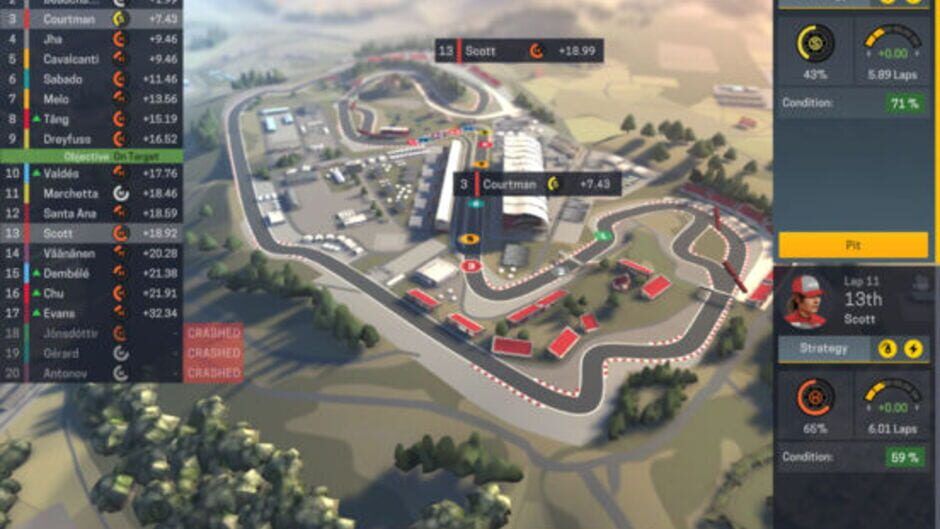
Race strategy was already the heart of Motorsport Manager, but over time its patterns became predictable. Motorsport Manager 2 is pitching a more dynamic model where strategy is less about solving a simple tire puzzle and more about managing constantly shifting risk.
The sequel’s “expanded race strategy” is built on three broad pillars.
First, race conditions are more volatile. Weather remains a factor, but the key is how quickly it changes and how your information arrives. Forecast data looks set to be fuzzier, with short‑notice showers or unexpectedly dry spells forcing reactive calls. A safe two‑stop plan can suddenly be punished if you stay out one lap too long on slicks, or it can win you a race if you read the radar better than the AI.
Second, the cars themselves appear to have more depth. In the original, tire choice, fuel load and occasional component wear were the primary tools. Motorsport Manager 2 folds in a broader performance model, with race pace, degradation curves and reliability all responding to how you have built and tuned the car over the season. A team that has invested in durability might run aggressive stints and accept higher temperatures, while a fragile but fast package might be forced into conservative strategies that depend on clean air and undercuts.
Third, the AI is being talked up as more adaptive. Instead of locking into one or two archetypal strategies, rivals should now respond to evolving race states. If you gamble on an early stop, expect some teams to cover you, others to stretch their stints and a few backmarkers to roll the dice on contrarian calls. If Playsport delivers on that promise, it should reduce the number of “solved” races and make time‑accelerated play more engaging over long careers.
Put together, the expanded strategy layer looks less like a scripted puzzle and more like F1’s real‑world chess match, where you are rarely fully confident that you have made the right call until the checkered flag.
Off‑track management gets the spotlight
If dynamic races are one half of the sequel’s pitch, the other half is what happens when the engines are silent. Both Rock Paper Shotgun and the official blurb highlight “expanded off‑track stories” and “deeper team management systems” as headline features.
The original Motorsport Manager already let you sign drivers, develop HQ facilities and answer the occasional board dilemma, but the human side felt relatively light. Motorsport Manager 2 aims to make this off‑track layer feel closer to the soap opera of a real paddock.
Relationships and rivalries are one of the areas Playsport is leaning into now that they are not locked to an official license. Team bosses, drivers and even staff can form long‑term bonds or grudges that affect negotiations, performance and media narratives. A driver who feels betrayed by a team mate’s contract renewal might become more error‑prone or political. A friendly relationship with another team principal could unlock favorable engine deals or testing agreements. The idea is that you are managing egos and alliances as much as budgets and lap times.
Board expectations and sponsors are also set to be more involved. Instead of simple season targets, your owners might shift their priorities mid‑campaign based on how results and finances are trending. Sponsors, meanwhile, may demand certain drivers, markets or on‑track performances in return for big payouts. It hints at more of a push‑pull between pure sporting logic and the commercial realities that shape a modern race team.
The staff side has been broadened too. Engineers, strategists and mechanics are not just background modifiers but people you hire, fire and develop. Their skills and traits should influence how quickly you can bring upgrades, how consistently you nail pit stops and how well you can adapt strategy on the fly. Losing a star race engineer to a rival might hurt more than losing a mid‑grid driver.
A car‑building sandbox with consequences
Deeper management also shows up in the garage. Motorsport Manager 2 builds on the part‑development system of the first game, but with a longer‑term, more philosophical twist to car design.
Racing teams now have to choose who they want to be. Do you chase outright qualifying performance and accept higher wear, hoping to convert poles into wins through clean air and defensive drives? Or do you invest in tire management and efficiency, aiming to run fewer stops or attack late in races? These choices should feed back into the strategy model in visible ways instead of feeling like small, flat stat bumps.
Long‑term regulation changes add another layer. The series you are in can tweak technical rules between seasons, forcing you to plan years ahead and decide when to double down on a concept and when to pivot. Commit too hard to a philosophy only for the rule book to move against you and you could be stuck in the midfield while your rivals surge.
Coupled with the upgraded HQ and staffing systems, Motorsport Manager 2 is positioning its car‑building as a true sandbox where each campaign can produce very different kinds of teams across multiple disciplines.
Mod support from day one
A quiet but crucial line in the announcement is that Motorsport Manager 2 will ship with full mod support from launch.
The original game built a dedicated modding community, especially around alternative series, real‑world driver names and custom calendars. This time Playsport is embracing that from the start. Steam Workshop support is planned, and the team is openly encouraging players to reshape the motorsport universe to their tastes.
For players who want accurate recreations of current championships, that is effectively a green light. For others, it opens the door to fantasy grids, radical rule sets or historical seasons, all running inside the improved simulation. In practice, the game’s longevity may depend just as much on what the community builds as on the official content.
Expectations heading into 2027
With launch still some distance away, plenty of questions remain. The original Motorsport Manager succeeded because it balanced depth with approachability. The danger of adding more systems is that the experience becomes cluttered or opaque.
On the positive side, the early messaging suggests Playsport understands what worked. They are not rebuilding the interface or scrapping the core loop that players loved. Instead they are layering on more reactive races, richer off‑track stories and a bigger web of management decisions, supported by a flexible modding framework.
If they can keep the clarity of the original’s UI while giving expert players more to chew on, Motorsport Manager 2 could reclaim the space as the go‑to PC motorsport management sim. The promise of livelier race strategy, a drama‑filled paddock and long‑term team building makes the 2027 release one worth watching for anyone who prefers calling strategy from the pit wall to chasing lap times themselves.