
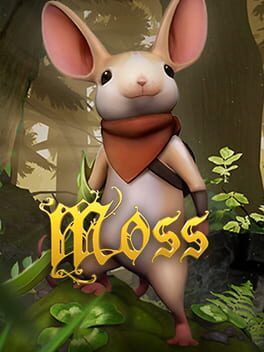

Polyarc is bringing its beloved Moss saga to PC and consoles with Moss: The Forgotten Relic. Here is how Quill’s diorama-style adventure is being reimagined for traditional platforms, why it matters for VR-born series, and what keeps fans so attached to this tiny hero.
Polyarc has spent the last six years proving that a tiny mouse can carry an entire platform. Moss and Moss: Book II were built from the ground up around virtual reality, embracing close-up diorama scenes, head-tracked secrets, and a tactile sense of presence between player and protagonist. With Moss: The Forgotten Relic, that same saga is finally stepping outside the headset and onto PC and traditional consoles this summer.
On its face, The Forgotten Relic is a definitive edition. It combines Moss, Moss: Book II, and the Twilight Garden content into a single, reimagined adventure, with modernized visuals, revised camera work, new cutscenes, and platform specific enhancements. What makes it fascinating is not just the package, but the pivot. Polyarc is taking one of VR’s defining series and reworking its core ideas for flat screens without losing the intimacy that made Quill so beloved.
The studio’s announcement frames The Forgotten Relic as a “handcrafted fantasy adventure” told through a living storybook. That storybook framing has always been central to Moss. In VR, you physically leaned over page-like dioramas, craned your neck around ruined archways, and reached into the world to pull levers or drag platforms. On a TV or monitor, those same scenes need to communicate scale and depth through framing, animation and camera transitions rather than head movement.
Polyarc’s answer is a more deliberate camera system designed for gamepad and keyboard. Instead of asking you to look around freely, The Forgotten Relic remixes encounters so that each camera angle is composed like a shot in a movie. The goal is to preserve the sense that you are a Reader peering into a miniature stage while still giving you the visibility required for precise platforming and combat.
That has real implications for how Quill plays. In VR, Moss felt like a hybrid of third person action platformer and light point and click adventure. You controlled Quill directly with the controller, but you also existed in the world as an ethereal Reader, reaching in to grab enemies, drag blocks, or heal your companion. That Twofold control scheme, as Polyarc calls it, returns here. The difference is that instead of hand tracked controllers, your interaction is mapped to a traditional input layout.
From what Polyarc has shown so far, analogue movement and face button actions still drive Quill’s basic traversal. She runs, climbs, and dodges across crumbling bridges and forest temples that fans will recognize, though they are visually refreshed. Reader abilities now rely on contextual prompts and cursor driven targeting. On PC, that likely means a mouse pointer or subtle reticle that can latch onto interactive objects. On consoles, stick guided cursors and lock on assists look poised to keep the pace from stalling.
Crucially, the team is not simply porting the environments one to one. VR puzzles that relied on leaning around corners or changing your physical perspective have been rebuilt to work from fixed or gently panning cameras. New environmental cues, like lighting and animation, help highlight levers and pathways that might otherwise have stood out only when you physically inspected them. That should make The Forgotten Relic feel like a native console adventure even if you never touched the originals.
Combat is receiving similar attention. The first two Moss games were never action heavy in the way of a character action title, but they did demand timing, positioning, and occasional multitasking as you paired Quill’s sword swings with Reader grabs. On flat screens, clarity is king. Updated camera work, cleaner silhouettes, and a more legible sense of depth all aim to ensure that when you commit to a dodge or parry, you understand exactly what you are reacting to.
At the same time, Polyarc is expanding accessibility. An optional combat skip feature will let players focus on exploration and story if they prefer, while still preserving key narrative beats. That is a subtle but important shift in a genre that often ties progress tightly to mechanical mastery. It reflects how many fans came to Moss more for the relationship with Quill and the atmosphere of the world than for hard edged challenge.
The Forgotten Relic’s arrival on PS5, Xbox Series consoles, Switch, Switch 2, and PC carries weight far beyond one studio’s fortunes. Moss has frequently been used as a showcase when people want to sell newcomers on the magic of VR. It demonstrated that you could build something intimate, tactile, and emotionally resonant in virtual reality without relying on spectacle or disorienting locomotion systems.
By reimagining that experience for non VR platforms, Polyarc is testing whether VR-born design language can survive and even thrive outside headsets. If it works, it offers a template for other VR darlings. Games like Astro Bot: Rescue Mission, Lone Echo, or Asgard’s Wrath inhabit worlds and mechanics that many players may never experience so long as they remain tied to expensive hardware. A successful transition for Moss could encourage more studios to rework their VR catalogues instead of leaving them stranded on aging platforms.
It also challenges assumptions about what counts as a “VR game” in the first place. Moss has always owed as much to classic console platformers and adventure games as it did to VR showcases. Its diorama style scenes recall the fixed cameras of early PlayStation era titles, while its tactile puzzles echo the physicality of modern physics based indies. The Forgotten Relic leans into those roots, treating VR not as the defining identity of the series but as one lens through which its ideas were first expressed.
For Polyarc, there is strategic value here too. Reaching the enormous combined audiences of PC and console opens Moss to players who followed Quill’s critical acclaim from afar but never had a headset. If those players connect with The Forgotten Relic, it strengthens the commercial case for future entries that launch simultaneously across both VR and traditional platforms. The studio has already proven it can build for VR. This is its opportunity to prove that the same craftsmanship resonates just as strongly on a living room screen.
The decision to invest this much effort into a non VR version only makes sense because Moss has built such a dedicated fanbase. On paper, it is a modest series about a mouse and a book. In practice, it has cultivated the kind of attachment that many larger franchises envy. That starts with Quill herself. She is not a power fantasy avatar or a blank slate. She is expressive, vulnerable, and quietly brave, signing to you, reacting to your gestures, and looking you in the eye.
That bond is amplified by the Reader conceit. You are not just piloting Quill from a detached camera; you are present in the world as a character who shares the journey. The moment she reaches out for a tiny high five after a tough encounter has become one of those oft cited VR memories that players talk about years later. Translating that emotional texture to flat screens will be one of The Forgotten Relic’s biggest tests, but small touches like enhanced cutscenes and expanded animation work are clearly aimed at preserving it.
World building has played an equally important role. Moss presents a kingdom reclaimed by nature, layered with folklore, stained glass, and quiet ruins, all framed as pages in a storybook. It is a cozy setting without being saccharine, grounding its charm in melancholy and history. Collectibles, hidden areas, and background details invite fans to pore over every scene, theorizing about the wider world. The Forgotten Relic’s unified structure gives Polyarc an opportunity to strengthen those connective threads, smoothing the transition between the original game, Book II, and the Twilight Garden.
There is also the simple fact that both Moss titles feel meticulously crafted. Levels are compact and tightly paced, puzzles are thoughtful without becoming obtuse, and the orchestral score from Jason Graves ties it together with a warm, adventurous tone. Those qualities matter just as much on a TV as they do in a headset. The announcement that Graves is returning to score The Forgotten Relic suggests that Polyarc understands how much of the series’ identity lives in its audio as well as its visuals.
For longtime fans, The Forgotten Relic looks like both a celebration and a bridge. It offers a definitive way to revisit Quill’s story while hinting at a future where her adventures are no longer siloed on a single type of hardware. For newcomers, it is a chance to discover why so many VR early adopters still bring up Moss when asked what convinced them that virtual reality could deliver lasting, character driven experiences.
Most importantly, it signals that VR does not have to be a walled garden. If Polyarc can successfully translate the tactile, intimate spirit of Moss to traditional platforms, it may open the door for a broader conversation about how to preserve and evolve VR’s best ideas. Whether you are meeting Quill for the first time or returning as a devoted Reader, Moss: The Forgotten Relic looks poised to be more than a simple port. It is a statement of intent for a franchise, and perhaps a milestone for VR born games at large.