
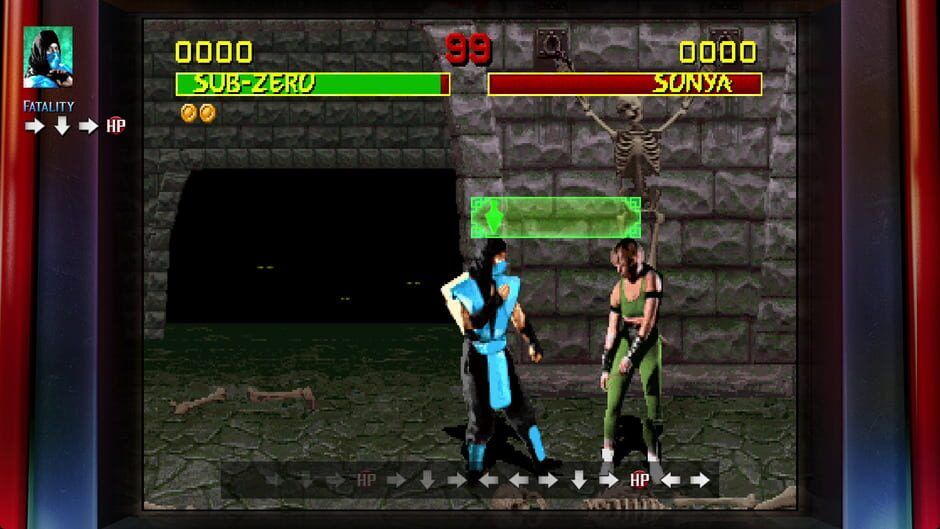

Digital Eclipse turns Mortal Kombat: Legacy Kollection into a far stronger online package with Krossplay, 2v2 support, and platform-specific upgrades that matter for serious and retro-minded fighters alike.
Mortal Kombat: Legacy Kollection launched as a lovingly curated museum of the series’ early years, but its competitive potential felt capped by fragmented online play and a few missing quality-of-life features. Digital Eclipse’s new April 2026 update goes directly after those weak points, turning the collection into something much closer to a modern online fighting game while still preserving its retro core.
Krossplay finally unlocks the full player base
The headliner is full cross-play, or “Krossplay,” across PlayStation, Xbox, Switch and PC platforms. Previously, each platform’s player base was walled off, which is a particular problem for a niche, retro-focused release where long-term population is always a concern.
Krossplay matters most for serious players because matchmaking speed and skill distribution directly affect how viable the game is for practice. With everyone in the same pool, you are more likely to find opponents at your level instead of cycling through the same handful of players or fighting large skill gaps just to get a match. For a collection that spans multiple versions of Ultimate Mortal Kombat 3, Mortal Kombat Trilogy and Mortal Kombat 4, this consolidated population helps keep even the less popular versions playable online.
The only major caveat sits with the original Switch version, where Mortal Kombat Trilogy does not support online cross-play due to technical limitations. Trilogy on that hardware remains more of a local nostalgia piece than a serious online option. Outside of that, Switch 2 players in particular now have feature parity with other platforms in terms of cross-platform matchmaking, which is crucial for a system that might otherwise have a smaller dedicated fighting-game audience.
2v2 online turns a party mode into a real competitive option
The update also brings online 2-on-2 play to several versions in the collection, including Ultimate Mortal Kombat 3 arcade and SNES, the PS1 version of Mortal Kombat Trilogy and the arcade version of Mortal Kombat 4. This is more than a novelty. Tag-style and 2v2 formats have always been a natural fit for Mortal Kombat’s fast rounds and explosive momentum swings, but historically these modes were mostly confined to local setups.
Having 2v2 online means tournament organizers and community events can experiment with alternate formats without having to rely on everyone being in the same room. For casual players, it turns the collection into a stronger online hangout, where two friends can queue together and share a character roster rather than trading the controller after every match.
For retro specialists, 2v2 online also creates a way to lab team-specific tech in a more authentic environment. Things like corner trap handoffs, meter management and matchup coverage look different when you are designing a duo instead of a single main, and the ability to grind those scenarios online adds depth that simply was not available at launch.
Level select, connection fixes and VRR show a focus on playability
Alongside the headline features, Digital Eclipse has added some smaller but meaningful tools that matter to competitive players. Online matches now allow stage selection before a fight, which is important in older Mortal Kombat games where stages can subtly affect spacing, visibility and even player comfort. It is a nod to how tournaments often handle stage rules, and it makes recreating offline-style sets online much easier.
Network options have also been cleaned up, with fixes to minimum connection strength settings in rooms and a bug that could cause Kombat Kard replays to be deleted. Those are not flashy changes, but they signal that Digital Eclipse is still paying attention to the edges of the online experience where serious players live, such as filtering for stable connections for long sets.
On the visual side, the new Variable Refresh Rate support on PS5, Xbox Series X|S, Xbox One X/S, PC and Switch 2 in handheld mode directly targets one of the bigger issues in playing old arcade titles on modern displays: frame pacing inconsistencies and visible judder. VRR allows displays to sync to the game’s output more closely, reducing those artifacts without introducing extra input lag. For anyone grinding tight links or precise anti-airs, smoother motion with stable timing is a genuine gameplay upgrade, not just a cosmetic touch.
Platform-specific caveats and who gets the best experience
Although Krossplay is broad, there are still meaningful platform differences to keep in mind. Original Switch players lose out on cross-play for Mortal Kombat Trilogy, and that version is likely to have the smallest long-term online community. Switch 2 gets the best portable experience thanks to both cross-play and VRR, so players who want a handheld setup that can still hang in serious lobbies will be happiest there.
On PlayStation and Xbox, the combination of Krossplay, VRR and generally stronger hardware gives these platforms the most stable experience for tournament-style play. PC benefits from flexible display options and input choices, though as with any cross-platform fighter, controller standardization can be a question for organized events.
The key point is that outside of that original Switch Trilogy exception, feature parity is now strong across platforms. When communities look at where to anchor their lobbies, they no longer have to worry that one platform’s player base is cut off from the rest. That makes it easier to recommend the collection to anyone regardless of what hardware they already own.
A better package for both competitive and retro-focused fans
At launch, Mortal Kombat: Legacy Kollection already worked well as a historical archive, with its interactive documentary content and multiple versions of each classic. This update nudges the balance toward a more well-rounded package that respects both the historian and the grinder.
Competitive players get larger matchmaking pools, better technical stability, more control over stages and new 2v2 formats to explore. Retro fans who mostly care about revisiting old favorites benefit too, because healthier online lobbies and smoother performance extend the lifespan of the collection well beyond the initial nostalgia rush.
Digital Eclipse has framed this as likely the last major feature update, with future patches focusing more on bug fixes and polish. If that holds, this patch effectively defines what Mortal Kombat: Legacy Kollection is going to be for the long term. In that light, the Krossplay and 2v2 additions feel less like optional bonuses and more like core pillars that make the collection worth sticking with.
For players who bounced off at launch due to barren lobbies or platform lock-in, this is the moment to take another look. Mortal Kombat’s early years have rarely been this accessible, unified and tournament-ready, and the latest update finally lets the collection live up to its potential as both a museum piece and a live fighting game.