
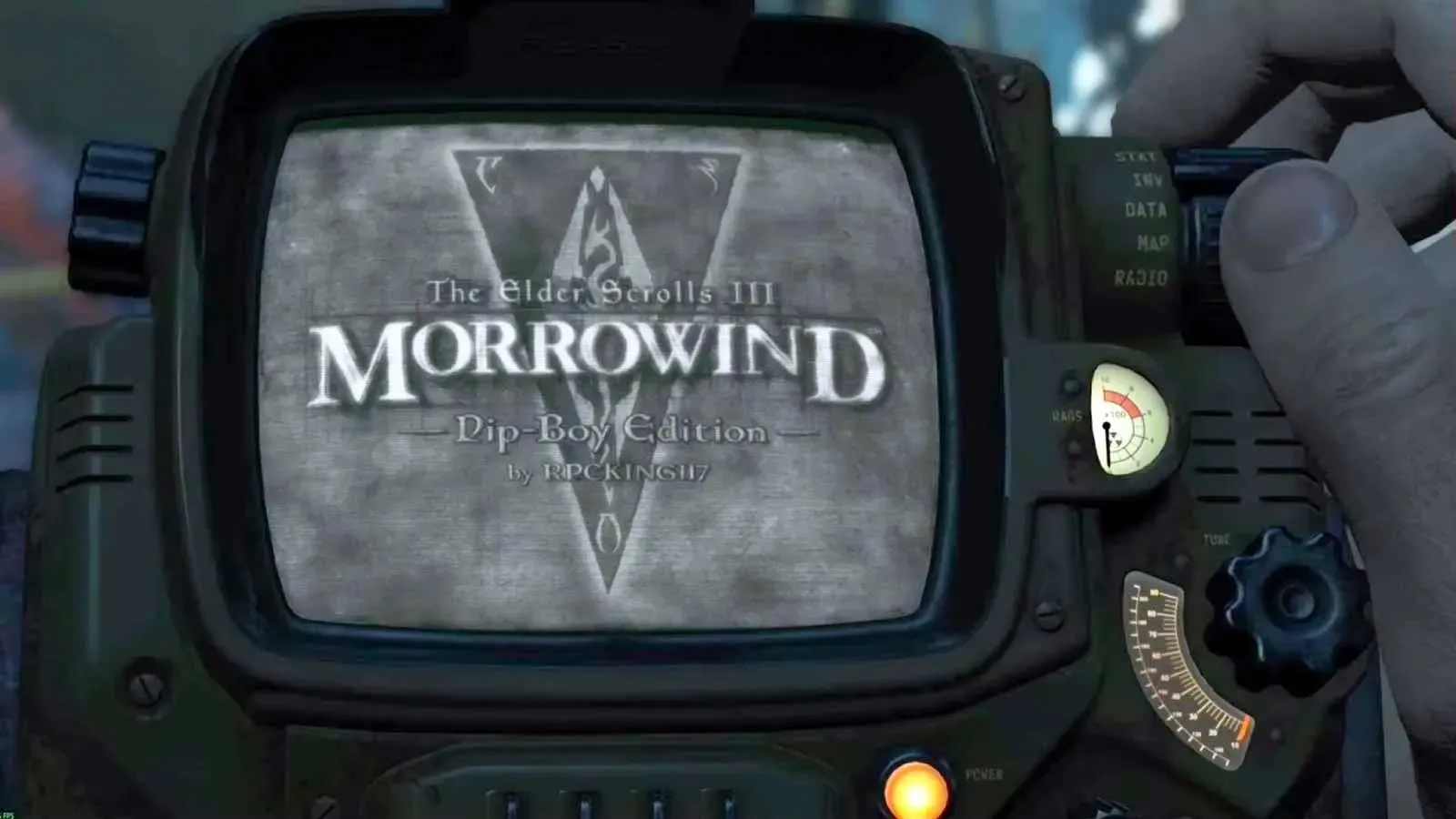
Two Morrowind Final Fantasy 11 UI mods and a weekend-built Fallout 4 charity quest with Wes Johnson show how older RPGs are getting fresh PC attention through focused fan projects.
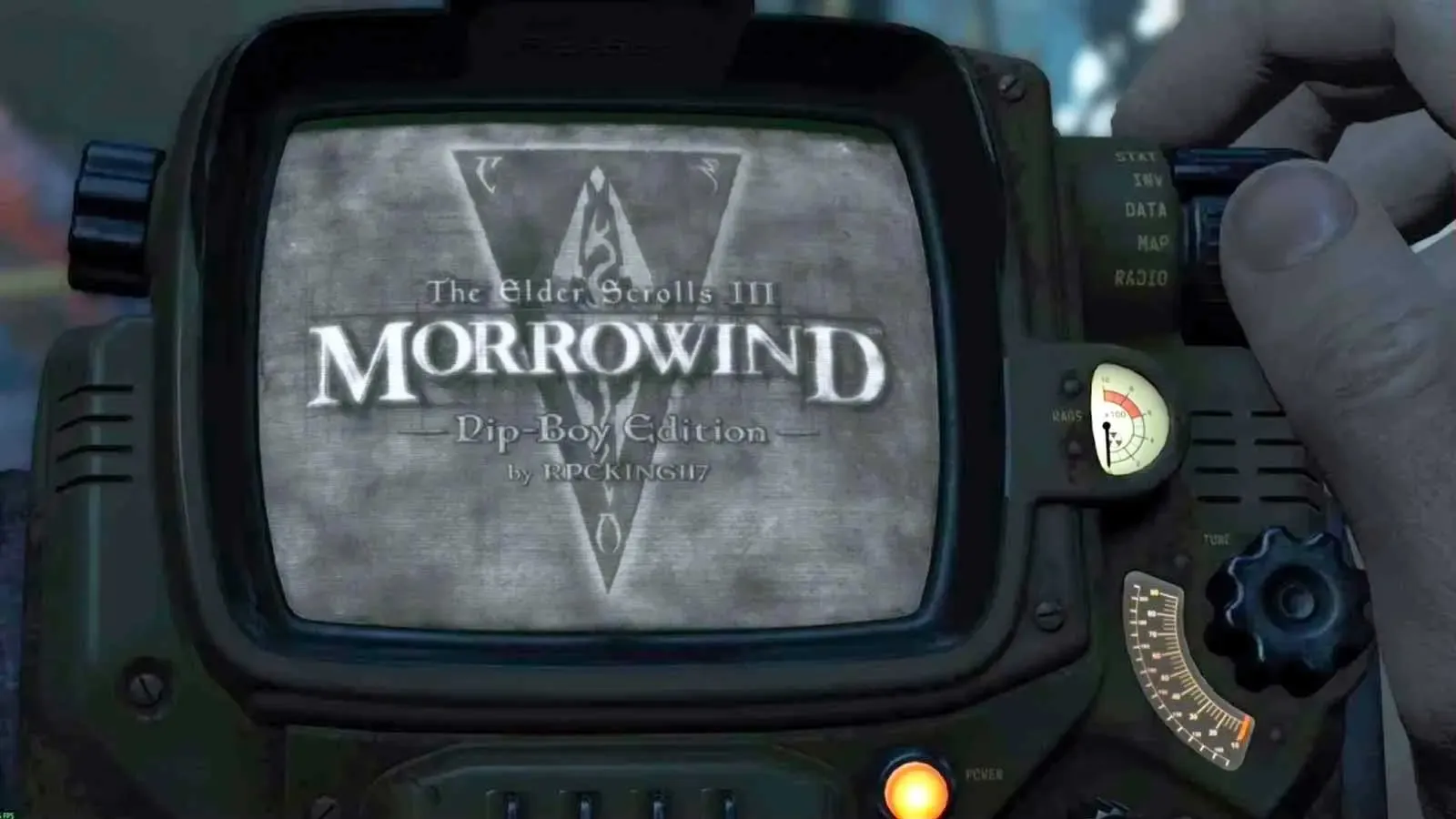
Image: gamingbible.com
A Morrowind UI makeover and a Fallout 4 charity quest point to the same PC trend
The clearest recent signal that classic RPGs are still drawing serious PC attention is not a publisher remaster or a formal anniversary campaign. It is a pair of tightly focused fan projects: a Morrowind Final Fantasy 11 UI mod setup highlighted by Polygon, and a Fallout 4 charity quest mod reported by PC Gamer as having been built in a weekend with Elder Scrolls actor Wes Johnson involved.
That contrast is the story. One project reaches back to 2002, pairing The Elder Scrolls III: Morrowind with the look and feel of Square Enix’s Final Fantasy 11 through interface work made for OpenMW. The other uses Fallout 4 as a platform for a new quest, Double Feature, created by modders Kinggath and collaborators as a charity effort. Neither source describes these projects as official Bethesda releases. Both are fan-built works using older RPGs as living toolsets.
For players, that makes the current wave of Morrowind mods and Fallout 4 mods different from the usual nostalgia cycle. These are not broad promises that an old favorite will be modernized someday. They are practical, downloadable or reported fan efforts with clear creative intent: make Morrowind feel a little closer to another cult 2002 RPG, or use Fallout 4’s quest framework to stage a fast-turnaround community project for charity.
What the Final Fantasy 11-style Morrowind mods actually change
Polygon points to two Nexus Mods releases that bring Final Fantasy 11 flavor into Morrowind. FF-HUD for OpenMW, first released in May 2025, changes in-game interface elements, including the cursor, to replicate aspects of Square Enix’s MMO. FF11 Style Menu BG and Button Replacer, first uploaded in August 2025, replaces Morrowind’s main menu with assets that evoke Final Fantasy 11’s start screen.
Those are cosmetic and interface changes, not a conversion of Morrowind into Final Fantasy 11. That distinction matters for a role-playing game where friction is part of the progression loop. Morrowind’s skills, travel, quest directions, dice-roll combat heritage, and famously awkward original journal are still the spine of the experience. A HUD can shift the mood of play, but it does not erase Vvardenfell’s slow information economy or turn its faction ladder into an MMO hotbar treadmill.
The appeal is still easy to understand. The FF-HUD uploader Hayakawadono, quoted by Polygon, described Morrowind and Final Fantasy 11 as feeling like “half-siblings,” pointing to their shared 2002 release year, early 3D look, art direction, render-distance memories, and hybrid RPG mechanics. That is an unusually precise kind of nostalgia. It is not asking Morrowind to become newer. It is asking Morrowind to lean into a neighboring branch of the same era of RPG design.
OpenMW is the technical hinge behind the Morrowind side of the story
The practical catch is compatibility. Polygon notes that both Final Fantasy 11-style Morrowind mods are designed for OpenMW and may not work as intended on vanilla Morrowind installs. That warning is important because OpenMW is not a simple texture pack. As DSOGaming summarizes, OpenMW is a free and open-source game engine that can run Morrowind natively on Windows, Linux, and macOS, and is widely treated as a modern replacement for the original engine.
The timing is favorable for players who are already following OpenMW. DSOGaming reports that OpenMW version 0.51.0 adds custom magic effects through the scripting API, terrain vertex painting in the content editor, crash fixes related to Lua scripting, fixes for some gamepad menu navigation issues introduced in the prior release, support for BC6H and BC7 compressed DDS textures when using the OpenSceneGraph fork, and Lua-configurable camera projection offset that can support advanced techniques such as temporal anti-aliasing. The same report says OpenMW supports most Morrowind mods, with the main exception being mods that require the Morrowind Script Extender, since MWSE and OpenMW-Lua are separate, incompatible systems.
That creates a real fork for Morrowind players. If your setup depends on MWSE-exclusive mods, OpenMW may not be the right base for this specific UI experiment. If you are building a cleaner OpenMW load order, FF-HUD for OpenMW and the FF11 menu replacer fit into a broader engine ecosystem that is still receiving technical work. The best advice is to treat these as OpenMW-first mods, check the Nexus pages before installing, and avoid assuming that every classic Morrowind mod will sit comfortably in the same load order.
The Fallout 4 charity quest shows a different kind of fan momentum
The Fallout 4 example is smaller in the available reporting but distinct in purpose. PC Gamer reports that Double Feature is a new Fallout 4 mod, a quest made in a weekend for charity, and the fourth collaboration by modders Kinggath and collaborators with Elder Scrolls actor Wes Johnson. The outlet’s headline and article text identify Johnson’s participation as a key feature of the project.
That makes Double Feature useful to watch for a different reason than the Morrowind Final Fantasy 11 UI mod. Morrowind’s FF11-inspired work is about interface memory and long-tail engine support. The Fallout 4 charity quest mod is about Fallout 4’s ability to host a fast, authored quest project tied to a public cause and recognizable voice talent. PC Gamer’s report does not provide enough in the supplied source text to confirm quest length, release platform, download requirements, charity beneficiary, or compatibility with specific Fallout 4 load orders, so those remain points players should verify from the mod’s public page or the creators’ channels before installing.
Even with those unknowns, the confirmed outline says something about Fallout 4’s continuing utility on PC. Quest mods demand a different skill set than UI replacers: writing, staging, implementation, scripting, testing, and often voice integration. A weekend build for charity is not the same proposition as a multi-year total conversion. It is closer to an RPG jam, using a familiar wasteland framework as the stage for a concentrated new scenario.
Focused projects are competing with giant overhauls for player attention
Large-scale Morrowind modding has not gone away. ModDB describes Morrowind Rebirth as a total overhaul for The Elder Scrolls III: Morrowind aimed at enhancing the game by rebuilding the world, rebalancing most aspects of play, and improving graphics. DSOGaming also points to other major Morrowind efforts and additions, including Tamriel Rebuilt content, a 32GB 4K texture pack, and mods that expand voice work.
The newer attention around FF-HUD for OpenMW, the FF11 menu replacer, and Double Feature sits alongside that older “make the whole game bigger” tradition. These projects are narrower, but that narrowness is part of their strength. A player can decide quickly whether they want Final Fantasy 11-style menus in Morrowind. A Fallout 4 player can decide whether a charity-built quest with Wes Johnson is worth tracking. The value proposition is clearer than a total overhaul that may require rebuilding an entire load order.
For completionist-minded RPG players, that clarity matters. Every mod is a progression decision. A total overhaul can change balance, economy, travel routes, encounter pacing, and character growth. A UI replacer mostly changes the player’s frame around those systems. A quest mod adds a discrete chunk of authored content, but it can still touch saves, locations, and scripting. The healthier 2026 mod scene is not defined by size alone. It is defined by projects that know exactly which layer of the RPG they want to alter.
Who should install now, who should watch, and what to verify first
The Morrowind Final Fantasy 11 UI mod pairing is best suited to players who already use OpenMW or are willing to move to it for a modernized Morrowind foundation. If you love Final Fantasy 11’s atmosphere and want Morrowind’s interface to echo that early-2000s MMO mood, FF-HUD for OpenMW and FF11 Style Menu BG and Button Replacer are directly aligned with that taste. If your Morrowind setup relies on MWSE-only gameplay systems, OpenMW compatibility is the key obstacle to check before you touch your load order.
Double Feature is one to watch for Fallout 4 players who enjoy compact quest mods, charity community projects, or Wes Johnson’s Bethesda work. The supplied PC Gamer source confirms the weekend charity build, the Fallout 4 quest framing, Kinggath and collaborators’ involvement, and Johnson’s presence, but it does not confirm the details players usually need before installation. Before treating it as part of a main save, check the mod’s official listing for requirements, version notes, known conflicts, and whether it has guidance for next-gen Fallout 4 updates or heavily modded setups.
If you are searching for the best RPG mods 2026, these two examples are a useful filter. The strongest older-RPG projects are not always the ones promising the largest map or the longest questline. Sometimes they are the ones that make a 2002 interface feel newly personal, or turn a familiar 2015 wasteland into a venue for a charity collaboration. For players with long memories and crowded mod managers, the smart move is to follow the projects that declare their scope clearly, respect the systems underneath, and tell you exactly which version of the old game they expect you to be playing.