
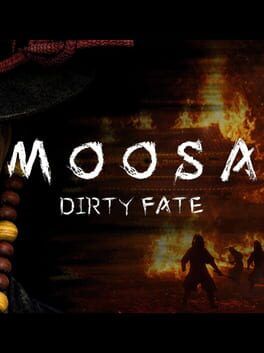
Iggymob’s brutal new IP fuses Joseon-era famine, cannibal cults, and Korean myth creatures into a cursed 17th-century Korea that could make MOOSA: Dirty Fate one of the most striking action games on the horizon.
MOOSA: Dirty Fate did not arrive with the weight of a famous license or a legacy series behind it. It landed as a rare thing in today’s crowded action space: a completely fresh IP that knows exactly what it wants to be. The reveal trailer introduced a brutal third-person action game from Gungrave G.O.R.E. developer Iggymob, but what really stands out is where and how it is set. Rather than another vaguely medieval Europe or mythic Japan, MOOSA is rooted in a specific and ugly moment in Korean history, then twisted by folklore into something nightmarish.
At its core, MOOSA: Dirty Fate is an action game about warriors colliding in a land that has already gone to hell. "Moosa" is a Korean term for a martial warrior, and Iggymob leans into that definition with a protagonist who feels less like a chosen hero and more like a hardened survivor. Official descriptions frame the story around revenge, responsibility, and ambition, with different warriors chasing their own ideals through a landscape that no longer has room for nobility. It is a character-driven setup, but the hook is how that drama plays against a very particular historical backdrop.
Iggymob has pinned the game firmly to late Joseon, specifically 17th-century Korea in an age of famine and social collapse. In the setting description, mountains and fields have withered and a strange blight has turned the countryside into dust. Crops fail, people starve, and the social order fractures. Everything we see in the reveal carries that desaturated, ash-choked look, closer to historical famine accounts than to glossy fantasy Korea. Soldiers shake down peasants on empty dirt roads, villages look half-abandoned, and any hint of color comes from blood or fire rather than lush nature.
This historical anchor matters because it frames the horror. Several descriptions emphasize cannibalism and desperation, calling this a land where people have been driven mad by hunger and will do anything to survive. That choice pushes MOOSA past the usual “dark fantasy” marketing line into something more grounded and uncomfortable. The monsters in the trailer are terrifying, but the earliest threats are humans. Armed bandits, desperate villagers, and corrupt officials are as much a part of this world as any supernatural creature. For an action game, that spectrum of enemies hints at a tone that is more bleak survival than pure power fantasy.
From there, Iggymob layers on mythology. The studio describes MOOSA as being based on Korean history and myth, and the reveal footage wastes no time blending the two. The protagonist carves through human soldiers, then clashes with distended, corpse-like creatures and hulking beasts that clearly come from folklore rather than the battlefield. Official blurbs talk about demons, colossal creatures from Korean legends, and “terrible monsters” shaped by that cultural tradition. Even without specific names, the silhouettes carry that feel, with elongated limbs and masks that recall shamanic rituals more than Western demon designs.
What makes that fusion interesting is how little it relies on familiar East Asian genre shorthand. Instead of instantly recognizable yokai or Chinese myth figures, MOOSA is working with spirits, rituals, and fears tied to Joseon-era Korea. Hints of Korean shamanism bleed through in the costuming and idol-covered shrines, while the way monsters rise from burial mounds evokes local ghost stories. The cursed fate driving the plot reads less like a generic curse and more like a supernatural exaggeration of historical suffering, as if the land itself is taking revenge for decades of misrule and famine.
Combat is where it all comes together. Iggymob calls MOOSA a “fierce” and “brutal” action game, and the footage backs that up with tight third-person swordplay. This is not a sprawling musou battlefield or floaty spectacle combo system. Attack animations are quick and weighty, more grounded than flashy, with a clear focus on decisive strikes and brutal finishers. The studio leans on realistic sword work over wild fantasy weaponry, which fits the grounded martial artist concept. At the same time, special moves and cinematic executions drive home that this is still very much an action showpiece.
The toolkit extends beyond the sword. Official overviews mention bow combat and a range of weapons and special techniques, suggesting a flexible moveset that can adapt to both human duels and giant folklore beasts. In practice, that means firing arrows into a charging demon before closing in for a stagger, or switching from tight one-on-one clashes with soldiers to evasive fights against multi-limbed horrors. Iggymob has a history of stylish, high-impact combat with Gungrave G.O.R.E., and MOOSA looks like an attempt to reapply that sense of impact onto something tighter and more grounded.
Important for any new action IP is what we actually know rather than what we can assume. Iggymob has confirmed that MOOSA: Dirty Fate is a third-person action game built around the story of Moosas locked in cycles of revenge and clashing ideals. It is set in 17th-century Joseon during a nationwide famine that has devastated the landscape and the population. Players fight both human factions and supernatural monsters using sword and bow, with an emphasis on brutal melee combat and special moves. The studio has also been clear that the game is explicitly inspired by Korean history and myth and that it will send players up against colossal folklore creatures alongside more grounded threats.
On the release side, MOOSA is slated for 2027 and is coming to PlayStation 5, Xbox Series X|S, and PC via Steam and the Microsoft Store. It will be available through Xbox Game Pass on day one, which gives a new IP immediate visibility and lowers the barrier to trying something that is culturally specific. Outside of that, Iggymob has not gone deep on systems, structure, or difficulty, and there has been no detailed breakdown of whether MOOSA leans more toward Soulslike progression, character action mission design, or something in between. For now, timing, platforms, the basic combat focus, and the setting concept are the pieces locked in.
Where MOOSA: Dirty Fate really carves its own space in the genre is its cultural backdrop. Action games have spent years cycling between similar flavors of fantasy Europe, modern cities, and mythologized Japan or China. Korean developers have been stepping more into the global spotlight, but there are still very few big-budget titles that commit to 17th-century Korea as rigorously as MOOSA appears to. Iggymob is not simply using Joseon as an aesthetic; the famine, class tension, and religious anxiety of that period are fueling both the human drama and the supernatural threat.
That specificity could matter a lot once players are a few hours in. Instead of yet another cursed castle or abstract ruined kingdom, you are walking through villages that look like they could have existed, now warped by a curse that has intensified real historical suffering. Monsters tied to Korean folklore instantly give MOOSA a different silhouette among a sea of European-style demons and dragons, and the martial “Moosa” identity lets the game build its combat fantasy around Korean warrior archetypes rather than the usual samurai or knight.
For Iggymob, this is also a chance to step out from under its own history. Gungrave G.O.R.E. was loud, stylish, and uneven. MOOSA: Dirty Fate reads as a deliberate pivot toward something more thematically rich and culturally grounded without abandoning the studio’s love of heavy-hitting combat. If the team can maintain that harsh, famine-stricken Joseon atmosphere, keep its monsters drawing from Korean myth instead of generic fantasy, and back it all with responsive swordplay, MOOSA has a real shot at being one of the most distinct action games in the 2027 lineup.
Plenty of questions remain about structure, progression, and how the different warriors’ ambitions intersect, but the reveal did what it needed to. MOOSA: Dirty Fate walks into the genre not as another faceless dark fantasy, but as a cursed, cannibal-haunted slice of 17th-century Korea shaped by a history and mythology that action games almost never touch. That alone makes it one of the more intriguing new IPs to watch in the coming years.